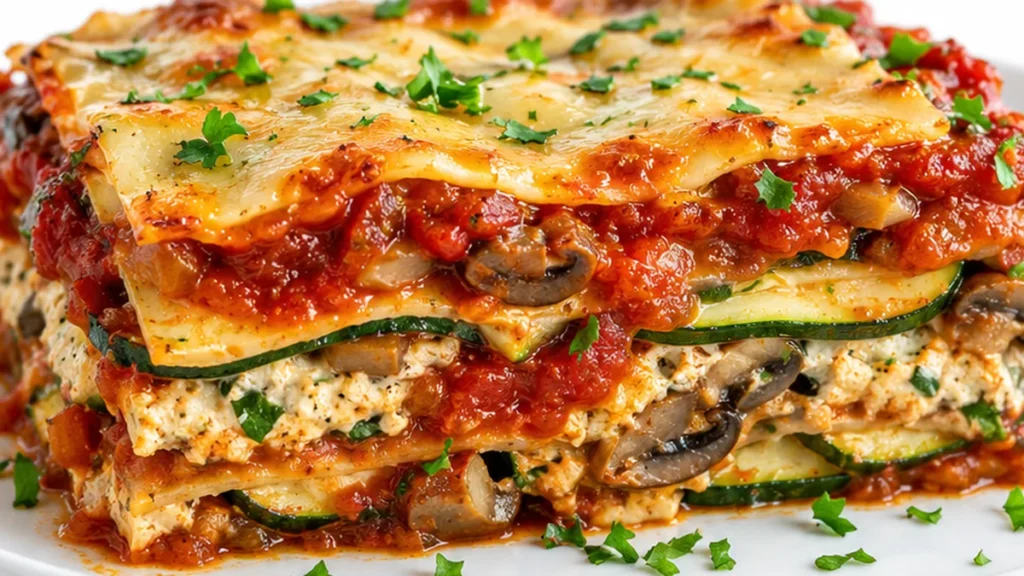
This vegan zucchini lasagna recipe uses fresh zucchini and a rich cashew cream. It’s a simple, healthy alternative to traditional lasagna that everyone will enjoy.
Key takeaways
- Thinly slice zucchini to prevent excess moisture.
- Allow the lasagna to rest before serving for better texture.
- Consider ingredient swaps carefully to maintain flavor balance.
- Use homemade sauce for enhanced freshness and taste.
Vegan Zucchini Lasagna Recipe
Ingredients
Instructions
- Preheat oven to 350°F (175°C) and grease a 9×13 inch casserole dish.
- Slice zucchini lengthwise into very thin lasagna sheets.
- Heat olive oil in a skillet over medium heat. Add mushrooms and shallots, season with salt, and cook until tender, about 5-7 minutes.
- Stir in marinara sauce and cook for 2 minutes until bubbling.
- In a food processor, combine cashews, tofu, nutritional yeast, lemon juice, basil, and salt. Process until smooth and creamy, adding water if needed.
- Assemble the lasagna: spread marinara sauce on the bottom, layer zucchini, cashew-tofu mixture, and more marinara. Repeat layers twice more, ending with marinara.
- Cover with foil and bake for 30 minutes. Remove foil and bake for another 10-15 minutes until bubbly.
Understanding the Role of Zucchini in Vegan Lasagna
Zucchini serves as a key ingredient in vegan lasagna, providing moisture and texture. It is essential to slice the zucchini thinly, ideally around 3-5 mm, to ensure even cooking and prevent excess water release during baking. The moisture content in zucchini is about 95%, which can lead to a watery dish if not managed properly. To combat this, salting the zucchini before layering can draw out moisture, allowing for a firmer lasagna.
Common Mistakes When Layering Vegan Lasagna
One frequent issue is uneven layering, which can result in a dish that is either too dry or too soggy. Ensure that each layer is consistent in thickness, and avoid overloading with sauce. A good rule of thumb is to use about 200-250 grams of sauce per layer. Additionally, allowing the dish to rest for at least 15-20 minutes after baking helps the layers set and makes serving easier.
Ingredient Substitutions and Their Impact on Flavor
When making vegan zucchini lasagna, certain ingredient swaps can enhance or alter the flavor profile. For instance, using cashew cream instead of tofu can create a richer, creamier texture. However, this may increase the fat content. Alternatively, replacing store-bought marinara with homemade sauce can elevate the dish’s freshness but requires additional preparation time. Each substitution should consider the final texture and taste of the lasagna.
Unique Characteristics of Vegan Zucchini Lasagna
This dish stands out due to its use of vegetables as the primary source of filling, making it a lighter alternative to traditional lasagna. The combination of zucchini and other vegetables not only adds nutritional value but also creates a visually appealing dish. Moreover, the absence of dairy allows for a broader range of flavors from spices and herbs, making it versatile for various dietary preferences.
How to Prepare Vegan Zucchini Lasagna in Advance
Preparing vegan zucchini lasagna ahead of time can be a game-changer for busy weeknights. To do this, assemble the lasagna but do not bake it. Cover it tightly with plastic wrap or aluminum foil and store it in the refrigerator for up to 24 hours. For longer storage, you can freeze it before baking. When ready to cook, thaw it overnight in the refrigerator if frozen, then bake as directed, adding about 10-15 minutes to the cooking time if baking from frozen. This method helps the flavors meld and allows for easier meal prep.
Understanding the Impact of Ingredient Quality on Vegan Zucchini Lasagna
The quality of your ingredients can significantly affect the final outcome of your vegan zucchini lasagna. Fresh, organic zucchini will yield a better texture and flavor compared to older, less fresh options. Similarly, using high-quality plant-based cheeses or homemade nut-based sauces can enhance creaminess and depth of flavor. When possible, opt for seasonal vegetables, as they are often more flavorful and nutrient-dense. This dish shines during summer when zucchini is at its peak, but you can also experiment with other seasonal vegetables like eggplant or bell peppers for a different twist.
Choosing the Right Equipment for Perfect Layers
Using the right equipment can make a difference in how your vegan zucchini lasagna turns out. A deep, rectangular baking dish is ideal for layering, as it allows for even cooking and better heat distribution. Consider using a mandoline slicer for uniform zucchini slices, which helps achieve even cooking and prevents sogginess. If you prefer a crispy top, a cast-iron skillet can provide excellent heat retention. Additionally, having a good spatula for serving will help maintain the layers without collapsing the structure of the lasagna.
Serving Suggestions and Pairings for Vegan Zucchini Lasagna
Vegan zucchini lasagna is versatile in terms of serving and pairing. It pairs wonderfully with a fresh green salad dressed in a light vinaigrette, which adds a refreshing contrast to the rich flavors of the lasagna. For those who enjoy a heartier meal, serving it alongside garlic bread or a side of roasted vegetables can elevate the dining experience. Additionally, consider topping the lasagna with fresh herbs like basil or parsley right before serving for a burst of freshness. A light, fruity red wine or a crisp white wine can also complement the dish beautifully.
Understanding the Storage and Reheating of Vegan Zucchini Lasagna
Proper storage and reheating are crucial for maintaining the quality of vegan zucchini lasagna. After cooking, allow the lasagna to cool to room temperature before refrigerating. Store it in an airtight container for up to 4 days. When reheating, it’s best to do so in the oven at 175°C (350°F) to ensure even heating. Cover with foil to prevent the top from drying out, and heat for about 20-25 minutes. This method helps retain moisture and flavor, making the lasagna taste as good as fresh. For longer storage, consider freezing the lasagna. Wrap individual portions tightly in plastic wrap and then in aluminum foil to prevent freezer burn. It can be frozen for up to 3 months. To reheat from frozen, thaw in the refrigerator overnight and then bake as mentioned above.
Scaling the Recipe for Different Serving Sizes
Scaling your vegan zucchini lasagna recipe can be quite straightforward, whether you are cooking for a small family or a larger gathering. The key is to maintain the same ratios of ingredients to ensure consistent flavor and texture. For a smaller batch, you can simply halve the ingredients. Conversely, if you need to double the recipe, consider using a larger baking dish and adjusting the cooking time accordingly. A larger lasagna may require an additional 10-15 minutes in the oven. Always check for doneness by ensuring the center is hot and the cheese (if using) is bubbly. Additionally, scaling the recipe may also affect the layering process; ensure each layer is evenly distributed to avoid uneven cooking.
Choosing the Right Equipment for Optimal Results
The equipment you use can significantly impact the outcome of your vegan zucchini lasagna. A high-quality baking dish, preferably ceramic or glass, provides even heat distribution, which is essential for cooking the lasagna thoroughly. If you use a metal pan, be aware that it may cook faster, so keep an eye on it to prevent burning. Additionally, a mandoline slicer can help achieve uniform zucchini slices, which aids in even layering and cooking. For those who prefer a more rustic look, a sharp knife will suffice, but aim for consistent thickness of about 5 mm to ensure even cooking. Lastly, consider using parchment paper to line your baking dish; this can prevent sticking and make cleanup easier.
Seasonal Variations and Ingredient Quality Impact
Seasonality plays a significant role in the flavor and texture of your vegan zucchini lasagna. Fresh, in-season zucchini tends to be more flavorful and has a firmer texture, which holds up better in layers. During peak zucchini season, typically in summer, you might find varieties that are sweeter and less watery. Conversely, off-season zucchini may be more watery, which can lead to a soggy lasagna. To combat this, consider salting and draining the zucchini slices before layering them. This technique draws out excess moisture and enhances the overall flavor. Additionally, if you’re using store-bought sauces, check for seasonal ingredients, as they can vary in taste and quality, affecting the final dish.
Understanding the Role of Ingredients in Texture and Flavor
The choice of ingredients in vegan zucchini lasagna directly affects both texture and flavor. For instance, the type of plant-based cheese used can significantly alter the creaminess of the dish. Nut-based cheeses often provide a richer flavor profile compared to soy-based options, which can be more neutral. Additionally, using fresh herbs like basil or oregano can enhance the overall taste, while dried herbs may not impart the same vibrancy. The moisture content of zucchini is another critical factor; if the zucchini is not properly salted and drained, it can release excess water during baking, leading to a soggy lasagna. Aim for a moisture-to-solid ratio that ensures each layer remains distinct. As a rule of thumb, for every 500 grams of zucchini, consider using about 200 grams of plant-based cheese to maintain a balanced texture.
Scaling the Recipe for Meal Prep and Storage
Scaling vegan zucchini lasagna for meal prep requires careful consideration of ingredient ratios and storage techniques. When doubling or tripling the recipe, maintain the same ratios of zucchini, sauce, and cheese to ensure consistent flavor and texture. For optimal storage, allow the lasagna to cool completely before refrigerating. It can be stored in an airtight container for up to five days. For longer storage, consider freezing portions. When freezing, wrap the lasagna tightly in plastic wrap and then in aluminum foil to prevent freezer burn. Thawing in the refrigerator overnight before reheating ensures even warming without compromising texture. When reheating, aim for a temperature of 180°C (350°F) for about 25-30 minutes, or until heated through, to restore the original flavors and consistency.
Pro tips
Pro tip: Best served immediately while hot!
Frequently asked questions
How can I prevent my zucchini lasagna from being watery?
To prevent a watery lasagna, salt the zucchini slices and let them sit for about 30 minutes before layering. This process draws out excess moisture. Additionally, avoid overloading the dish with sauce.
Can I use other vegetables in place of zucchini?
Yes, you can substitute zucchini with other vegetables like eggplant or bell peppers. Each vegetable will impart a different flavor and texture, so consider the cooking times and moisture content of your substitutes.
What can I use instead of dairy cheese in this recipe?
You can use cashew cheese or nutritional yeast for a cheesy flavor. Cashew cheese provides a creamy texture, while nutritional yeast adds a savory, cheesy taste without the fat.
How long should I bake the vegan zucchini lasagna?
Bake the lasagna at 180°C (350°F) for about 45 minutes, or until the top is golden and bubbly. Keep an eye on it to prevent over-browning, and adjust the time based on your oven’s efficiency.
More from Vegan Pasta →