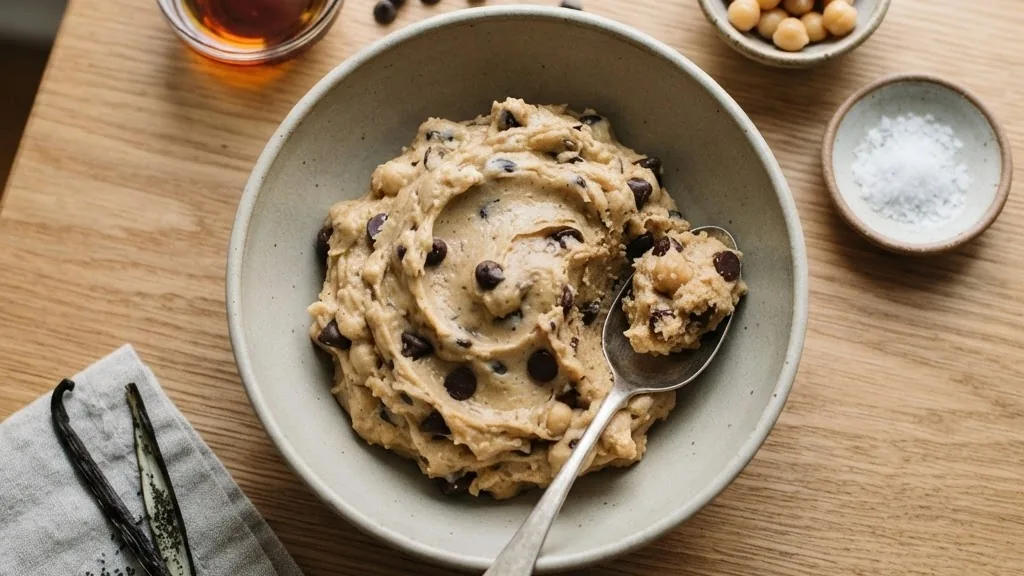
Chickpea cookie dough sounds like a dare until the first spoonful, and then it just makes sense. This is edible, no-bake cookie dough built on a can of chickpeas instead of raw wheat flour and eggs, which means you can eat the whole bowl without that nagging worry in the back of your head. It comes together in about five minutes in a food processor, it is naturally vegan, and it is easy to keep gluten-free.
This is a good option for nights when you want something sweet without turning on the oven. The trick that turns it from “interesting bean snack” into “wait, this is genuinely good” is mostly about how you treat the chickpeas and how you balance the fat and sweetness. This guide covers the recipe, the one fix that kills any beany taste, how to rescue dough that comes out too wet or too dry, and the honest answer to whether you can bake it.
The short answer
Here is the whole idea in plain terms.
- It is edible raw on purpose. There are no raw eggs and no raw wheat flour, the two ingredients that make ordinary dough risky to taste.
- The base is one can of chickpeas. Drained and rinsed, blended with nut or seed butter, a little flour, sweetener, vanilla, and a pinch of salt.
- It takes about five minutes. Blend until smooth, fold in chocolate chips, and eat. No cooking step at all.
Once you stop thinking of it as a substitute and start treating it as its own snack, chickpea cookie dough earns a permanent spot in the fridge.
Why it is safe to eat raw
Regular cookie dough is a treat you are told not to eat, and there are two real reasons for that. The U.S. Food and Drug Administration explains that flour is a raw food and that raw eggs can carry Salmonella while raw flour can carry harmful bacteria like E. coli. The Centers for Disease Control and Prevention makes the same point in its advice on raw dough, noting that wheat flour is a raw agricultural product and has been linked to E. coli outbreaks.
Chickpea cookie dough sidesteps both problems. There are no eggs in it at all. And instead of raw wheat flour, it leans on canned chickpeas, which are fully cooked during the canning process. For the small amount of flour that sets the texture, almond flour is the safest pick because it is ground from nuts rather than a raw cereal grain. Take away the raw egg and the raw wheat flour and you take away the reasons cookie dough was ever off-limits.
That is the part most recipes skip. They tell you it is safe without telling you why. Knowing the mechanism is what lets you serve it to kids or hand the spoon to a friend without a disclaimer.
Ingredients and the job each one does
A good batch is about balance, not a long list. Here is what goes in and, more usefully, what each piece is doing.
- 1 can chickpeas (about 15 oz / 425 g), drained and rinsed. This is the body. It brings protein and a soft, doughy texture without flour.
- 1/3 cup nut or seed butter. Fat and binding. Smooth peanut, almond, or cashew butter all work; tahini or sunflower seed butter keep it nut-free.
- 2 to 4 Tbsp oat flour or almond flour. Structure. It soaks up moisture so the dough holds together instead of being a dip.
- 3 to 4 Tbsp maple syrup or agave. Sweetness, and a little extra moisture.
- 1 tsp vanilla extract. The flavor that makes it taste like dessert rather than blended beans.
- A pinch of salt. Small but non-negotiable. Salt is what makes the sweetness read as cookie dough.
- 1/3 cup chocolate chips. Folded in at the end, not blended. Use dairy-free chips to keep it vegan.
If you want to understand the base ingredient better, the notes on how to prepare chickpeas for cooking explain why texture starts with the bean.
Choosing the right chickpeas and nut butter
Two ingredients decide whether your dough is great or just fine, so it is worth a moment on each.
The chickpeas. Canned is the convenient choice on a weeknight, because they are already cooked and just need a rinse. Look for a no-salt-added or low-sodium can if you can find one, since you control the salt later anyway. If you cook your own from dried beans, cook them until they are fully soft, almost to the point of falling apart, because firm chickpeas blend grainy. Either way, the goal is a soft bean that purees smooth.
The nut or seed butter. Use a drippy, natural one that is stirred well. Peanut butter gives the most classic cookie-dough flavor, almond and cashew are milder and let the vanilla shine, and tahini or sunflower seed butter make the recipe safe for nut-free households. Avoid the heavily sweetened, hydrogenated jars; they throw off both the sweetness and the texture. If your butter is stiff from the fridge, warm it for a few seconds so it blends in cleanly.
How to make it, step by step
This is a food-processor recipe. A high-speed blender works too, though you will stop and scrape more often.
- Drain and rinse the chickpeas well. Rinse under cool water until no foam comes off. This also rinses away surface starch and salt, and draining plus rinsing canned beans can cut their sodium by roughly 40 percent.
- Optional but worth it: slip off the skins. Pinch a few at a time; the loose skins are the main source of grit. It takes two minutes and makes the dough noticeably smoother.
- Blend the base. Add chickpeas, nut butter, maple syrup, vanilla, and salt. Process until completely smooth, scraping down the sides once or twice. Smooth is the goal; any graininess now will stay in the final dough.
- Add flour to set the texture. Pulse in the oat or almond flour a tablespoon at a time until it pulls together into a soft, scoopable dough.
- Fold in the chocolate chips by hand. Keep them whole so you get pockets of melt rather than a uniform brown.
- Taste and adjust. Want it sweeter, add a teaspoon of maple. Flat-tasting, add a pinch more salt. Then grab a spoon.
One can makes about two cups of dough, enough for four generous servings or a lot more if you are rolling it into bites. It comes together start to finish in roughly five minutes, with the only “slow” step being the optional skin removal. If you want the cleanest safety margin, reach for almond flour rather than a cereal-grain flour; the FDA advises against trying to heat-treat raw flour at home, so choosing a nut-based flour sidesteps the question entirely.
The no-beany-taste fix
This is the question everyone really has, so here is the direct answer. A beany aftertaste is not the recipe failing; it is one of three fixable things.
- Under-rinsed chickpeas. The cloudy liquid in the can is where a lot of the “bean” flavor lives. Rinse until the water runs clear.
- Skins left on. The skins carry both grit and a faint earthiness. Removing them is the single biggest upgrade.
- Not enough salt, vanilla, or nut butter. These three flavors cover any remaining bean note. If your dough tastes “green,” it is almost always under-seasoned, not over-beaned.
Do those three things and a first-time taster will not guess the base is chickpeas.
Texture troubleshooting by ratio
Cans of chickpeas and brands of nut butter vary in moisture, so your first batch might need a nudge. Fix it by ratio, not by guessing.
- Too wet or sticky (acts like a dip). Add oat or almond flour 1 tablespoon at a time, pulsing between additions, until it holds a scoop.
- Too dry or crumbly. Add unsweetened plant milk 1 teaspoon at a time. A teaspoon goes a long way, so resist dumping.
- Grainy even after blending. You skinned too few chickpeas or did not blend long enough. Run the processor another full minute.
- Greasy. Your nut butter was oily on top and under-stirred. Stir the jar well before measuring next time.
The dough firms up in the fridge, so aim for slightly softer than you think you want while it is still warm from blending.
Flavor variations
The base recipe is a launch pad. Once you have it down, the variations are quick.
- Classic peanut butter. Use peanut butter as the nut butter and add an extra pinch of salt.
- Double chocolate. Blend in 2 tablespoons of cocoa powder and a splash more maple to balance the bitterness.
- Birthday cake. Skip the chocolate chips, add a half teaspoon of almond extract, and fold in vegan sprinkles.
- Salted caramel tahini. Use tahini, swap part of the maple for date syrup, and finish with flaky salt.
If chocolate chip is your end goal, it is worth comparing this to a baked batch of vegan chocolate chip cookies so you can pick the right project for your mood.
Ways to serve it beyond the spoon
Eating it straight from the bowl is a complete plan, but the dough is also a building block.
- As a dip. Leave it a touch softer and serve with apple slices, strawberries, or pretzels for a sweet-salty snack board.
- Stuffed in dates. Pit a Medjool date, tuck in a small spoonful, and you have a two-bite dessert with extra caramel notes.
- On top of ice cream. Scoop small nuggets over dairy-free vanilla. Cold firms the dough into chewy bites.
- Between cookies or graham crackers. Sandwich a layer for a no-bake treat that travels well in a lunchbox.
- Rolled into energy bites. Add a tablespoon of oats and roll into balls for a grab-and-go snack that leans more wholesome than dessert.
For more no-oven ideas in the same spirit, the collection of vegan gluten-free desserts pairs well with this dough.
How to store and freeze it
This dough keeps well, which is part of why it is worth making a full can’s worth.
- Fridge: store in an airtight container for up to about one week. The flavor actually deepens after a few hours as the salt and vanilla settle in.
- Freezer: roll the dough into bite-size balls, freeze them solid on a tray, then bag them. They keep for about two to three months and thaw in a few minutes at room temperature.
Frozen dough bites are the move if you tend to eat the whole bowl in one sitting, which, fair warning, is easy to do.
Nutrition versus classic cookie dough
This is where the chickpea base quietly wins. According to USDA FoodData Central, one cup of cooked chickpeas provides roughly 14 to 15 grams of protein and about 12 grams of dietary fiber. Traditional cookie dough, built on white flour, butter, and sugar, brings almost none of either.
That does not make this a health food; it still has sweetener and chocolate, and it is meant to be a treat. But spoon for spoon it carries more protein and fiber and no cholesterol, so it sits a lot lighter than the wheat-and-butter version. Here is how the two compare at a glance.
| Trait | Chickpea cookie dough | Classic raw cookie dough |
|---|---|---|
| Safe to eat raw | Yes, by design | No (raw egg and raw flour) |
| Main base | Cooked chickpeas | White wheat flour and butter |
| Protein | High (chickpeas add ~14–15 g per cup of base) | Low |
| Fiber | Notable (~12 g per cup of chickpeas) | Minimal |
| Cholesterol | None | From butter and egg |
| Gluten-free option | Easy (use GF flour and chips) | No |
| Cooking required | None (no-bake) | Meant to be baked |
If you are tracking it as part of a higher-protein day, this roundup of high-protein vegan foods puts the numbers in context.
Can you bake it?
To be clear, because this trips people up: no, this is not a dough you bake into cookies. It is engineered as a no-bake edible dough. There is no leavening, no egg structure, and far more moisture than a baking dough, so in the oven it would spread, dry oddly, and never set into a proper cookie.
If you want actual baked cookies, use a recipe built for baking. Think of chickpea cookie dough the way you think of pudding or mousse, a finished dessert in its own right, not a batter waiting for heat.
Common mistakes
- Skipping the rinse. This is the number-one cause of a beany batch. Thirty seconds of rinsing changes everything.
- Blending the chocolate chips in. Fold them in at the end; blending them just makes muddy dough.
- Adding all the flour at once. You cannot take it back out. Add gradually and stop when it scoops.
- Forgetting the salt. Unsalted dough tastes flat and, weirdly, more beany. Salt is the flavor switch.
- Using cold, stiff nut butter. It will not blend smoothly. Let it come to room temperature first.
Frequently asked questions
Is canned chickpea raw?
No. Canned chickpeas are fully cooked during the canning process, which is why they are safe to eat straight from the can after a rinse. That is the foundation of this whole recipe.
Is chickpea cookie dough gluten-free?
It can be. Chickpeas are naturally gluten-free, so it comes down to your flour and chips. Use certified gluten-free oat flour or almond flour. In the United States, a product labeled gluten-free must contain less than 20 parts per million of gluten, so look for that label on your add-ins.
Can kids eat it?
Yes, and that is one of its best features. Because there are no raw eggs or raw wheat flour, the food-safety reasons to keep kids away from ordinary dough do not apply here. Watch only for nut allergies and use a seed butter if needed.
How much protein is in a serving?
It depends on your exact ingredients, but the chickpea base alone contributes meaningfully, since a cup of cooked chickpeas carries about 14 to 15 grams of protein. The nut butter adds more, making a few spoonfuls a genuinely protein-rich snack.
Can dogs eat chickpea cookie dough?
No. Even though plain chickpeas are fine for many dogs, this dough contains chocolate and added sweeteners that are not safe for them. Keep it for the humans.
Why does mine taste like hummus?
Usually too little sweetener and vanilla, or too much nut butter relative to maple. Add a teaspoon of maple and a few drops of vanilla, and make sure you rinsed and skinned the chickpeas.
Do I have to remove the chickpea skins?
You do not have to, but it is the difference between smooth and slightly gritty. If you have two minutes, pinch the skins off after rinsing. If you are in a hurry, blend a full extra minute to make up for it.
Can I make it without a food processor?
Yes, though it takes more effort. Mash the chickpeas with a fork or potato masher until very smooth, then stir in the other ingredients. The texture will be a little more rustic, but the flavor is the same. A high-speed blender is the in-between option, just stop and scrape often.
What sweetener can I use instead of maple syrup?
Agave, date syrup, or brown rice syrup all work and keep it vegan. If you prefer a lower-sugar dough, a few drops of liquid stevia plus a tablespoon of plant milk for moisture will get you close, though the flavor is slightly less caramel-like.