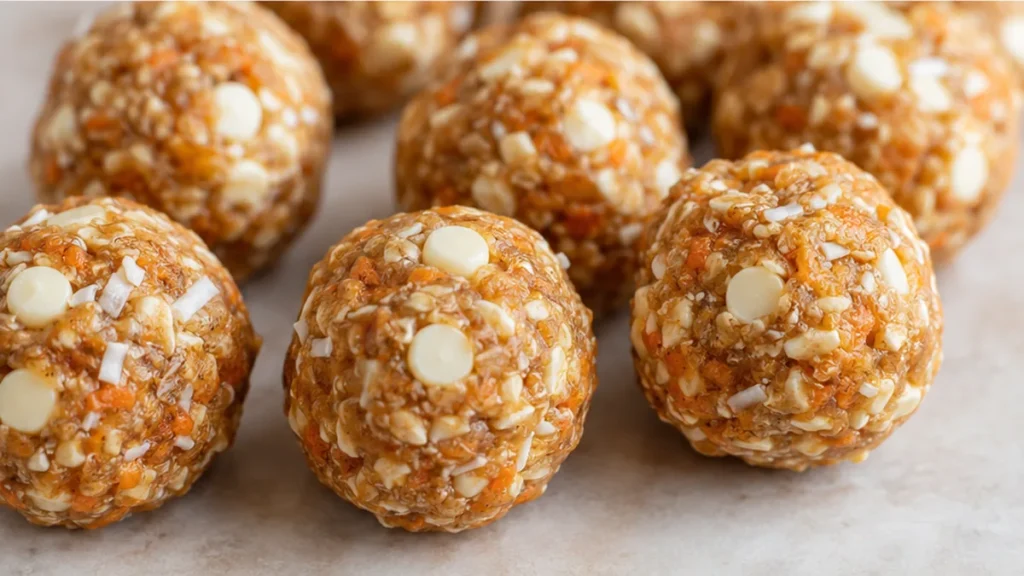
These raw vegan carrot cake bites are the perfect solution for a healthy, satisfying snack that doesn’t require any baking. No-bake recipes can raise doubts about texture, but these bites reach a chewy-soft consistency without a single minute in the oven. Crafted with simple, wholesome ingredients, these carrot cake bites are an ideal choice for anyone looking for a quick, nutritious treat. They pack all the classic flavors of carrot cake into a convenient, bite-sized form, making them suitable for meal prep or a quick grab-and-go option.
Key takeaways
- The almond butter and maple syrup are key binders that create a cohesive dough.
- Ensure the mixture is moist enough to hold together but not overly sticky for easy rolling.
- Adjusting cinnamon and salt is crucial for achieving the classic, balanced carrot cake flavor.
- Proper hydration and ingredient ratios are essential for the correct texture, preventing crumbly or overly sticky results.
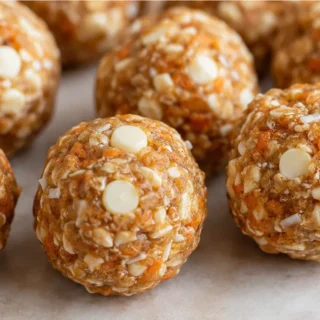
No-Bake Carrot Cake Bites: Sweet, Healthy & Easy!
Ingredients
- 1 medium carrot, peeled and chopped
- 1/2 cup almond butter
- 1/2 cup pure maple syrup
- 2 cups flaked unsweetened coconut
- 2 cups old fashioned oats
- 1/2 teaspoon salt
- 1/2 teaspoon vanilla
- 1 teaspoon cinnamon (more or less to taste)
- white chocolate chips (optional)
Instructions
- Add carrot chunks to the bowl of a food processor and pulse until finely chopped. (You should have a generous 1/2 cup.)
- Remove carrots and set aside. Add oats and coconut. Pulse until coarsely ground.
- Add all other ingredients, including the chopped carrots. Pulse until a smooth-ish, sticky “dough” forms. (You might have to push it down with a spatula a few times to help it along.)
- Add white chocolate chips and pulse until chopped into smaller pieces.
- Roll into balls. Store in the fridge or freezer.
Notes
The Science Behind No-Bake Carrot Cake Bites
The magic of these no-bake carrot cake bites lies in the careful balance of moisture, fat, and binding agents. The almond butter and maple syrup act as the primary binders, creating a cohesive dough when combined with the dry ingredients. Almond butter, rich in natural oils, provides the necessary fat content for a smooth texture and prevents the bites from becoming too dry. Maple syrup, a liquid sweetener, contributes moisture and helps to dissolve the salt and cinnamon, ensuring even flavor distribution. The flaked coconut and oats are crucial for structure and texture. Oats, particularly old-fashioned oats, absorb moisture and swell, providing a chewy base. Flaked coconut adds a delightful texture and also absorbs some of the liquid, preventing the bites from becoming overly sticky. The finely chopped carrot introduces natural moisture and sweetness, but its size is key; too large, and it will create pockets of excess water, compromising the structure. The cinnamon is a flavor enhancer, and its potency can be adjusted. The salt balances the sweetness from the maple syrup and carrot, making the overall flavor profile more complex and enjoyable. Proper hydration is essential; the mixture should be moist enough to hold together when squeezed, but not so wet that it’s sticky or difficult to roll.
Troubleshooting
- Problem: Bites are too crumbly and won’t hold their shape.
Fix: The mixture may be too dry. Add a tablespoon more almond butter or maple syrup at a time, mixing well after each addition, until the dough just holds together when squeezed. Ensure your oats and coconut are not stale, as they can absorb more moisture. - Problem: Bites are too sticky and difficult to roll.
Fix: The mixture is likely too moist. Add more flaked coconut or oats, a tablespoon at a time, until the dough reaches a workable consistency. Chilling the mixture for 15-20 minutes can also help firm it up for easier rolling. - Problem: The flavor is bland or unbalanced.
Fix: Ensure you’ve used the full amount of cinnamon and salt. Taste the mixture before rolling and adjust seasonings. A pinch more salt can enhance sweetness, and more cinnamon will boost the classic carrot cake flavor. - Problem: Bites are too hard after chilling.
Fix: This can happen if too many dry ingredients were added to compensate for initial stickiness. Try letting them sit at room temperature for a few minutes before serving, or slightly reduce the amount of oats/coconut in future batches.
Substitutions
- Nut Butter: Cashew butter or sunflower seed butter can be substituted for almond butter. The resulting texture will be similar, though the flavor profile will change slightly. Cashew butter is milder, while sunflower seed butter will impart a distinct, slightly savory note.
- Sweetener: Honey or agave nectar can replace maple syrup. The sweetness level and flavor will vary; honey will add a floral note, and agave is more neutral. Adjust quantity slightly based on personal preference.
- Binder/Texture: If oats are not preferred, a mix of finely ground almonds and more coconut can be used, though this may result in a slightly denser bite. Ensure the ground almonds are very fine to help with binding.
- Spice: A pinch of nutmeg or ginger can be added along with or instead of some of the cinnamon for a different spice profile, mimicking traditional carrot cake spices.
Pro tips
– For extra spice, a pinch of nutmeg or ginger can be added alongside the cinnamon. – If the mixture is too sticky to roll, refrigerate it for 15-20 minutes to firm up. – To keep your carrot cake bites fresh, store them in an airtight container in the refrigerator for up to a week or in the freezer for up to a month.
These raw vegan carrot cake bites prove that healthy treats can be incredibly delicious and easy to make. Enjoy them as a quick energy boost or a delightful dessert!
Frequently asked questions
Can I make these carrot cake bites ahead of time?
Yes, these carrot cake bites are perfect for making ahead. Store them in an airtight container in the refrigerator for up to a week. They tend to firm up slightly when chilled, so allow them to sit at room temperature for a few minutes before serving if you prefer a softer texture.
What happens if my mixture is too dry or too wet?
If too dry, add a little more almond butter or maple syrup, one teaspoon at a time, until it holds together. If too wet, incorporate more oats or coconut, a tablespoon at a time, until it’s firm enough to roll without sticking excessively to your hands.
Can I use different types of nuts or seeds?
Absolutely. Cashew butter, sunflower seed butter, or even tahini can be used instead of almond butter. Each will impart a slightly different flavor profile and texture, but the binding properties remain similar.
Is it important to use unsweetened coconut?
Using unsweetened coconut is recommended to control the overall sweetness of the bites, as the maple syrup and carrot already provide significant sweetness. Sweetened coconut will make the final product much sweeter.
More from Vegan Desserts →