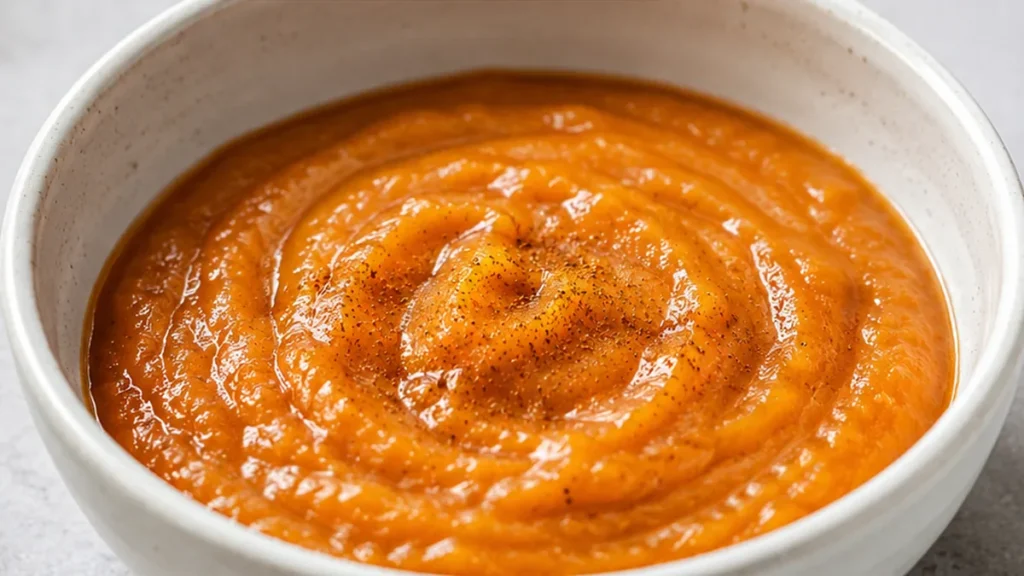
Creating a delicious persimmon puree is simpler than you might imagine, and it’s a fantastic way to enjoy the seasonal fruit. This persimmon puree recipe highlights the natural sweetness and vibrant color of ripe persimmons, making it a versatile addition to your culinary repertoire. This simple preparation method ensures that the delicate flavors of the persimmon shine through, offering a wholesome and naturally sweet option for snacks, breakfast toppings, or even a light dessert. It’s an ideal choice for parents seeking nutritious baby food or anyone looking for a healthy, unprocessed treat.
Key takeaways
- Ensure persimmons are fully ripe for optimal sweetness and smooth texture.
- Ripe Hachiya persimmons should be jelly-like; ripe Fuyu should be deep orange and slightly soft.
- Add optional spices, sweeteners, or citrus juice to customize flavor.
- Use a minimal amount of liquid only if needed for blending.
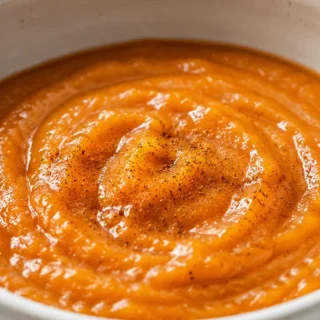
Sweet Persimmon Puree: A Taste of Autumn Sunshine!
Ingredients
- 2 ripe persimmons (Fuyu or Hachiya)
- Optional: a splash of water for smoother consistency
- Optional: a pinch of cinnamon or nutmeg for spice
- Optional: a drizzle of honey or maple syrup for extra sweetness
- Optional: a squeeze of lemon juice to brighten flavor
- Optional: a few mint leaves for garnish
Instructions
- Peel the skin off the persimmons and cut into cubes.
- Place the cut persimmon into a food processor and puree until smooth. Add a splash of water if needed for a smoother consistency.
- Serve immediately or chill for later. Garnish with a pinch of cinnamon or mint leaves if desired.
Notes
The Science of Sweet Persimmon Puree
The simplicity of this persimmon puree belies a crucial element: the ripeness of the persimmons. Persimmons contain tannins, which are responsible for their astringency when unripe. As persimmons ripen, these tannins break down, making the fruit sweet and palatable. For Fuyu persimmons, which are non-astringent and can be eaten firm, ripeness is indicated by a deep orange color and a slight give when gently squeezed. For Hachiya persimmons, which are highly astringent when firm, they must be completely soft and jelly-like before processing. This softening is due to enzymatic activity that degrades the tannins. Blending ripe persimmons, especially the soft Hachiya variety, requires minimal intervention. The natural sugars and pectin content in ripe persimmons create a naturally thick and smooth texture when pureed. Adding a small amount of liquid, if needed, helps the blender blades catch the fruit, ensuring a homogenous mixture without over-processing, which could introduce unwanted heat and alter the fresh flavor.
Troubleshooting
- Problem: Puree is too thick or not blending smoothly.
Fix: Add a tablespoon of water (or your chosen liquid) at a time and continue blending until the desired consistency is reached. Ensure the persimmons are sufficiently ripe, especially Hachiya varieties, which should be almost liquidy. - Problem: Puree tastes bland or lacks depth.
Fix: Incorporate optional flavor enhancers. A pinch of cinnamon or nutmeg adds warmth, a drizzle of honey or maple syrup boosts sweetness, and a squeeze of lemon juice provides a bright counterpoint to the fruit’s natural sugars. - Problem: Puree has a slightly gritty texture.
Fix: This can sometimes happen with Fuyu persimmons if not fully ripe or if the seeds (if any) were not removed. For a smoother texture, you can pass the puree through a fine-mesh sieve, though this is rarely necessary with very ripe Hachiya persimmons. - Problem: Puree is too watery.
Fix: This is uncommon with ripe persimmons. If it occurs, you can simmer the puree gently over low heat for a few minutes to reduce the liquid content. Be careful not to overcook, as this can diminish the fresh flavor.
Substitutions
- Instead of ripe persimmons: Use ripe mangoes. The resulting puree will have a tropical flavor profile and a similar smooth, thick consistency, though it will be less autumnal.
- Instead of water: Use orange juice or apple cider. This will add complementary fruit flavors and a slightly thinner consistency to the puree.
- Instead of cinnamon/nutmeg: Use a tiny pinch of ground ginger or cardamom. This will introduce different warm spice notes, altering the aromatic profile of the puree.
- Instead of honey/maple syrup: Use agave nectar or date syrup. These will provide alternative sources of sweetness with their own distinct flavor undertones.
Pro tips
- Choose ripe persimmons: Fuyu persimmons (non-astringent, apple-shaped) can be eaten firm, but for puree, slightly softer is better. Hachiya persimmons (acorn-shaped) must be very soft, almost jelly-like, to avoid astringency.
- Achieve perfect smoothness: If your puree isn’t as smooth as you’d like, add a tablespoon of water at a time and process until desired consistency is reached. A high-speed blender will yield the silkiest result.
- Storage: Store leftover persimmon puree in an airtight container in the refrigerator for up to 3-4 days. For longer storage, freeze in ice cube trays, then transfer cubes to a freezer bag for up to 3 months. Thaw in the fridge overnight or microwave briefly.
Embrace the flavors of autumn with this delightful persimmon puree. Experiment with different spices or serve it as a base for smoothies to enjoy its versatility. Happy cooking!
Frequently asked questions
What is the best type of persimmon for puree?
For the smoothest and sweetest puree, Hachiya persimmons are ideal when fully ripe and jelly-like. Fuyu persimmons can also be used if they are very ripe (deep orange and slightly soft), as they are non-astringent even when firm.
Can I make persimmon puree ahead of time?
Yes, persimmon puree can be made a day or two in advance and stored in an airtight container in the refrigerator. The flavors will meld nicely. For longer storage, freeze the puree in portions.
My persimmon puree is bitter. What went wrong?
Bitterness in persimmon puree typically indicates that the persimmons were not fully ripe, especially if you used Hachiya varieties. Ensure they are extremely soft and jelly-like before pureeing to break down the tannins responsible for astringency.
How thick should persimmon puree be?
The consistency should be smooth and thick, similar to applesauce or yogurt. If it’s too thick for your blender, add a splash of water or your chosen liquid, a tablespoon at a time, until it blends easily without becoming watery.
More from Vegan Desserts →