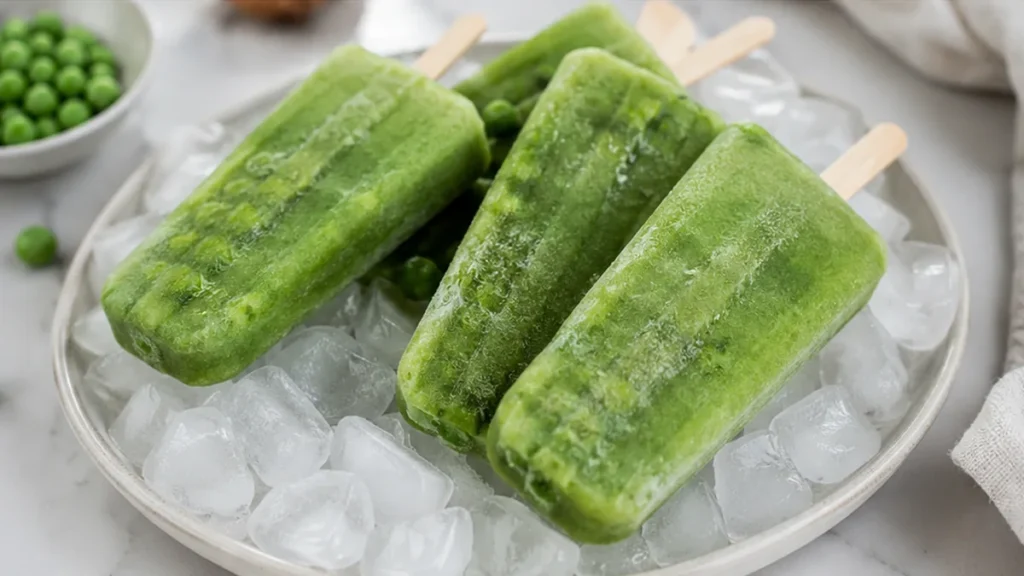
Pea Pops are an unexpectedly delightful and refreshingly simple treat, perfect for cooling down on a warm day. This recipe for pea pops showcases how minimal ingredients can create a surprisingly satisfying snack, combining the natural sweetness of peas with the icy chill of a popsicle. Frozen peas as a pop may sound odd, but the vibrant color and subtle sweetness win people over quickly. It’s a fantastic way to encourage healthier snacking, especially for children, by turning a simple vegetable into a fun, handheld delight. This recipe proves that sometimes, the most basic ideas are the most brilliant.
Key takeaways
- Blend frozen peas thoroughly with water to create a smooth base.
- Control ice crystal formation for a creamy, not icy, texture.
- Ensure molds are filled properly and freeze rapidly for best results.
- Adjust sweetness and liquid ratios based on pea variety and desired consistency.
Sweet Pea Pops: Chilled Summer Snack
Ingredients
- 1 pound bag frozen peas
- water
- popsicle molds
- popsicle sticks
- freezer
- serving platter
Instructions
- Carefully place frozen peas into each popsicle mold, filling to the top.
- Gently pour cold water over the peas in each mold until they are fully submerged, then insert popsicle sticks.
- Place the filled molds in the freezer for at least 3 hours, or until completely solid.
- To serve, run the molds under warm water for a few seconds to loosen, then carefully remove the pea pops and enjoy immediately.
Notes
The Science of Sweet Pea Pops
The simplicity of sweet pea pops belies a fundamental principle of frozen desserts: controlling ice crystal formation. Peas, when blended, create a liquid base. The key to a smooth, pleasant texture rather than an icy, hard one lies in the concentration of dissolved solids and the speed of freezing. Peas contain natural sugars and starches, which act as antifreeze agents, lowering the freezing point of the water and thus inhibiting the formation of large, crunchy ice crystals. Blending the peas thoroughly is crucial. This process not only breaks down the cell walls, releasing their liquid contents and sugars but also incorporates air. This air, when trapped in small bubbles, further contributes to a smoother mouthfeel by disrupting the continuous ice matrix. The water added serves to achieve the desired consistency for blending and pouring into molds. Too little water results in a thick, potentially icy pop; too much dilutes the pea flavor and can lead to a less dense, more easily melted product. Rapid freezing, achieved by using a cold freezer and appropriately sized molds, also favors smaller ice crystals. The goal is to create a semi-solid matrix where pea solids and small ice crystals are suspended in a concentrated sugar-water solution.
Troubleshooting
- Icy Texture: If your pea pops are too hard and icy, you likely didn’t blend them smoothly enough, or the mixture was too dilute. Ensure the peas are fully pureed, and consider using slightly less water next time. For immediate fixes, try letting the pops sit at room temperature for a minute or two before attempting to remove them from the mold.
- Watery Separation: If you notice a distinct layer of water at the bottom of your pops after freezing, it means the pea solids didn’t fully emulsify. Blend the mixture for longer, ensuring it’s completely smooth. You can also try adding a tiny pinch of salt to help stabilize the emulsion.
- Flavor Too Weak: The natural sweetness of peas can vary. If the flavor is too subtle, consider adding a teaspoon of honey or a pinch of sugar to the blending mixture. Ensure you are using sweet peas, not mature, starchy ones.
- Difficulty Removing from Molds: If the pops are sticking, the molds may not have been filled to the optimal level, or the freezing was too rapid and complete. Run the outside of the mold under warm (not hot) water for about 10-20 seconds to loosen the pop before gently pulling it out.
Substitutions
- Alternative Vegetables: While peas are ideal for their sweetness, you could experiment with other mild, naturally sweet vegetables like corn or blanched edamame. The flavor profile and texture will change significantly.
- Sweetener: If you prefer a sweeter pop or if your peas lack natural sweetness, you can add a teaspoon of honey, maple syrup, or agave nectar to the blender. This will also help with texture by adding more dissolved solids.
- Liquid Base: For a creamier texture and richer flavor, you could substitute some or all of the water with unsweetened almond milk, coconut milk, or even plain yogurt. This will alter the final consistency and taste.
- Flavor Enhancements: A small squeeze of lemon or lime juice can brighten the pea flavor. A tiny pinch of mint or a very small amount of garlic powder (use sparingly) can add unexpected complexity.
Pro tips
- For extra flavor, you can add a tiny squeeze of lemon juice to the water before freezing. – Ensure the peas are completely covered by water to prevent freezer burn and ensure a solid pop.
- If you don’t have popsicle molds, small paper cups with wooden sticks work just as well! – For a creamier texture, blend the peas with a little water before pouring into molds. This creates a smoother, sorbet-like consistency.
Enjoy these surprisingly delicious Pea Pops as a guilt-free pleasure. Experiment with other frozen veggies or fruits for more cool, healthy treats!
Frequently asked questions
What is the best way to ensure my pea pops aren’t icy?
To prevent icy pea pops, ensure you blend the frozen peas until completely smooth, incorporating some air. Using slightly less water can also help by increasing the concentration of dissolved solids, which lowers the freezing point and inhibits large ice crystal formation.
Can I use fresh peas instead of frozen?
Yes, you can use fresh peas, but they must be blanched briefly and then thoroughly chilled before blending. Frozen peas are preferred because their cell structure is already broken down, leading to a smoother puree and better texture in the final pop.
How long do pea pops need to freeze?
Typically, pea pops will need at least 4-6 hours to freeze solid, but overnight is best to ensure they are completely firm. The exact time depends on the size and shape of your popsicle molds and the temperature of your freezer.
Can I add other ingredients to the pea pops?
While the recipe is simple, you can experiment with additions like a squeeze of lemon juice for brightness, a touch of mint for freshness, or a small amount of honey for added sweetness. Ensure any additions are blended thoroughly with the peas.
More from Vegan Desserts →