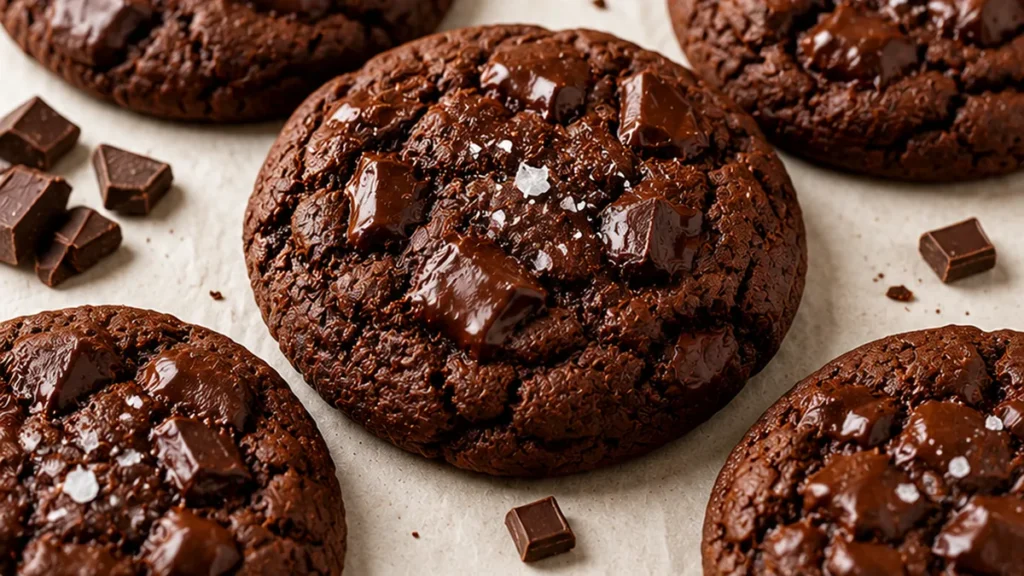
Need a plant-based cookie? These vegan double chocolate chunk cookies are simple to prepare. Using pantry staples, you can make these chocolate cookies quickly.
Key takeaways
- Aquafaba acts as an egg replacer, providing binding and texture.
- Chilling the dough is crucial for preventing excessive spreading and developing flavor.
- Avoid overmixing the dough after adding flour to ensure chewiness.
- Proper ingredient substitutions can maintain the cookie's quality, though texture may vary.
Insane Vegan Double Chocolate Cookies!
Ingredients
- 1/4 cup aquafaba (liquid from a can of chickpeas)
- 1/2 cup melted coconut oil
- 1/2 cup real maple syrup
- 1/4 cup brown sugar
- 2 tablespoons nut milk
- 2 teaspoons vanilla extract
- 2 cups, plus 2 tablespoons all-purpose flour
- 1 teaspoon baking soda
- 1/2 teaspoon kosher salt
- 1 1/2 cups chopped chocolate chunks or chips
Instructions
- Preheat oven to 350°F (175°C). Line a baking sheet with parchment paper.
- In a large bowl, whisk aquafaba until white and foamy (like egg whites), about 1-2 minutes. Add coconut oil, maple syrup, brown sugar, nut milk, and vanilla extract. Mix well.
- Add the all-purpose flour, baking soda, and kosher salt to the wet ingredients. Fold until just combined. Gently fold in the chopped chocolate chunks.
- Chill the dough for 10-15 minutes. Roll dough into 2-3 tablespoon balls. Place 3 inches apart on the prepared baking sheet. Flatten each ball into a disk.
- Bake for 7 minutes. Remove from oven and tap the baking sheet firmly on the counter twice to flatten cookies. Bake for another 4-5 minutes until edges are set but centers are still doughy.
- Remove from oven and tap the baking sheet on the counter 1-2 more times to flatten again. Let cookies cool on the sheet for at least 10 minutes before transferring. Enjoy warm or store in an airtight container for up to 4 days.
Notes
The technique that makes it
The magic behind these Insane Vegan Double Chocolate Cookies lies in the careful balance of ingredients and a few key techniques. The use of aquafaba, the liquid from a can of chickpeas, is crucial. When whipped, aquafaba acts as an emulsifier and binder, similar to eggs in traditional baking. It helps to create a lighter, chewier texture in the final cookie. Ensure the aquafaba is at room temperature for optimal whipping results. Melted coconut oil provides richness and moisture, contributing to the cookie’s tender crumb. It solidifies slightly when chilled, which helps the cookies hold their shape during baking. The combination of maple syrup and brown sugar offers both sweetness and moisture, with the brown sugar contributing to chewiness and a slight caramel note. It’s important not to overmix the dough once the flour is added. Overmixing develops the gluten in the flour, which can lead to tough cookies instead of the desired chewy texture. Gently folding in the chocolate chunks ensures they are evenly distributed without overworking the dough. Chilling the dough before baking is another vital step. This allows the fats to firm up, preventing the cookies from spreading too much in the oven, and also allows the flavors to meld, resulting in a more intense chocolate flavor.
Troubleshooting
- Cookies spread too much: This often happens if the dough is too warm or if there isn’t enough flour. Ensure the coconut oil is slightly cooled but not fully solidified. Chill the dough for at least 30 minutes before baking. You can also add an extra tablespoon of flour if the dough seems excessively wet.
- Cookies are dry or crumbly: This can be due to overbaking or insufficient moisture. Reduce the baking time slightly, checking for doneness when the edges are set but the center still looks slightly soft. Ensure you are using a liquid sweetener like maple syrup and not a granulated one alone, and that the coconut oil is fully incorporated.
- Cookies are too dense: This might be caused by overmixing the dough after adding the flour, which develops gluten excessively. Mix the dry and wet ingredients until just combined. Also, ensure your baking soda is fresh and active; stale baking soda won’t provide adequate lift.
- Aquafaba not whipping: Ensure the aquafaba is at room temperature and free from any residual chickpea solids. Use a clean, grease-free bowl and whisk attachment. A small pinch of cream of tartar (optional, not listed) can also help stabilize the aquafaba if it’s being stubborn.
Substitutions
- Coconut oil: Vegan butter or another neutral-flavored vegetable oil (like canola or sunflower) can be used. The texture might be slightly different, with vegan butter potentially yielding a richer cookie and a neutral oil a slightly less firm cookie.
- Maple syrup: Agave nectar or another liquid sweetener can be substituted. If using a granulated sweetener like coconut sugar, you may need to slightly increase the liquid content of the dough to compensate for the lack of moisture.
- Nut milk: Any plant-based milk (soy, oat, almond) will work. Water can also be used in a pinch, though it may result in a less rich flavor.
- All-purpose flour: A gluten-free all-purpose flour blend designed for baking can be used. Results may vary depending on the blend; some blends may require a binder like xanthan gum if not already included.
Pro tips
- For an extra gooey center, slightly underbake the cookies.
- Use a mix of chocolate chunks and chips for varied texture.
- Ensure your coconut oil is fully melted for proper dough consistency.
Enjoy these delightful vegan double chocolate chunk cookies anytime. You can also customize them with nuts or a swirl of vegan caramel.
More from Vegan Desserts →
Frequently asked questions
Why is aquafaba used in vegan baking?
Aquafaba serves as an excellent egg substitute in vegan recipes. Its protein and starch content allow it to emulsify fats, stabilize mixtures, and create leavening when whipped, mimicking the binding and textural properties of eggs in baked goods like cookies.
Can I use regular sugar instead of brown sugar and maple syrup?
While you can substitute granulated sugar, it will alter the texture and moisture content. Maple syrup and brown sugar contribute moisture and chewiness. Using only granulated sugar might result in a drier, crisper cookie. Adjustments to liquid may be needed.
How do I prevent my vegan chocolate chip cookies from spreading too much?
To prevent excessive spreading, ensure your coconut oil is chilled but not solid, and chill the dough for at least 30 minutes before baking. Using slightly less liquid or adding a touch more flour can also help. Baking on parchment paper is standard.
How long should I bake these double chocolate cookies?
Bake for 10-12 minutes, or until the edges are set and lightly golden, but the centers still appear slightly soft. They will continue to firm up as they cool on the baking sheet. Overbaking will lead to dry cookies.