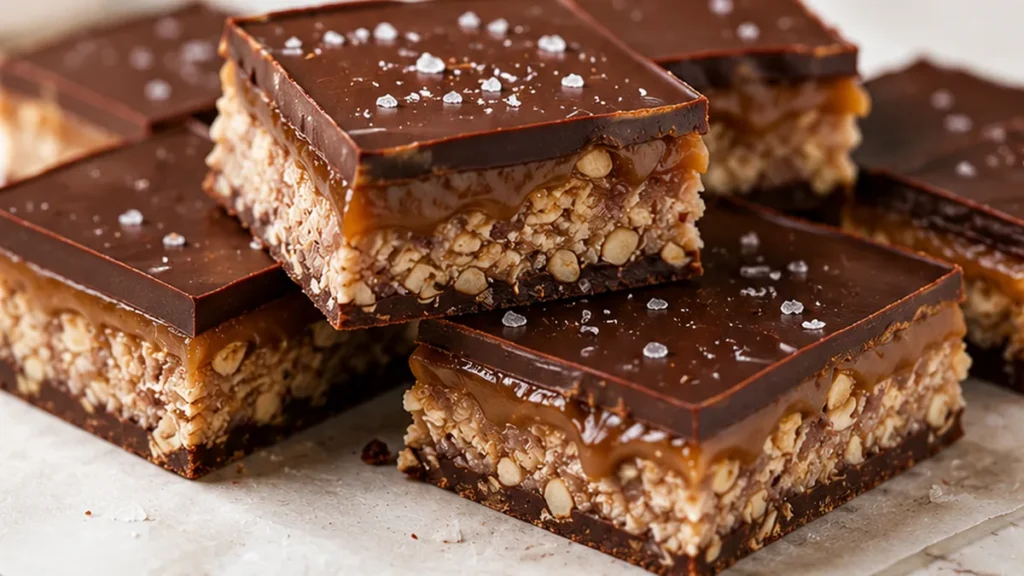
Craving a no-bake treat? These Vegan Chocolate Coconut Caramel Bars are the answer. Combining rich dark chocolate, a crunchy coconut-cashew base, and a chewy caramel layer, these chocolate bars are simple to make.
Key takeaways
- The key to the caramel is simmering full-fat coconut milk until thickened.
- Ensure your dates are soft for a cohesive base.
- Full-fat coconut milk is essential for proper caramel consistency.
- Allow the caramel layer to cool before adding the chocolate topping.
Vegan Chocolate Caramel Dream Bars
Ingredients
- 12 ounces dark chocolate, chopped (ensure vegan)
- 4 heaping tablespoons creamy peanut butter or almond butter
- 2 cups unsweetened flaked coconut
- 1 cup roasted cashews
- 1 cup pitted Medjool dates
- 1 (14-ounce) can full-fat coconut milk
- 1/2 cup light brown sugar (optional)
- 1/4 cup honey
- 1 tablespoon coconut oil
- 1 teaspoon pure vanilla extract
Instructions
- Line a 9 x 13-inch baking dish with parchment paper.
- Melt 6 ounces dark chocolate and 2 tablespoons peanut butter. Pour into the dish and freeze for 15 minutes.
- Pulse flaked coconut and cashews in a food processor until finely ground. Add dates and pulse until mixture forms a ball.
- Press the coconut-cashew-date mixture over the chocolate layer. Chill.
- Boil coconut milk and brown sugar (if using) for 10 minutes until thickened into caramel. Stir in coconut oil, vanilla, and remaining peanut butter.
- Pour caramel over the chilled base. Chill for at least 1 hour.
- Melt remaining 6 ounces dark chocolate with remaining 2 tablespoons peanut butter. Pour over caramel. Chill for at least 1 hour.
- Cut into squares and store in the fridge.
Notes
– For an extra layer of texture, add a pinch of sea salt to the caramel.
– Let the bars chill sufficiently between layers for clean slicing. Nutrition information is an estimate, calculated automatically. Values vary with brands, substitutions and portion sizes.
The technique that makes it
What makes these Vegan Chocolate Caramel Dream Bars work is the creation of a rich, gooey caramel layer that perfectly complements the crunchy chocolate base. The key technique involves carefully simmering the full-fat coconut milk with honey and brown sugar (if using) until it thickens. Full-fat coconut milk is crucial here; the fat content is what allows it to reduce and achieve a caramel-like consistency without splitting. The honey and sugar contribute to both the sweetness and the texture, preventing the caramel from becoming too hard. Stirring frequently during this process is essential to prevent scorching and ensure an even reduction. The addition of vanilla extract at the end enhances the overall flavor profile. For the base, the combination of melted dark chocolate, nut butter, flaked coconut, cashews, and dates creates a dense, flavorful, and slightly chewy foundation. The dates, when processed, act as a natural binder and sweetener, while the nuts and coconut provide texture and richness. Ensuring the dark chocolate is vegan means checking for the absence of dairy, which is common in many chocolate products.
Troubleshooting
- Caramel too thin: If your caramel layer doesn’t thicken sufficiently, it may be due to insufficient simmering time or using a lower-fat coconut milk. Return the mixture to low heat and continue to simmer, stirring constantly, until it reaches a pourable but not watery consistency. Be patient, as this can take longer than expected.
- Caramel too hard: Conversely, if the caramel becomes too hard after cooling, it likely simmered for too long or at too high a heat. This is difficult to fix once cooled, but for future batches, reduce simmering time or temperature.
- Base too crumbly: A crumbly base often indicates insufficient binder (dates) or not enough moisture. Ensure your dates are soft and sticky; if they are dry, soak them in warm water for 10 minutes before processing. You can also try adding a touch more nut butter or a tablespoon of melted coconut oil to the base mixture.
- Chocolate not setting: If the chocolate topping remains soft, ensure you used a good quality dark chocolate with a high cocoa butter content. Also, make sure the caramel layer was sufficiently cooled before pouring the chocolate over it, as a warm layer can prevent the chocolate from setting properly.
Substitutions
- Nut Butter: While peanut butter and almond butter are excellent choices, you can substitute with cashew butter or sunflower seed butter for a nut-free option. The flavor profile will change slightly, but the binding and richness will remain similar.
- Nuts: Pecans or walnuts can be used instead of cashews in the base for a different flavor and texture. Ensure they are roasted for optimal flavor.
- Sweetener in Caramel: If you prefer not to use honey, maple syrup is a good vegan alternative. The flavor will be subtly different, but it will still provide the necessary sweetness and help with caramelization.
- Flaked Coconut: Unsweetened shredded coconut can be used if flaked coconut is unavailable. The texture of the base will be slightly less chunky, but the overall flavor will be comparable.
Pro tips
- Ensure your dark chocolate is truly vegan to maintain the recipe’s integrity.
- For an extra layer of texture, add a pinch of sea salt to the caramel.
- Let the bars chill sufficiently between layers for clean slicing.
Give these vegan chocolate bars a try for a guaranteed crowd-pleaser. Enjoy this delightful layered treat!
More from Vegan Desserts →
Frequently asked questions
Can I make these bars nut-free?
Yes, you can make these bars nut-free by substituting the peanut or almond butter with sunflower seed butter or tahini. For the nuts, omit the cashews or replace them with toasted pumpkin seeds or sunflower seeds for added crunch.
How should I store these Vegan Chocolate Caramel Dream Bars?
These bars are best stored in an airtight container in the refrigerator. This helps maintain the firmness of the chocolate and the texture of the caramel. They will keep well for up to a week.
What is the best way to chop the dark chocolate?
For best results, use a sharp chef’s knife on a cutting board. Chop the chocolate into small, uniform pieces. This ensures it melts evenly and smoothly, whether you are melting it for the topping or incorporating it into the base.
Why is full-fat coconut milk important for the caramel?
Full-fat coconut milk contains a higher percentage of fat, which is crucial for achieving a thick, rich, and stable caramel consistency. Lighter versions have more water content, which can result in a thinner, less satisfying caramel that may not set properly.