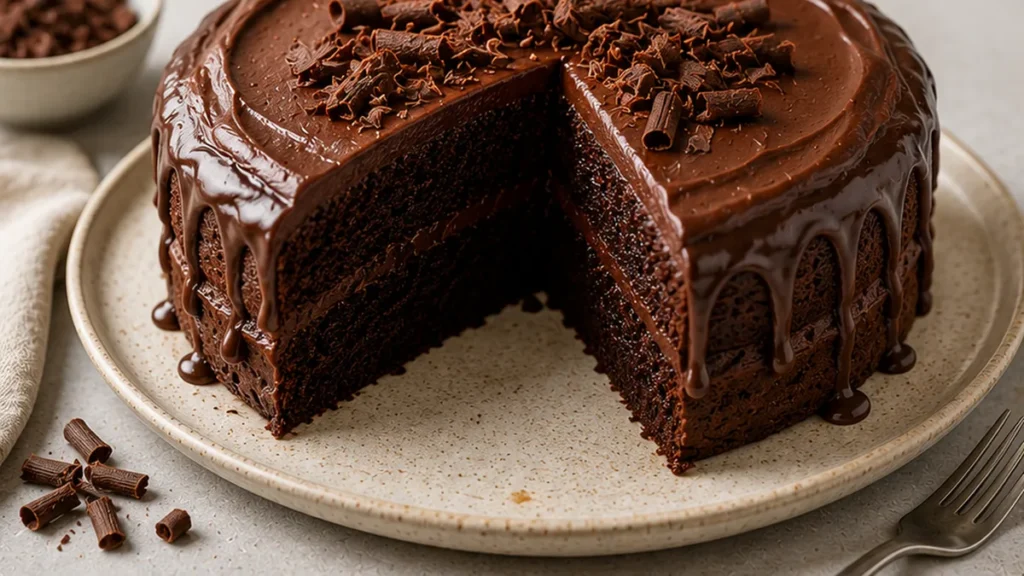
This vegan chocolate cake recipe is a real upgrade for anyone craving a truly decadent dessert without any animal products. It’s incredibly moist, rich, and surprisingly easy to make, proving that vegan baking can be just as satisfying. The star of this recipe is the combination of a perfectly tender vegan chocolate cake base and a luscious, creamy chocolate almond butter frosting. This cake is ideal for birthdays, holidays, or any occasion that calls for a special treat.
Key takeaways
- The reaction between baking soda and apple cider vinegar provides essential lift.
- Pumpkin puree adds moisture and a fudgy texture.
- Accurate measurement and avoiding overmixing are key for a tender crumb.
- Substitutions are possible, but may slightly alter the final texture and flavor.
Decadent Vegan Chocolate Cake: Pure Bliss!
Ingredients
- 3 cups all-purpose flour
- 2/3 cup cocoa powder
- 2 teaspoons baking soda
- 3/4 teaspoon salt
- 2 tablespoons apple cider vinegar
- 2 cups almond milk (or your milk of choice, at room temperature)
- 2/3 cup melted coconut oil
- 2 teaspoons vanilla extract
- 1 3/4 cups organic sugar or coconut sugar (I used coconut sugar)
- 3/4 cup pumpkin puree
Instructions
- Preheat oven to 350°F (175°C). Grease two 8 or 9-inch round cake pans with coconut oil and line with parchment paper.
- In a large bowl, whisk together the flour, cocoa powder, baking soda, and salt.
- In a separate bowl, combine almond milk and apple cider vinegar. Let sit for a minute until frothy. Whisk in the melted coconut oil, vanilla extract, and coconut sugar. Add about one-third of the wet ingredients to the dry ingredients and mix until just combined. Repeat with the remaining wet ingredients, being careful not to overmix.
- Pour the batter evenly into the prepared cake pans. Bake for 20-25 minutes, or until a toothpick inserted into the center comes out clean. Let cool completely.
- For the Chocolate Almond Butter Frosting: In a blender or food processor, combine all frosting ingredients (listed below) and blend until smooth. Chill until ready to frost.
- For the Ganache: Stir coconut milk and maple syrup in a small saucepan until gently boiling. Pour over chocolate chips, let sit for 5 minutes, then stir until smooth. Let cool to room temperature, stirring occasionally, until thickened and spreadable.
Notes
The technique that makes it
The success of this decadent vegan chocolate cake hinges on a few key scientific principles that ensure a moist, tender crumb and rich chocolate flavor. Firstly, the combination of baking soda and apple cider vinegar creates a chemical reaction. When these two ingredients meet, they produce carbon dioxide gas bubbles. This leavening action is crucial for giving the cake its lift and airy texture, especially in the absence of eggs. The vinegar also plays a role in tenderizing the gluten in the flour, contributing to a softer cake. Secondly, the use of pumpkin puree is a clever technique for adding moisture and binding the ingredients without relying on dairy or eggs. Pumpkin is naturally rich in moisture and has a subtle sweetness that complements the chocolate. It also contributes to the cake’s dense, fudgy texture. Finally, the ratio of wet to dry ingredients, including the melted coconut oil and almond milk, is carefully balanced. Coconut oil, a solid fat at room temperature, melts during baking and contributes to a rich mouthfeel and moistness. Ensuring the almond milk is at room temperature helps it emulsify better with the fats and other liquids, preventing a greasy or separated batter. Proper mixing is also vital; overmixing can develop the gluten too much, leading to a tough cake, so combining the wet and dry ingredients until just incorporated is key.
Troubleshooting
- Cake is dry and crumbly: This often happens due to overbaking or an incorrect liquid-to-flour ratio. Ensure you measure your flour accurately (spoon and level, don’t scoop directly from the bag) and don’t bake beyond the toothpick test (a few moist crumbs attached is ideal). You might also need to slightly increase the liquid if using a very absorbent flour.
- Cake is dense and gummy: This can be caused by overmixing the batter, which develops the gluten too much, or by using too much leavening agent. Mix the dry and wet ingredients only until they are just combined, and ensure your baking soda is fresh and accurately measured.
- Chocolate flavor is not intense enough: The quality and type of cocoa powder significantly impact the final flavor. Use a good quality unsweetened cocoa powder (Dutch-processed often yields a richer, darker color and smoother flavor). Ensure you’re using the full amount specified.
- Cake sinks in the middle: This is usually a sign of underbaking or too much leavening. Make sure the cake is fully baked by performing the toothpick test in the center. If it comes out clean or with dry crumbs, it’s done. If it’s still wet, it needs more time.
Substitutions
- Almond Milk: You can substitute other non-dairy milks such as soy milk, oat milk, or cashew milk. The result will be very similar in terms of moisture and binding. Dairy milk can also be used if veganism is not a strict requirement, though it may alter the flavor profile slightly.
- Coconut Oil: Other neutral-flavored oils like vegetable oil, canola oil, or even melted vegan butter can be used. The texture might vary slightly; coconut oil tends to give a particularly moist crumb.
- Pumpkin Puree: Unsweetened applesauce or mashed ripe banana can be used as a substitute. Applesauce will result in a slightly lighter texture and flavor, while banana will impart a noticeable banana taste and a denser cake. Ensure they are unsweetened.
- Apple Cider Vinegar: White vinegar or lemon juice can be used as a direct substitute. The purpose is to react with the baking soda for leavening and to tenderize the crumb. The flavor of the vinegar is not detectable in the finished cake.
Pro tips
- Use good quality cocoa powder for the best chocolate flavor.
- Don’t overmix the batter; this is key to a tender cake.
- Ensure your frosting is chilled enough to be spreadable but not solid.
Enjoy this delightful vegan chocolate cake and share the joy with friends and family. It’s a recipe you’ll want to make again and again.
More from Vegan Desserts →
Frequently asked questions
Why is apple cider vinegar used in this vegan cake?
Apple cider vinegar reacts with the baking soda in the recipe to create carbon dioxide gas. This chemical reaction is crucial for leavening, helping the cake rise and achieve a light, airy texture in the absence of eggs. It also helps to tenderize the gluten in the flour.
Can I use a different type of flour?
While all-purpose flour is recommended for its balanced gluten content, you could experiment with a 1:1 gluten-free baking blend. Be aware that gluten-free flours can absorb liquid differently, so you might need slight adjustments to moisture. Whole wheat flour would make the cake denser.
How do I know when the vegan chocolate cake is fully baked?
Insert a toothpick or a thin knife into the center of the cake. If it comes out clean or with a few moist crumbs attached, the cake is done. If wet batter clings to it, continue baking for a few more minutes and test again.
Does the pumpkin puree make the cake taste like pumpkin?
No, the pumpkin puree is used primarily for its moisture and binding properties. Its flavor is very subtle and is completely masked by the rich chocolate flavor. It contributes to a fudgy texture rather than a distinct pumpkin taste.