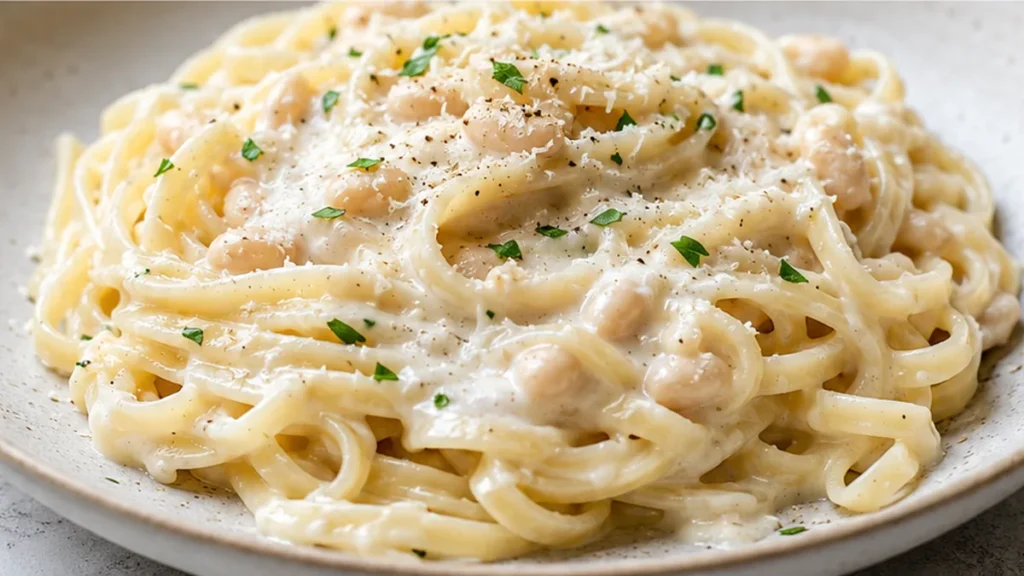
The secret to a truly creamy white bean alfredo lies in achieving a silky-smooth blend of all ingredients, ensuring no grainy texture remains. This recipe delivers a surprisingly rich and satisfying sauce using simple plant-based ingredients. White bean alfredo offers a fantastic alternative to traditional dairy-heavy versions, providing fiber and protein while remaining light. It’s an excellent choice for those seeking a healthier take on a classic comfort food, without compromising on flavor or creaminess.
Key takeaways
- Emulsifying the sauce is key for creaminess.
- Blend thoroughly to avoid graininess.
- Control heat to prevent sauce separation.
- Enhance flavor with additional seasonings.

Creamy White Bean Alfredo Pasta
Ingredients
- 1 can (15 ounce) white beans (cannellini, navy, small white, etc.)
- 1 tablespoon olive oil
- 2 cloves garlic (minced)
- ½ cup vegetable broth
- ¼ cup almond or soy milk
- Freshly ground nutmeg (optional)
Instructions
- Drain and rinse white beans thoroughly under cold water.
- Heat 1 tablespoon olive oil in a medium saucepan over medium heat. Sauté minced garlic for 1-2 minutes until fragrant and lightly golden.
- In a blender or food processor, combine sautéed garlic, rinsed white beans, vegetable broth, and almond or soy milk. Blend on high speed until perfectly smooth and creamy, about 1-2 minutes.
- Pour the blended bean mixture back into the saucepan and heat thoroughly over medium-low heat, stirring constantly with a whisk, until warm and thickened (do not boil).
- Serve immediately over your favorite cooked pasta, about 8 ounces. Grate fresh nutmeg over the top, if desired, for an aromatic finish.
Video
Notes
The technique that makes it
The key to achieving a creamy texture in white bean alfredo lies in the emulsion process. When the cooked white beans are blended with olive oil, vegetable broth, and almond or soy milk, they create a smooth, cohesive sauce. The starches from the beans help thicken the mixture, while the fats from the olive oil contribute to a rich mouthfeel. To ensure a successful emulsion, it is crucial to blend the ingredients at a high speed until completely smooth, avoiding any graininess. Additionally, controlling the heat during cooking is vital; too high a temperature can cause the sauce to separate, while too low may not allow the flavors to meld properly.
Troubleshooting
- Issue: Sauce is too thick.
Fix: Gradually add more vegetable broth or almond milk until desired consistency is reached. - Issue: Sauce is grainy.
Fix: Ensure beans are blended thoroughly; consider using a high-speed blender for a smoother texture. - Issue: Flavor is bland.
Fix: Enhance flavor by adding more garlic, salt, or a squeeze of lemon juice to brighten the sauce. - Issue: Sauce separates when heated.
Fix: Maintain a low heat when warming the sauce; avoid boiling to prevent separation.
Substitutions
- Beans: Use chickpeas instead of white beans for a different flavor profile while maintaining creaminess.
- Olive oil: Substitute with avocado oil for a similar texture and a slightly different taste.
- Vegetable broth: Chicken broth can be used for a non-vegetarian option, adding depth to the flavor.
- Almond or soy milk: Coconut milk can be used for a richer, creamier sauce with a hint of sweetness.
Pro tips
- For the creamiest sauce, blend the mixture for at least 2-3 minutes, pausing to scrape down the sides, until absolutely no bean pieces remain.
- If the sauce is too thick, thin it with a tablespoon of warm water or vegetable broth until it reaches your desired consistency.
- A pinch of white pepper alongside the nutmeg enhances the savory notes without adding extra heat.
This white bean alfredo proves that healthy and delicious can go hand in hand. Experiment with adding fresh herbs like parsley or basil for an extra layer of flavor. Enjoy your plant-powered pasta!
Frequently asked questions
Can I use dried beans instead of canned?
Yes, you can use dried beans, but you will need to soak and cook them beforehand. Canned beans save time and provide a creamy texture without additional preparation.
Is this recipe suitable for vegans?
Yes, this white bean alfredo recipe is vegan as it uses plant-based ingredients like white beans, olive oil, and almond or soy milk, making it a great option for those following a vegan diet.
How can I make this dish gluten-free?
This recipe is naturally gluten-free since it does not contain any wheat products. Just ensure that any additional ingredients you use, like vegetable broth, are also gluten-free.
What can I serve with white bean alfredo pasta?
This creamy pasta pairs well with a side of steamed vegetables, a fresh salad, or garlic bread. You can also add protein like grilled chicken or sautéed mushrooms for a heartier meal.
More from Vegan Pasta →