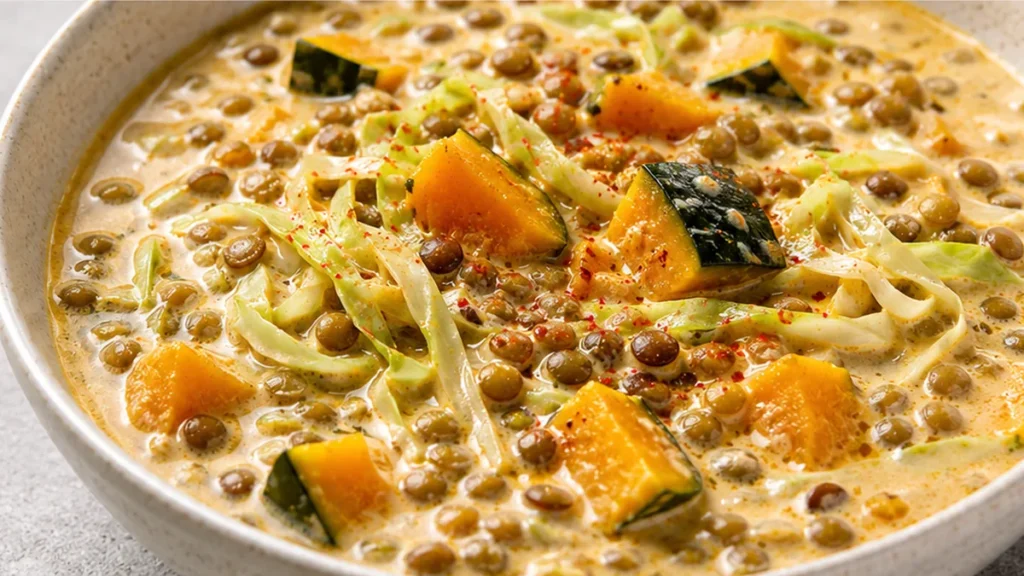
The secret to truly flavorful Thai Coconut Lentils lies in building layers of aromatic ingredients: first the garlic, then the cabbage, and finally simmering the squash in a rich coconut-tom kha base. This recipe offers a hearty, plant-based meal ready in about an hour, perfect for a nourishing dinner. Thai Coconut Lentils are a comforting and wholesome dish, delivering a complex flavor profile with minimal effort. Getting the squash just right, tender but not mushy, is key to the texture, so keep a close eye on it during simmering. This recipe is designed for both seasoned cooks and beginners looking for a healthy, delicious meal.
Key takeaways
- Soaking lentils improves texture and flavor absorption.
- Proper sautéing of garlic prevents bitterness.
- Coconut milk is essential for creaminess and flavor balance.
- Adjust spices and liquids to suit personal taste preferences.
Ingredients for thai coconut lentils
- 1 cup dried green or brown lentils, or monggo beans
- 3 cloves garlic, minced
- 1 tablespoon olive oil
- 1/2 head green cabbage, shredded
- 1/2 large kabocha squash (about 3-4 cups cubed)
- 1 can coconut milk
- 1 1/2 tablespoons tom kha paste
- cayenne pepper
- chili powder
- salt
- fresh basil
- chopped peanuts
How to make thai coconut lentils
- Cook the lentils in a pot of boiling water for about 45 minutes or until soft. Drain the water and set aside.
- While lentils are cooking, saute the minced garlic in the olive oil over medium high heat. Add the shredded cabbage, season with salt, and stir fry until the cabbage begins to soften. Remove from heat and set aside.
- Add a little more olive oil to the pan and add the kabocha squash. Season with chili powder, cayenne, and salt. Add the coconut milk and simmer the squash for 8-10 minutes or until soft but not mushy. Add the tom kha paste and stir until mixed in with the coconut milk.
- Add the cooked cabbage and lentils to the squash mixture and gently stir to combine. Top each bowl with fresh basil and chopped peanuts.
The technique that makes it
The key to achieving the creamy texture in Thai coconut lentils lies in the proper cooking technique and the balance of ingredients. First, soaking the lentils or monggo beans for at least 30 minutes can help them cook evenly and absorb flavors. When sautéing the garlic, ensure it is cooked just until fragrant to avoid bitterness. The addition of kabocha squash not only contributes sweetness but also thickens the dish as it breaks down during cooking. The use of coconut milk provides a rich, creamy base that binds all the flavors together. Combining tom kha paste with the coconut milk enhances the dish’s depth, creating a harmonious blend of spices and creaminess.
Troubleshooting
- Issue: Lentils are mushy. Fix: Reduce cooking time and check for doneness early. Overcooking can lead to a loss of texture.
- Issue: Dish is too spicy. Fix: Add more coconut milk to dilute the heat and balance the flavors.
- Issue: Lack of flavor. Fix: Ensure proper seasoning with salt and consider adding more tom kha paste for an extra flavor boost.
- Issue: Too thick. Fix: Stir in a little water or additional coconut milk to reach your desired consistency.
Substitutions
- Green or brown lentils: Use red lentils for a quicker cooking time and a slightly different texture, as they become mushy faster.
- Kabocha squash: Substitute with butternut squash for a similar sweetness and creaminess when cooked.
- Tom kha paste: Use red curry paste if tom kha paste is unavailable, but be aware that it will alter the flavor profile slightly.
- Fresh basil: Swap with cilantro for a different herbaceous note that complements the dish.
Pro tips
- For extra flavor, toast the dried lentils lightly in a dry pan before boiling.
- Don’t overcook the cabbage; it should still have a slight bite for texture contrast.
- If you prefer more heat, add an extra pinch of cayenne pepper or a sliced fresh chili to the squash while it simmers.
- Storage: Leftovers keep well in an airtight container in the refrigerator for up to 3-4 days. Reheat gently on the stovetop or in the microwave.
This nourishing and flavorful dish is a testament to how simple ingredients can create something truly special. Enjoy these Thai Coconut Lentils as a wholesome meal that warms both body and soul. Give it a try and share your own variations!
Frequently asked questions
Can I use canned lentils instead of dried?
Yes, you can use canned lentils to save time. Just rinse them well and add them towards the end of cooking to heat through without overcooking.
How can I make this dish vegan?
This recipe is already vegan as it uses coconut milk and plant-based ingredients. Ensure that the tom kha paste you use is also vegan-friendly.
What can I serve with Thai coconut lentils?
This dish pairs well with steamed rice, quinoa, or even as a filling in wraps. It can also be served alongside a fresh salad for added crunch.
How long does this dish last in the fridge?
Thai coconut lentils can be stored in an airtight container in the fridge for up to 5 days. Reheat gently on the stove or in the microwave before serving.