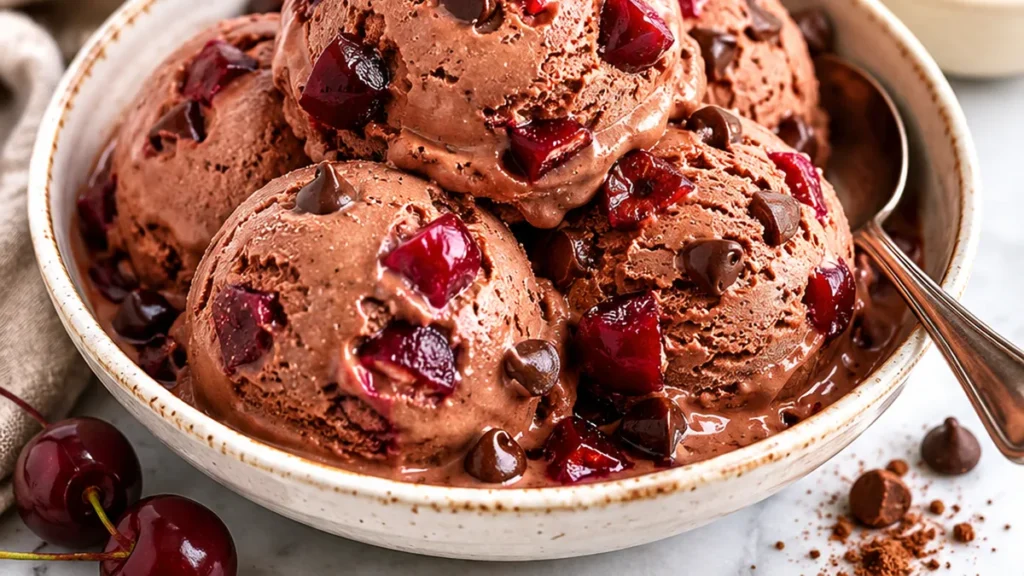
This dairy-free ice cream is a game-changer for anyone seeking a rich, creamy frozen treat without the dairy. Combining the lusciousness of coconut milk with the deep flavor of cocoa and sweet cherries, this recipe creates an incredibly satisfying dessert. The first time I tried making a dairy-free ice cream, I was skeptical it could achieve the same creamy texture, but with the right blend of fats and sugars, it truly rivals traditional versions. This dairy-free ice cream is perfect for those with dietary restrictions or simply looking for a lighter option that doesn’t compromise on taste. It’s surprisingly simple to prepare, requiring minimal hands-on time before your ice cream maker takes over.
Key takeaways
- Use full-fat coconut milk for optimal creaminess.
- Chill the base thoroughly before churning for smaller ice crystals.
- Adjust sweetness before freezing, as flavors intensify when cold.
- Ensure sugar is fully dissolved to prevent a gritty texture.
OMG! This Dairy-Free Chocolate Cherry Ice Cream Is PURE BLISS!
Ingredients
- 1 13.5 ounce can full fat coconut milk
- 1/2 cup oat, almond or soy milk
- 3/4 cup coconut sugar
- 3/4 cup cocoa powder
- pinch kosher salt
- 1 1/2 teaspoon vanilla extract
- 1 1/2 cup fresh cherries, chopped
- 1/2 cup dairy free chocolate chips or chopped walnuts (optional)
Instructions
- Place the full fat coconut milk, dairy free milk, coconut sugar, cocoa powder, kosher salt, and vanilla extract in a bowl. Whisk thoroughly to combine and ensure there are no lumps and the sugar is dissolved. Cover and refrigerate for 2 hours or overnight to allow the flavors to develop.
- Whisk the mixture one more time and pour into the bowl of your ice cream maker. Prepare ice cream based on your ice cream maker’s instructions (my ice cream maker takes 50 minutes).
- 5 minutes before the ice cream is complete, add the chopped fresh cherries, any additional cherry juice, and dairy free chocolate chips or walnuts if desired.
- Serve immediately if you prefer a softer texture similar to soft serve, or cover and freeze if a harder consistency is desired.
Notes
– If your cherries are particularly tart, you can add an extra tablespoon of coconut sugar to the base mixture before chilling to balance the flavors.
– Leftover dairy-free ice cream can be stored in an airtight container in the freezer for up to 2 weeks. For best texture, let it soften on the counter for 10-15 minutes before serving. Nutrition information is an estimate, calculated automatically. Values vary with brands, substitutions and portion sizes.
The Science Behind Creamy Dairy-Free Ice Cream
Achieving a rich, creamy texture in dairy-free ice cream hinges on a few key factors, primarily fat content and sugar’s role in lowering the freezing point. This recipe utilizes full-fat coconut milk, which provides the necessary fat to prevent an icy texture. The fat molecules interfere with ice crystal formation, leading to a smoother mouthfeel. Coconut sugar not only sweetens but also acts as an antifreeze. Sugars bind to water molecules, reducing the amount of free water available to form large ice crystals. This is crucial in dairy-free recipes where the absence of milk solids and lactose can lead to a harder, icier result. The cocoa powder also contributes to the texture by absorbing some moisture and adding body. Proper chilling of the base before churning is essential to jumpstart the freezing process efficiently, allowing smaller ice crystals to form, which are perceived as creamier.
Troubleshooting
- Problem: Icey Texture
Fix: Ensure you are using full-fat coconut milk, not light. Also, make sure the base is thoroughly chilled (at least 4 hours, preferably overnight) before churning. If using an ice cream maker, don’t over-churn; stop when it reaches a soft-serve consistency. - Problem: Not Sweet Enough
Fix: Taste the base before churning. Coconut sugar can vary in sweetness. Adjust by adding a tablespoon more at a time until desired sweetness is reached. Remember that flavors mute slightly when frozen. - Problem: Gritty Texture
Fix: This can sometimes happen with coconut sugar. Ensure it is fully dissolved in the heated liquid before chilling. If you notice grittiness after churning, try gently warming the ice cream slightly and stirring to dissolve any remaining sugar crystals. - Problem: Coconut Flavor Too Strong
Fix: While coconut milk is the base, its flavor can be masked. Ensure you use good quality cocoa powder and vanilla extract. Adding the optional chocolate chips or walnuts can also help balance the coconut notes.
Substitutions
- Milk: You can substitute the 1/2 cup of oat, almond, or soy milk with another 1/2 cup of full-fat coconut milk for an even richer result. The ice cream will be denser and have a more pronounced coconut flavor.
- Sweetener: Maple syrup or agave nectar can be used instead of coconut sugar. Use approximately 3/4 cup, but adjust to taste. Note that liquid sweeteners may slightly alter the final texture, potentially making it a bit softer.
- Cherries: Frozen cherries (thawed slightly) can be used if fresh are unavailable. Ensure they are well-drained to avoid adding excess water, which can lead to iciness.
- Add-ins: Chopped pecans or almonds can replace walnuts. For a different flavor profile, consider adding a teaspoon of espresso powder with the cocoa for a chocolate-cherry mocha ice cream.
Pro tips
- For the creamiest dairy-free ice cream, ensure your coconut milk is full-fat and well-chilled before mixing. This helps it emulsify properly.
- If your cherries are particularly tart, you can add an extra tablespoon of coconut sugar to the base mixture before chilling to balance the flavors.
- Leftover dairy-free ice cream can be stored in an airtight container in the freezer for up to 2 weeks. For best texture, let it soften on the counter for 10-15 minutes before serving.
This dairy-free chocolate cherry ice cream is a delightful treat that proves you don’t need dairy for indulgence. Give it a try and enjoy every creamy, cherry-filled spoonful!
Frequently asked questions
Can I make this without an ice cream maker?
Yes. Pour the chilled base into a freezer-safe container. Stir vigorously every 30-45 minutes for the first 3-4 hours to break up ice crystals. Add the cherries and chocolate chips during the last hour of stirring. The texture will be icier than machine-churned but still delicious.
How long does this dairy-free ice cream need to churn?
Churning time varies by machine, typically 20-30 minutes. The ice cream is ready when it reaches a thick, soft-serve consistency. Avoid over-churning, which can incorporate too much air or melt the base.
Can I use sweetened condensed coconut milk?
You can, but you’ll need to adjust the recipe significantly. Reduce or omit the coconut sugar and be mindful of the added liquid. It’s generally easier to use the unsweetened full-fat coconut milk as directed for the best texture and sweetness control.
What is the best way to store homemade dairy-free ice cream?
Store in an airtight, freezer-safe container. Pressing parchment paper or plastic wrap directly onto the surface of the ice cream before sealing can help minimize ice crystal formation and freezer burn. Consume within 1-2 weeks for the best quality.
More from Vegan Desserts →