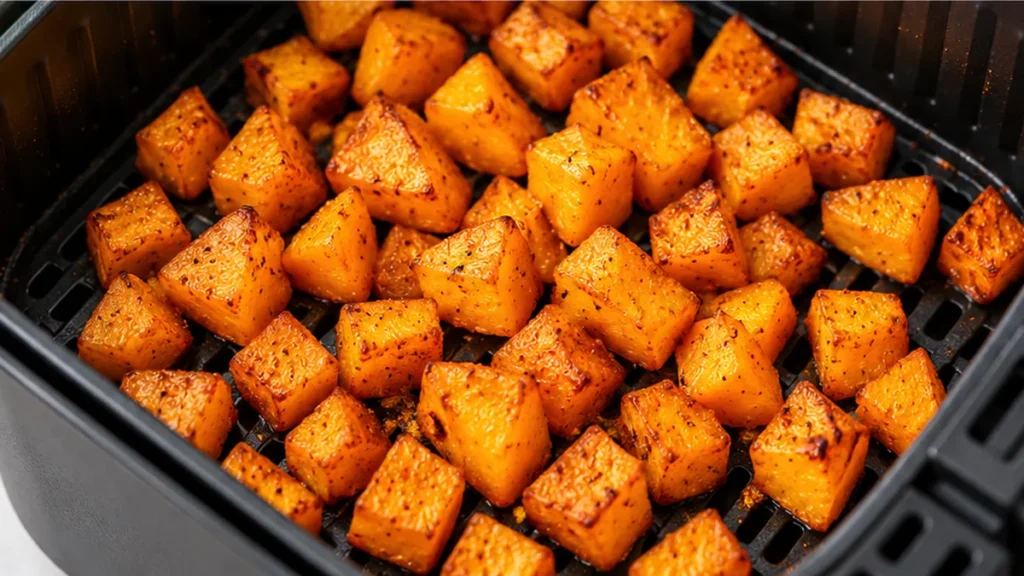
Crispy air fryer butternut squash is a simple and healthy side dish. This recipe uses a maple glaze to enhance the natural sweetness of the squash.
Key takeaways
- Cut butternut squash into uniform pieces for even cooking.
- Preheat the air fryer to 200°C (400°F) for optimal crispiness.
- Use a light coating of oil to enhance the Maillard reaction and achieve crunch.
- Consider ingredient swaps like sweet potatoes or pumpkin for different flavors.
Crispy Air Fryer Butternut Squash
Ingredients
Instructions
- Cut and peel butternut squash into bite sized pieces, about 1/2″ cubes.
- Whisk together oil, paprika, garlic powder, salt, and pepper in a large bowl. Add butternut squash cubes and toss in marinade to coat all squash pieces.
- Add the squash to air fryer basket (if you have a small air fryer, cook it in two batches). Try to keep the squash in a single layer for more even cooking.
- Air Fry at 380
- Continue to air fry at 380
Understanding the Science Behind Crispy Air Fryer Butternut Squash
The key to achieving a perfectly crispy air fryer butternut squash lies in the Maillard reaction, which occurs when sugars and amino acids react under heat. This reaction not only enhances flavor but also contributes to a desirable golden-brown crust. To optimize this, ensure the squash is cut into uniform pieces, ideally around 1.5 cm thick, to promote even cooking. Preheating the air fryer to 200°C (400°F) for about 5 minutes can also help initiate this reaction more effectively.
Common Pitfalls and How to Avoid Them
One common issue when making crispy air fryer butternut squash is sogginess. This can occur if the squash is overcrowded in the air fryer basket, preventing proper air circulation. To remedy this, cook in batches if necessary. Another potential problem is insufficient oil; using too little can lead to a lack of crispiness. Aim for a light coating of oil, about 1 tablespoon for every 500 grams of squash, for optimal texture.
Ingredient Swaps and Their Effects
While butternut squash is the star of this dish, there are several substitutions you can consider. For instance, sweet potatoes can be used instead, offering a similar sweetness but with a slightly different texture. Alternatively, pumpkin can be swapped in for a more seasonal flavor, but it may require a longer cooking time due to its higher moisture content. Remember that each substitute will slightly alter the final taste and texture.
Unique Characteristics of Butternut Squash
Butternut squash is particularly unique due to its high beta-carotene content, which contributes to its vibrant orange color and offers health benefits such as improved vision and immune function. Unlike many other squashes, butternut squash has a sweet, nutty flavor that intensifies when roasted or air-fried, making it an ideal candidate for this cooking method. This sweetness pairs well with savory spices, enhancing the overall flavor profile.
Understanding the Role of Seasonality in Butternut Squash Quality
The quality of butternut squash can vary significantly with the seasons. Fresh, in-season squash is typically sweeter and more flavorful, which directly impacts the final dish. Look for squash that is heavy for its size, with a dull skin and no soft spots. During off-seasons, squash may be stored for longer periods, leading to a drier texture and less flavor. When selecting squash, consider that late fall and winter are ideal for peak flavor, while spring and summer may yield less satisfactory results. This fluctuation in quality can affect the crispiness achieved in the air fryer, as fresher squash tends to retain moisture better, allowing for a more satisfying texture.
Batch Scaling: How to Adjust Cooking Times and Temperatures
When preparing crispy air fryer butternut squash for a larger group, it’s essential to adjust cooking times and temperatures accordingly. If you increase the batch size, you may need to cook the squash in multiple batches to ensure even cooking and crispiness. Overcrowding the air fryer can lead to steaming rather than frying, which compromises the texture. A good rule of thumb is to maintain a single layer of squash pieces in the basket, with enough space for hot air to circulate. If cooking larger batches, consider increasing the cooking time by 2-3 minutes while monitoring for doneness. Always check the squash for a golden-brown color and crispy texture to ensure optimal results.
Choosing the Right Air Fryer for Optimal Results
Different air fryer models can yield varying results when cooking butternut squash. Some air fryers have a more powerful fan and heating element, which can lead to quicker cooking and better crisping. If your air fryer has a smaller capacity or a less efficient heating mechanism, you may need to adjust cooking times or even the temperature. Additionally, models with multiple cooking settings may offer specific options for roasting vegetables, which can enhance the outcome. Always refer to the manufacturer’s guidelines for cooking times and temperatures, and consider conducting a few test runs to find the perfect settings for your particular model.
Pairing and Serving Suggestions for Crispy Air Fryer Butternut Squash
Crispy air fryer butternut squash can be a versatile addition to many dishes. It pairs beautifully with proteins like grilled chicken, roasted pork, or even as a topping for salads. For a more robust flavor, consider tossing the cooked squash with spices such as smoked paprika or cumin. Additionally, serving it with a drizzle of balsamic reduction or a sprinkle of feta cheese can elevate the dish. Consider serving it alongside grains like quinoa or farro for a complete meal. The sweetness of the squash can also balance well with spicy or tangy elements, making it a delightful contrast in various culinary contexts.
Understanding the Impact of Butternut Squash Ripeness on Flavor and Texture
The quality of butternut squash can significantly affect the final dish, particularly in terms of flavor and texture. When selecting butternut squash, look for those that feel heavy for their size and have a uniform, tan color. A ripe squash should yield slightly to pressure when squeezed but not be overly soft. The sugar content in a well-ripened squash enhances the caramelization process during air frying, contributing to a sweeter and more flavorful result. Conversely, an under-ripe squash may be starchy and lack the depth of flavor necessary for an enjoyable dish. Aim for squash that is at least 2-3 months old post-harvest for optimal taste.
Adjusting Cooking Times Based on Air Fryer Model and Size
Different air fryer models can vary significantly in cooking performance due to differences in wattage, size, and design. For instance, compact air fryers may require shorter cooking times compared to larger, more powerful models. A general guideline is to check for doneness at the minimum cooking time suggested in the recipe, especially when using a new air fryer. If your air fryer has a digital display, consider using the temperature probe option to ensure the squash reaches an internal temperature of at least 95°C (203°F) for optimal tenderness. If the pieces are not cooked through, add additional time in 2-3 minute increments, checking for doneness frequently.
Best Practices for Storing Leftover Crispy Air Fryer Butternut Squash
To maintain the texture and flavor of leftover crispy butternut squash, proper storage is crucial. Allow the squash to cool completely before transferring it to an airtight container. Store it in the refrigerator for up to 3 days. For best results, reheat in the air fryer at 180°C (350°F) for about 5 minutes to restore its crispiness. Avoid microwaving, as this can make the squash soggy. If you plan to store it for longer, consider freezing the cooked squash. Place it in a single layer on a baking sheet until frozen, then transfer to a freezer-safe bag. This method helps preserve texture and flavor, allowing you to enjoy the dish later.
Understanding the Impact of Cooking Temperature on Texture
The temperature at which butternut squash is cooked in an air fryer plays a crucial role in achieving the desired crispy texture. Cooking at too low a temperature can result in a soft, mushy texture, while cooking at too high a temperature may cause the exterior to burn before the interior is fully cooked. For optimal results, a cooking temperature of 200°C (400°F) is recommended. This temperature allows for the Maillard reaction, which contributes to browning and flavor development, to occur effectively. The ideal cooking time at this temperature typically ranges from 15 to 20 minutes, depending on the size of the squash pieces. Ensuring even cooking is essential, so it’s advisable to shake the basket halfway through the cooking process to promote uniformity.
Preparing Butternut Squash for Maximum Crispiness
Preparation methods significantly influence the final texture of crispy air fryer butternut squash. To achieve the best crispiness, it is important to cut the squash into uniform pieces, ideally around 1 to 2 centimeters in size. This uniformity ensures that all pieces cook at the same rate. Additionally, drying the squash pieces after washing and before seasoning can help remove excess moisture, which is critical for achieving crispiness. A light coating of oil enhances the Maillard reaction and aids in crisping the exterior. However, be cautious not to over-oil, as too much oil can lead to a soggy texture. Experimenting with different spices and seasonings can also enhance flavor without compromising texture.
Pro tips
Pro tip: Best served immediately while hot!
Frequently asked questions
How can I make sure my butternut squash is crispy?
To ensure your butternut squash is crispy, cut it into uniform pieces and avoid overcrowding the air fryer basket. Preheating the air fryer and using a light coating of oil can also enhance crispiness.
Can I use frozen butternut squash for this recipe?
While you can use frozen butternut squash, it may not achieve the same level of crispiness as fresh squash due to its higher moisture content. If using frozen, ensure to thaw and pat dry before air frying.
What spices pair well with crispy butternut squash?
Common spices that complement butternut squash include cinnamon, nutmeg, paprika, and garlic powder. These spices enhance the sweetness and add depth to the flavor profile.
How do I store leftover air fryer butternut squash?
Store leftover butternut squash in an airtight container in the refrigerator for up to 3 days. To reheat, use the air fryer to regain crispiness, heating at 180°C (350°F) for about 5-7 minutes.
More from Vegan Air Fryer →