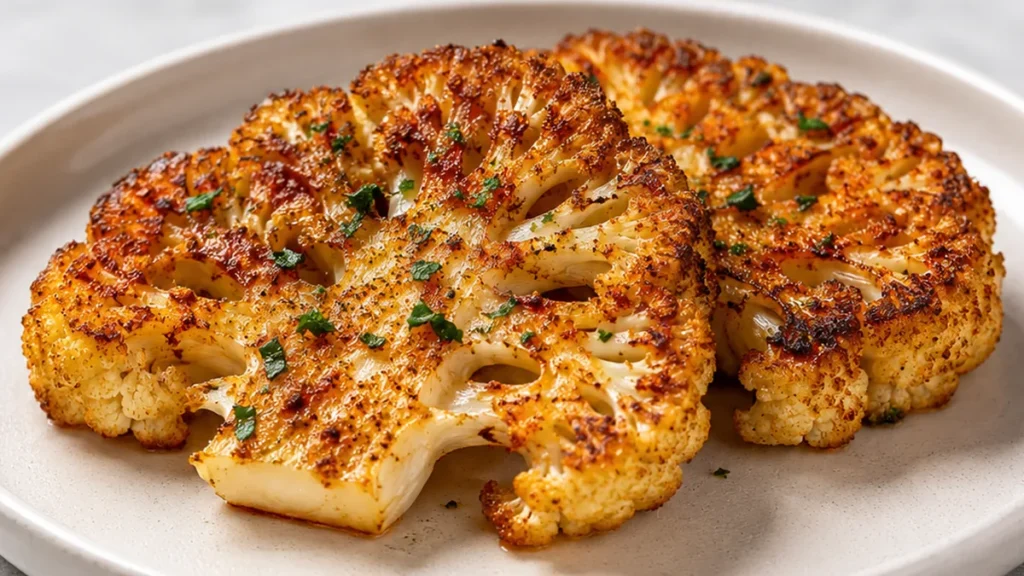
Crispy cauliflower steaks are a simple yet impressive way to transform a humble vegetable into a satisfying meal. My first attempt at making cauliflower steaks involved too thin slices, and they fell apart in the pan. The secret to success lies in precise slicing from root to stem and proper moisture management to achieve that irresistible crispy sear. This cauliflower steaks recipe focuses on achieving a perfectly browned, flavorful exterior and a tender interior. It’s a versatile plant-based option that can serve as a hearty main course or a substantial side dish, proving that vegetables can indeed be the star of your plate.
Key takeaways
- Slice cauliflower 1-inch thick, root to stem for integrity
- Pat cauliflower very dry before seasoning to promote crisping
- Use olive oil and spices to facilitate Maillard browning
- Roast at 400-425°F (200-220°C) for optimal texture
- Don’t overcrowd the skillet during searing
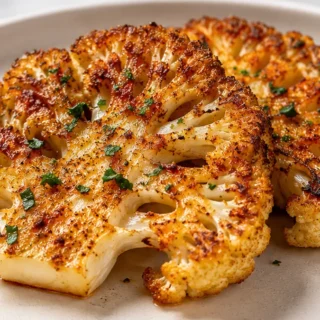
Crispy Cauliflower Steaks: The Ultimate Veggie Delight!
Ingredients
- 1 head of cauliflower
- 3 tablespoons olive oil, for brushing
- 1/2 teaspoon paprika
- 1/2 teaspoon cumin
- 1/2 teaspoon garlic powder
- 1/2 teaspoon salt
Instructions
- Preheat oven to 400 degrees Fahrenheit.
- Slice the cauliflower into 1-inch thick flats or “steaks”.
- Brush each flat with olive oil and sprinkle both sides evenly with the paprika, cumin, garlic powder, and salt.
- Heat a cast iron or oven-proof skillet over medium-high heat, add 1 tablespoon of olive oil and cook cauliflower steaks for 4 minutes per side or until golden brown.
- Turn steaks over and place the skillet in the preheated oven for 12-14 minutes, or until the cauliflower is fork-tender.
- Serve immediately with chimichurri or pesto if desired.
Notes
The Science of Crispy Cauliflower Steaks
Achieving crispy cauliflower steaks relies on a few key principles: even heat distribution, proper moisture management, and effective searing. Unlike most recipes that treat cauliflower as merely a side, this one focuses on its transformation through the Maillard reaction. Cauliflower, being a dense vegetable, requires sufficient heat to soften its core while developing a browned, flavorful exterior. The olive oil acts as a conductor for heat, promoting browning through the Maillard reaction, which creates those desirable savory notes and crispy edges. Paprika, in particular, contains sugars that caramelize, enhancing crispiness. Slice the cauliflower head into thick, 1-inch steak-like portions; thinner slices tend to overcook and become mushy before achieving a good sear.
Troubleshooting
- Problem: Cauliflower steaks are soggy or mushy.
Fix: Ensure the cauliflower is sliced into thick steaks (at least 1 inch). Pat the steaks very dry with paper towels before brushing with oil and spices. Increase oven temperature slightly to 425°F (220°C) or roast for a few extra minutes, ensuring they don’t burn. - Problem: Edges are burnt while the inside is undercooked.
Fix: Reduce the oven temperature by 25°F (15°C) to 375°F (190°C). Ensure the steaks are not overcrowded on the baking sheet, allowing hot air to circulate. You can cover the pan loosely with foil for the first half of cooking if edges brown too quickly. - Problem: Cauliflower steaks fall apart.
Fix: Slice the cauliflower from root to stem to maintain structural integrity. The overlooked detail here is to gently handle the steaks when flipping and ensure the core is still partially attached to the florets in each steak.
Substitutions
- Oil: Avocado oil or melted coconut oil can be used instead of olive oil. The result will be similar crispiness, though coconut oil may impart a subtle sweetness. Avoid oils with very low smoke points, as they can burn the spices.
- Spices: Smoked paprika can replace regular paprika for a smoky flavor. Onion powder can be added or substituted for garlic powder. A pinch of cayenne pepper can add heat, but be mindful it can burn faster at high temperatures.
- Salt: Sea salt or kosher salt are suitable replacements for table salt, offering slightly different textures and dissolution rates. Consider using a coarser salt for a textural crunch.
- Serving: While not a direct substitution for the steak itself, these can be served as a side dish or a base for other toppings like a tahini drizzle or vegan pesto.
Pro tips
- For the best texture, ensure your cauliflower slices are uniform in thickness. Aim for about 1 inch (2.5 cm) to ensure even cooking and tenderness without falling apart.
- Don’t overcrowd your skillet when searing; this allows the cauliflower to get a beautiful golden crust rather than steaming. Cook in batches if necessary.
- Store leftover cauliflower steaks in an airtight container in the refrigerator for up to 3 days. Reheat gently in a 350°F (175°C) oven for 8-10 minutes for best results, ensuring an internal temperature of 165°F (74°C).
Try this cauliflower steak recipe tonight and discover a delicious, healthy, and satisfying way to enjoy vegetables. It’s perfect as a main course or a hearty side dish that might just become a new family favorite!
Frequently asked questions
How thick should cauliflower steaks be?
Cauliflower steaks should be at least 1 inch thick to hold their shape during cooking and prevent them from becoming mushy. Slicing from the root end through the core helps maintain the steak’s integrity and ensures even cooking.
Can I use a different oil for searing?
Yes, you can substitute olive oil with other high-heat oils like avocado oil or melted coconut oil. Avocado oil offers a neutral flavor, while coconut oil may impart a subtle sweetness, both achieving similar crispiness.
How do I prevent soggy cauliflower steaks?
To prevent soggy cauliflower steaks, ensure you pat them very dry with paper towels before seasoning and oiling. Also, avoid overcrowding the skillet during searing to allow for proper browning instead of steaming. Roasting at a slightly higher temperature can also help.
Can I make these ahead of time?
You can prep the cauliflower by slicing and seasoning it a few hours in advance, storing it covered in the refrigerator. For best crispy results, searing and roasting should be done just before serving. Leftovers store well for up to 3 days and reheat nicely in the oven.