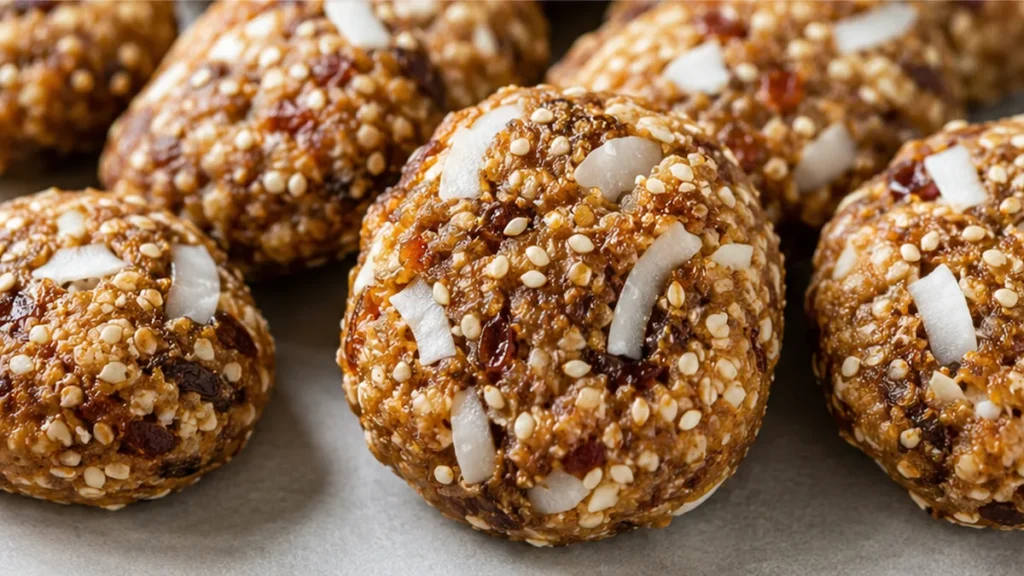
Cocodate cookies are a simple treat combining dates, bananas, coconut, and sesame. This recipe offers a perfect, naturally sweet snack with minimal ingredients.
Key takeaways
- Process banana and dates until a sticky dough forms, but avoid over-processing.
- Bake at a moderate temperature to toast coconut and seeds without burning.
- Cookies firm up as they cool; allow them to rest on the baking sheet.
- Adjust processing time based on banana ripeness for optimal dough consistency.
Sweet & Chewy Cocodate Cookies
Ingredients
- 1 banana, chopped
- 5 medjool dates, pitted and roughly chopped
- 1/2 cup unsweetened coconut flakes
- 1/4 cup sesame seeds
- Baking sheet
- Food processor
Instructions
- Preheat oven to 275° F (135° C).
- Place banana, medjool dates, coconut flakes, and sesame seeds in a food processor and pulse until a smooth dough forms.
- Using a small ice cream scoop or 1 tablespoon measure, form the dough into balls on a baking sheet lined with parchment paper, then gently press down with the palm of your hand to flatten into cookies.
- Bake for 45-50 minutes or until golden brown and firm to the touch. Serve warm or at room temperature.
Notes
The technique that makes it
The magic behind these cocodate cookies lies in the simple yet effective method of using a food processor to create a cohesive dough from naturally sticky ingredients. The banana, when processed, breaks down and releases moisture, acting as a binder. Simultaneously, the pitted Medjool dates, which are naturally soft and syrupy, also contribute significantly to the dough’s stickiness and sweetness. Blending these with the coconut flakes and sesame seeds ensures an even distribution of ingredients. The key is to process until the mixture just comes together into a thick, pliable paste. Over-processing can make the banana too watery, leading to a sticky, unmanageable dough. Under-processing will result in a crumbly mixture that won’t hold its shape. The goal is a dough that is firm enough to be rolled or pressed into cookies, but still moist and slightly tacky. No leavening agents are used, so the cookies rely on their inherent moisture and the slight expansion of the coconut flakes during baking for their texture. Baking at a moderate temperature (around 350°F or 175°C) is crucial to gently toast the coconut and sesame seeds without burning the sugars from the dates and banana, achieving that signature chewy texture.
Troubleshooting
- Cookies are too sticky to handle: If the dough is excessively wet, it’s likely due to over-processing the banana or using a very ripe, soft banana. Try chilling the dough for 15-20 minutes to firm it up. You can also add a tablespoon more of coconut flakes or sesame seeds to absorb excess moisture.
- Cookies are crumbly and won’t hold their shape: This usually means the dough was under-processed, or the banana wasn’t ripe enough to provide sufficient binding moisture. Try processing for another 30-60 seconds. If still crumbly, you can try adding another chopped date or a teaspoon of water to help bind it.
- Cookies are burning on the bottom: The sugars in the dates and banana can caramelize quickly. Ensure your baking sheet is lined with parchment paper to prevent direct contact with the hot metal. Lowering the oven temperature slightly to 325°F (160°C) and extending the baking time by a few minutes can help.
- Cookies are too hard after baking: This can happen if they are over-baked or if the initial dough was too dry. Ensure you are baking only until the edges are lightly golden and the centers are set but still soft. Allow them to cool completely on the baking sheet before moving, as they firm up as they cool.
Substitutions
- Banana: For a similar binding effect and sweetness, you could substitute with 1/4 cup of unsweetened applesauce or 1/4 cup of pureed ripe pear. The texture might be slightly softer.
- Medjool Dates: If Medjool dates are unavailable, other soft, sticky dates like Deglet Noor can be used, though you might need slightly more (about 6-7) as they are sometimes less moist. Ensure they are pitted. Dried figs, rehydrated briefly in warm water, could also work but will alter the flavor profile.
- Coconut Flakes: Unsweetened shredded coconut or even finely chopped almonds or pecans can be used instead of flakes. This will change the texture and flavor, making the cookies less distinctly
Pro tips
- For best results, use very ripe bananas with brown spots; they add more natural sweetness and moisture to the cocodate cookies.
- If your food processor struggles, you might need to scrape down the sides a few times to ensure all ingredients are uniformly combined.
- Chilling the dough for 15-20 minutes before forming cookies makes them easier to handle, preventing stickiness. This step isn’t mandatory but helps create more uniform shapes.
- Store leftover cocodate cookies in an airtight container at room temperature for up to 3 days, or refrigerate for up to a week. They also freeze well for up to 2 months.
Enjoy these delicious cocodate cookies as a healthy snack or a light dessert. Feel free to experiment with a sprinkle of sea salt before baking for an extra flavor kick!
Frequently asked questions
Why are my cocodate cookies so sticky?
Excessive stickiness usually comes from over-processing the banana, which releases too much liquid, or using a very soft, ripe banana. Try chilling the dough for 15 minutes to firm it up before shaping. Adding a little extra coconut or sesame seeds can also help absorb moisture.
My cocodate cookie dough is too dry and crumbly. What went wrong?
This typically happens if the dough was under-processed, or the banana lacked sufficient moisture. Try processing the mixture for another 30-60 seconds. If it’s still too dry, add another chopped date or a teaspoon of water to help bind the ingredients together.
How do I prevent my cocodate cookies from burning?
The sugars in the dates and banana can burn easily. Use parchment paper on your baking sheet to create a buffer. Consider lowering the oven temperature slightly to 325°F (160°C) and baking for a few minutes longer until the edges are just golden.
Can I make these cookies without a food processor?
While a food processor is ideal for creating a cohesive dough, you could attempt to mash the banana and dates very thoroughly by hand with a fork until a paste forms. Then, stir in the coconut and sesame seeds. The texture might be less uniform, but it should still be achievable.
More from Vegan Desserts →