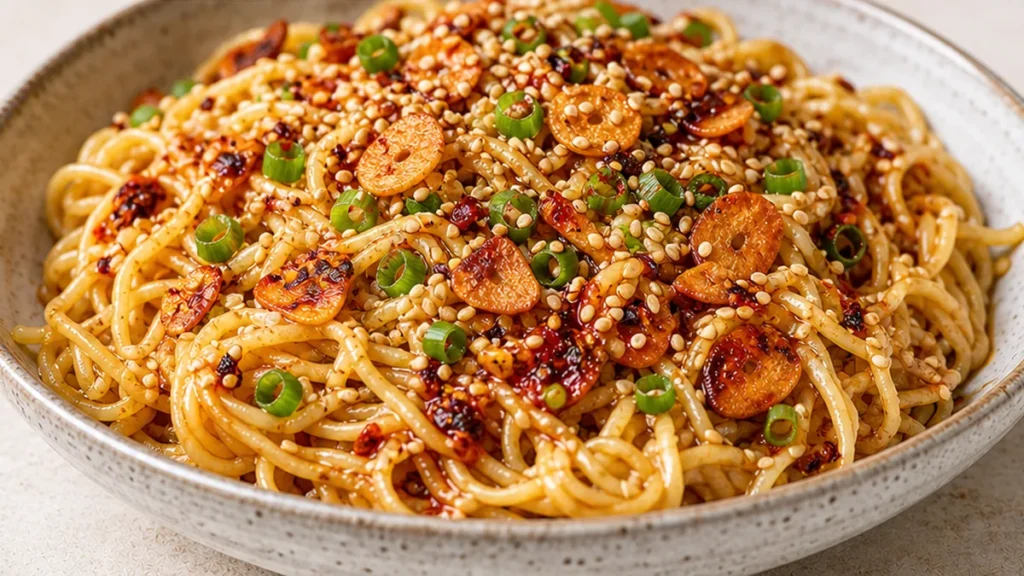
These Farmers Market Sesame Miso Noodle Bowls with crispy Garlic Chips offer an explosion of flavor and texture, making them a weeknight winner. Forget takeout, this recipe brings bright, savory, and satisfying noodles right to your table in under 30 minutes. The perfect harmony of nutty sesame oil, umami-rich miso, a hint of spice, and the star of the show – incredibly crispy garlic chips – improves these miso noodles from simple to sensational.
Key takeaways
- The crispy garlic chips are the secret to these miso noodles, infusing the oil with incredible flavor.
- Fry the garlic slowly in sesame oil over low heat to prevent burning and achieve sweetness.
- Balance the salty miso and soy sauce with acidity from rice vinegar and lime.
- Don't be afraid to adjust seasonings and add extra toppings for a personalized bowl.
Craveable Miso Noodles: Garlic Chip Magic!
Ingredients
- 1 head garlic (skin removed and sliced thin)
- 1/4 cup sesame oil
- salt (to taste)
- 2 tablespoons rounded white miso
- 2 tablespoons hot chili sesame oil
- 1 tablespoon reduced sodium soy sauce
- 1 tablespoon rice vinegar
- 1 tablespoon fresh ginger (grated)
- 1 lime (juiced)
- 2 tablespoons toasted sesame seeds (plus more for serving, black or white)
Instructions
- Place the very thinly sliced garlic in a skillet with the sesame oil. Place over medium heat and gently fry, stirring occasionally, until the garlic is golden brown. Watch it close, it cooks fast! Using a fork, remove from the hot oil to a paper towel lined plate. Toss with salt and set aside.
- Turn the heat off the skillet, but leave it on the stove. To the warm oil add the miso, hot chili sesame oil, soy sauce, rice vinegar, ginger and lime juice. Whisk until smooth and combined. The miso may seem thick at first, but it should dissolve into a smooth paste. Stir in the sesame seeds.
- Bring a large pot of salted water to a boil. Cook the soba noodles according to package directions, but be careful not to overcook. They cook in less than 3 minutes, so do not forget about them! Drain the noodles.
- While the water is coming to a boil, use a spiralizer to spiralize the zucchini + summer squash.
- Add the drained soba noodles and the spiralized squash to the skillet with the miso dressing. Turn the heat back on to medium and toss the noodles + squash with the dressing. Cook 2 minutes or until just warmed through. Remove from the heat.
- Divide the noodles among plates or bowls. Top with tomatoes, peppers and green onions. Sprinkle with goat cheese and toasted sesame seeds. Add the garlic chips on top and if desired garnish with fresh basil. Eat!
Notes
The technique that makes it
The magic behind these craveable miso noodles lies in the preparation of the garlic. Instead of simply mincing or crushing the garlic, we’re slicing it thinly and frying it gently in sesame oil. This process, often referred to as making garlic chips or confit, transforms the pungent raw garlic into sweet, nutty, and crispy morsels. The key is low and slow heat. Starting with cold or lukewarm oil and gradually increasing the heat allows the garlic to infuse the oil with its flavor while slowly dehydrating and crisping up. If the oil is too hot, the garlic will burn quickly, resulting in a bitter taste that will overpower the delicate miso sauce. The oil becomes infused with garlic essence, forming the flavorful base for the sauce. This infused oil, along with the crispy garlic chips, is the star component that improves simple noodles into something truly special.
Troubleshooting
- Garlic burned and bitter: The oil was too hot during the frying process. Next time, use lower heat and stir more frequently to ensure even cooking. You may need to discard the burnt garlic and start over with fresh garlic and oil.
- Sauce is too thick: The miso paste might be too dense, or not enough liquid was incorporated. Whisk in a tablespoon or two of hot noodle cooking water or a little more soy sauce to thin it out.
- Sauce is too salty: Miso and soy sauce are both salty. Taste the sauce before adding extra salt. If it’s too salty, balance it with a bit more rice vinegar, lime juice, or a touch of honey/sugar.
- Noodles are clumpy: Ensure you add the sauce to the noodles immediately after draining, while they are still hot and slightly wet. Toss vigorously to coat evenly. Rinsing noodles can sometimes make them gummy and harder to coat.
Substitutions
- White Miso Paste: If white miso is unavailable, red miso can be used, but it will result in a stronger, more robust flavor. A mix of white and red miso can also work.
- Sesame Oil: For the base oil, a neutral oil like grapeseed or vegetable oil can be used, but the dish will lose the distinct sesame flavor. For the hot chili sesame oil, regular chili oil or a pinch of red pepper flakes can be substituted, adjusting for heat preference.
- Rice Vinegar: Apple cider vinegar or even a mild white wine vinegar can be used, though rice vinegar offers a cleaner, slightly sweeter acidity that complements the miso well.
- Noodles: While ramen or udon noodles are ideal, spaghetti or linguine can be used in a pinch. Adjust cooking time accordingly. The sauce is versatile and will cling well to most noodle types.
Pro tips
- Fry the garlic slices in oil *very* slowly to achieve maximum crispiness without burning.
- Don’t overcook the soba noodles; they should have a slight bite.
- Adjust the chili sesame oil to your preferred spice level.
Enjoy this fresh and satisfying noodle bowl that’s as delightful to make as it is to eat. Experiment with your favorite seasonal market vegetables!
More from Vegan Bowls →
Frequently asked questions
Can I use different noodles for miso noodles?
Absolutely! While ramen or udon noodles are fantastic, feel free to use spaghetti, linguine, or even soba noodles. Adjust the cooking time according to the package directions for your chosen pasta. The key is to cook them al dente so they hold up well with the sauce.
How do I store leftover miso noodles?
Store any leftovers in an airtight container in the refrigerator for up to 3 days. The noodles may clump together when cold. To reheat, gently warm them in a pan with a splash of water or broth, or microwave briefly, stirring halfway through.
Can I make the miso noodle sauce ahead of time?
Yes, the miso sauce can be prepared up to 2 days in advance and stored in an airtight container in the refrigerator. Whisk it well before combining with freshly cooked noodles, as the miso paste may settle. This makes weeknight assembly much quicker!
What can I serve with miso noodles?
These noodles are a meal on their own, but they pair wonderfully with steamed or sautéed greens like bok choy or spinach. For added protein, consider serving with pan-fried tofu, edamame, or a sprinkle of toasted sesame seeds. A side of pickled ginger is also a nice touch.