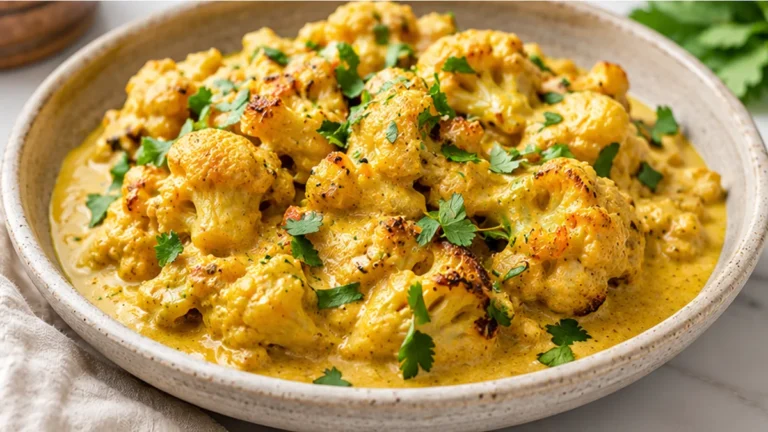
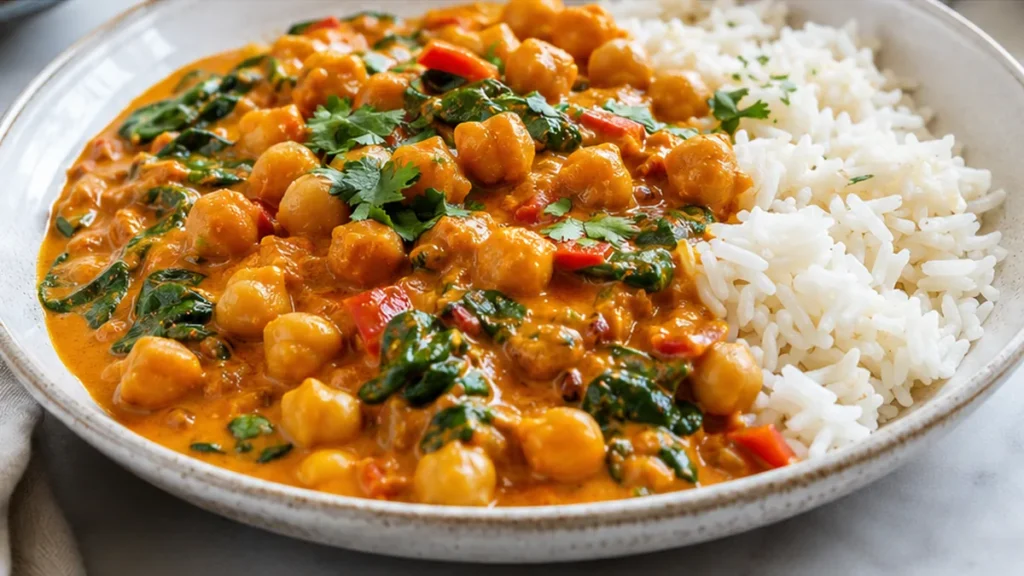
This chickpea curry with spinach and rice offers a vibrant, flavorful journey for your tastebuds, proving that wholesome, comforting meals don’t require hours in the kitchen. For a quick curry, the key is to really let the curry paste bloom in the oil for a minute or two – that initial fragrance sets the stage for everything that follows. This recipe delivers a rich, creamy sauce that perfectly coats tender chickpeas and wilted spinach, making it an ideal choice for both busy weeknights and cozy weekend dinners. It’s a testament to how simple ingredients can transform into something truly extraordinary.
Key takeaways
- Bloom the red curry paste in oil to maximize flavor.
- Use full-fat coconut milk for a creamy, stable emulsion.
- Add spinach at the end to prevent overcooking and wateriness.
- Adjust seasoning (sugar, soy sauce) to balance the curry’s taste.

Creamy Chickpea Curry: Weeknight Obsession!
Ingredients
- 1 tablespoon avocado oil
- 2 cloves garlic, minced
- 1 1/2 cups jasmine rice, uncooked
- 1 tablespoon brown sugar
- 1 1/2 tablespoons red curry paste
- one 14-ounce can full fat coconut milk
- 1 1/2 tablespoons soy sauce
- one 14-ounce can chickpeas, drained and rinsed
- 2-3 cups fresh spinach, chopped
- 1/2 cup cilantro, chopped
Instructions
- Cook jasmine rice according to package directions.
- Heat avocado oil over medium heat. Add minced garlic and red curry paste; sauté until softened and fragrant, about 1-2 minutes.
- Add brown sugar, full-fat coconut milk, and soy sauce. Bring to a low simmer until thickened slightly.
- Add chickpeas, fresh spinach, and chopped cilantro; cook until chickpeas are heated through and spinach is wilted. Mash chickpeas slightly for a creamier texture.
Notes
The Technique That Makes It: Building Flavor and Creaminess
The magic of this chickpea curry lies in two key techniques: blooming the curry paste and achieving a creamy emulsion with the coconut milk. Starting by heating the avocado oil and then toasting the red curry paste for about a minute is crucial. This process, known as blooming, awakens the spices and aromatics in the paste, releasing their full flavor potential and deepening their color. If the paste is added directly to liquid, it won’t toast properly, resulting in a less vibrant and more one-dimensional flavor profile. Following this, the addition of coconut milk and soy sauce creates the base for the curry. Simmering gently allows the flavors to meld. The full-fat coconut milk is essential here; its fat content helps to create a stable, rich emulsion when combined with the other ingredients. Avoid low-fat versions, as they may not emulsify as well, leading to a thinner, greasier sauce. The final addition of spinach wilts quickly, adding freshness and nutrients without overcooking, while the chickpeas absorb the sauce’s flavor.
Troubleshooting
- Problem: Curry is too thin.
Fix: Simmer uncovered for a few extra minutes to allow some liquid to evaporate, thickening the sauce. Alternatively, create a slurry with 1 teaspoon of cornstarch mixed with 2 teaspoons of cold water and stir it into the simmering curry until thickened.
- Problem: Curry lacks depth of flavor.
Fix: Ensure you properly bloomed the curry paste in the oil before adding liquids. You can also add a pinch more brown sugar to balance the spice or a splash more soy sauce for umami.
- Problem: Spinach is watery and limp.
Fix: Add the spinach towards the very end of cooking and stir just until wilted. Overcooking spinach releases excess water, diluting the sauce. Ensure the curry is at a gentle simmer, not a rolling boil, when adding it.
- Problem: Coconut milk has separated.
Fix: This can happen if the heat is too high or if the coconut milk is old. Gently whisk the curry to re-emulsify. If it doesn’t fully combine, a cornstarch slurry (as mentioned above) can help bind it.
Substitutions
- For Jasmine Rice: Use basmati rice or brown rice. The cooking time may vary slightly, and the texture will be different (basmati is similar, brown rice is chewier).
- For Avocado Oil: Use coconut oil or a neutral vegetable oil like canola. This will slightly alter the flavor profile but maintain the cooking properties.
- For Full-Fat Coconut Milk: Use light coconut milk for a less rich result, or a mixture of half-and-half and water for a non-coconut alternative (though the flavor will change significantly).
- For Fresh Spinach: Use kale (stems removed, chopped) and simmer for an extra 5 minutes to soften, or use frozen spinach (thawed and squeezed dry) added at the end.
Pro tips
- For an extra layer of flavor, toast the curry paste in the oil for a full 2 minutes before adding liquids. This deepens its aromatic profile.
- If the curry becomes too thick, thin it with a splash of vegetable broth or water until it reaches your desired consistency.
- Store leftover chickpea curry in an airtight container in the refrigerator for up to 3-4 days. It reheats beautifully on the stovetop over low heat, adding a splash of water if needed to maintain creaminess.
This easy chickpea curry is a fantastic way to enjoy a hearty, flavorful vegetarian meal. Don’t hesitate to experiment with extra spices or a squeeze of lime to personalize it to your taste. Enjoy!
Frequently asked questions
Can I make this chickpea curry ahead of time?
Yes, this curry can be made ahead. The flavors often meld and deepen overnight. Reheat gently on the stovetop or in the microwave, adding a splash of water or coconut milk if it has become too thick.
What can I serve with this chickpea curry?
This curry is excellent served over the recommended jasmine rice. It also pairs well with naan bread for dipping, quinoa, or even a side of roasted vegetables for a more substantial meal.
Is red curry paste very spicy?
Red curry paste can vary in spice level depending on the brand. Start with the recommended amount and taste the curry before serving. You can always add more paste or a pinch of cayenne pepper if you prefer more heat.
Can I use canned coconut milk that has separated?
Yes, separated canned coconut milk is usually fine to use. The solid cream and liquid can be stirred or whisked together before adding to the recipe to create a cohesive mixture for your curry base.
More from Vegan Bowls →