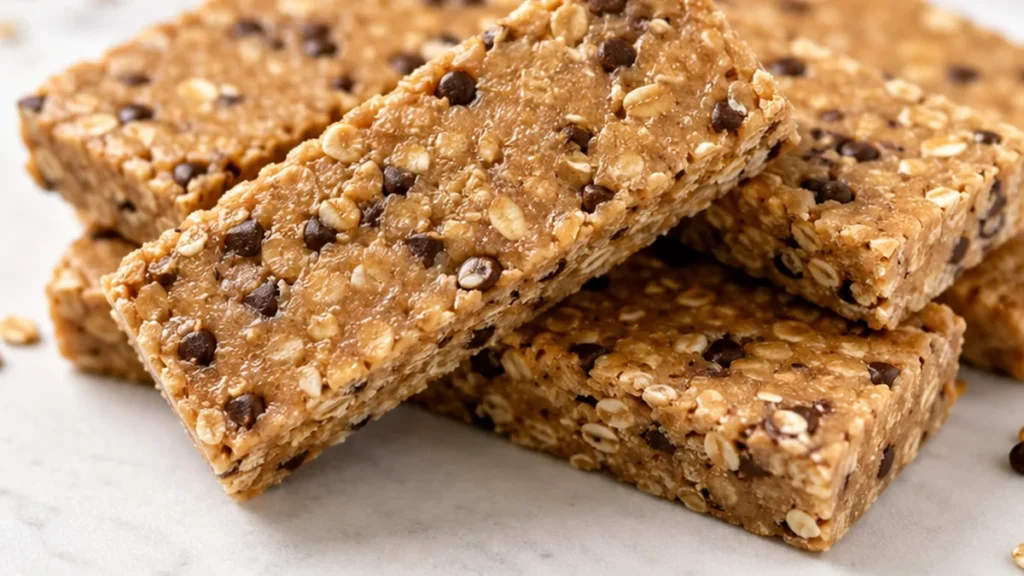
The secret to perfectly firm no-bake peanut butter bars lies in balancing the wet and dry ingredients precisely. These bars are an easy way to create a healthy, satisfying snack that’s ready in just 45 minutes, with zero oven time. Made with creamy peanut butter and hearty oats, this recipe is designed for anyone looking for a convenient, wholesome treat. They’re naturally vegan and gluten-free, making them a versatile option for various dietary needs.
Key takeaways
- Achieve the correct dough consistency by balancing wet and dry ingredients.
- Ensure peanut butter and maple syrup are well-emulsified for even binding.
- Chill bars sufficiently for 30 minutes in the freezer to set properly.
- Accurate measurement of ingredients is key to successful no-bake bars.
Peanut Butter Protein Bars Recipe
Ingredients
- ⅔ cup creamy peanut butter
- ⅓ cup maple syrup
- 1 small banana, peeled and mashed (~100 g)
- 1 teaspoon pure vanilla extract
- ¾ cup vanilla vegan protein powder (~80 g)
- ⅓ cup flax meal
- 1 ½ cup quick-cooking oats (~120 g)
- 1 ½ cup crispy rice cereal (~40 g)
- ½ cup dairy-free mini chocolate chips
- pinch sea salt
Instructions
- Line an 8×8 or 9×9 baking dish with parchment paper, ensuring overhang for easy removal.
- In a large mixing bowl, combine the peanut butter, maple syrup, mashed banana, vanilla extract, protein powder, flax meal, quick-cooking oats, crispy rice cereal, and sea salt until thoroughly mixed. Gently fold in the chocolate chips.
- Press the mixture very firmly and evenly into the prepared baking dish, using the back of a spoon or your hands.
- Freeze for 30 minutes or until the bars are completely firm.
- Lift the bars from the baking dish by pulling up on the parchment paper overhang. Place on a cutting board and cut into 12 equal bars using a sharp knife.
Notes
– If your protein powder makes the mixture too dry, add an extra teaspoon of maple syrup or a splash of non-dairy milk until it reaches a firm, moldable consistency.
– Store the finished protein bars in an airtight container in the refrigerator for up to a week, or freeze for up to 3 months. For freezer storage, wrap them individually for easy grab-and-go access. Nutrition information is an estimate, calculated automatically. Values vary with brands, substitutions and portion sizes.
The Science of No-Bake Binding
The success of these no-bake peanut butter protein bars hinges on achieving the right consistency through careful ingredient ratios and temperature. The primary binding agents are the peanut butter and maple syrup. Peanut butter, an emulsion of fat and protein, provides a sticky base, while maple syrup, a sugar solution, acts as a liquid sweetener and binder. When combined with dry ingredients – protein powder, flax meal, oats, and crispy rice cereal – they create a cohesive dough that holds its shape. What most guides miss is the crucial interaction between the wet and dry components. Too much liquid, and the bars will be crumbly; too little, and they will be overly dense. The banana adds moisture and sweetness, with its starch content also contributing to binding. Make sure the peanut butter and maple syrup are well-emulsified before adding dry ingredients; this is the overlooked detail for an even distribution of moisture and prevents pockets of dryness. The final texture is a balance between the chewiness of the oats, the crispness of the rice cereal, and the dense, fudgy quality from the protein powder and peanut butter base.
Troubleshooting Common Issues
- Bars are too crumbly and won’t hold their shape? The mixture likely lacked sufficient binder or was too dry. Reintroduce a small amount of peanut butter or maple syrup (1 tablespoon at a time), mixing thoroughly until the dough just comes together. You may need to add a bit more protein powder or flax meal if it becomes too sticky.
- Bars are too sticky and difficult to handle? The mixture has too much liquid. Gradually add more dry ingredients, such as protein powder, flax meal, or oats (1 tablespoon at a time), until the dough is firm enough to press into the pan without excessive sticking. Rushing this step leads to very messy hands.
- Bars are hard and dry after setting? This usually indicates too much dry ingredient or not enough moisture. Ensure you measured the peanut butter and maple syrup accurately. If the dough felt very stiff during mixing, consider adding a splash more maple syrup or a bit more mashed banana next time.
- Bars do not set firmly in the refrigerator? This could be due to insufficient binding agents or not enough chilling time. Ensure the correct amount of peanut butter and maple syrup was used. Allow the bars to chill for at least 2-3 hours, or even overnight, to fully firm up, especially if your refrigerator runs warmer.
Substitutions with Trade-offs
- Nut Butter: Almond butter or cashew butter can be used instead of peanut butter. The resulting bars will have a slightly different flavor profile and potentially a different texture depending on the oil content of the chosen nut butter; almond butter tends to be runnier, so you might need a touch more dry ingredient.
- Sweetener: Honey or agave nectar can replace maple syrup. These will alter the flavor slightly and may affect the binding consistency due to differences in sugar composition and viscosity. Honey is thicker, so it might make the bars denser.
- Flax Meal: Chia seeds (ground or whole) can be substituted for flax meal. Chia seeds will absorb liquid similarly and contribute to binding, though the texture might be slightly different, potentially adding a slight crunch if whole.
- Oats: Rolled oats can be used instead of quick-cooking oats, but they may result in a chewier and less uniform texture. Ensure they are finely chopped or pulsed briefly in a food processor if a smoother consistency is desired.
Pro tips
- For an extra crunch, add a handful of chopped almonds or walnuts to the mixture before pressing into the pan. It adds a lovely texture contrast.
- If your protein powder makes the mixture too dry (some brands absorb more liquid), add an extra teaspoon of maple syrup or a splash of non-dairy milk until it reaches a firm, moldable consistency. A little extra liquid can save a crumbly batch.
- Store the finished protein bars in an airtight container in the refrigerator for up to a week, or freeze for up to 3 months. For freezer storage, wrap them individually in parchment paper for easy grab-and-go access, perfect for meal prep.
Enjoy these delicious and nutritious vegan protein bars as a versatile snack throughout your week. Feel free to experiment with different nut butters or add-ins to customize them to your taste. Happy snacking!
Frequently asked questions
Can I use a different nut butter?
Yes, almond butter or cashew butter can be used instead of peanut butter. Keep in mind the resulting bars will have a slightly different flavor profile and potentially a different texture depending on the oil content and thickness of the chosen nut butter. Adjust liquid if needed.
How do I prevent my bars from being too sticky?
If your bars are excessively sticky, it usually indicates too much liquid in the mixture. Gradually add more dry ingredients, such as an extra tablespoon of protein powder, flax meal, or oats, until the dough is firm enough to press without excessive sticking.
Can I make these bars gluten-free?
Yes, this recipe is naturally gluten-free as long as you use certified gluten-free oats. All other ingredients are typically gluten-free, making these a great option for those with gluten sensitivities or preferences.
How long do these protein bars need to chill?
The bars need to freeze for at least 30 minutes to become completely firm, which makes them easy to cut and handle. For optimal firmness and an easier cut, let them chill in the freezer for the full 30 minutes, or even slightly longer if your freezer isn’t very cold.