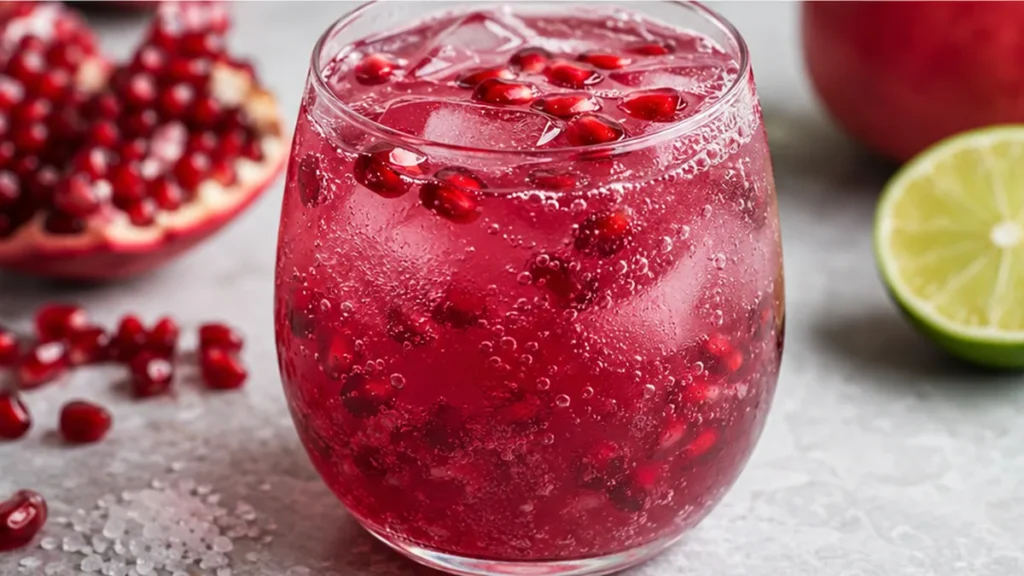
Making homemade pomegranate juice is surprisingly simple and yields a far fresher, more bright drink than store-bought options. The key to excellent pomegranate juice lies in not over-blending the seeds, which can release bitter compounds from the pith. This pomegranate juice recipe focuses on quick preparation using common kitchen tools, making it accessible for anyone looking for a healthy, delicious beverage. It’s a fantastic way to enjoy the benefits of fresh pomegranates.
Key takeaways
- Proper extraction of pomegranate juice requires careful blending and straining.
- Balancing acidity with lime and sweetness with sugar is key to flavor.
- Adding seltzer water enhances the juice’s refreshing quality.
- Avoid over-blending to prevent bitterness and ensure a smooth texture.

Homemade Pomegranate Juice
Ingredients
- 2 cups pomegranate seeds
- 2 cups still water (divided)
- 1 cup seltzer water
- 1/4 teaspoon salt
- 2 teaspoons sugar (optional)
- 1 tablespoon fresh lime juice
Instructions
- Add pomegranate seeds with 1 cup water to the blender. Pulse for 5-10 seconds or just until the juice starts separating from the seeds. Do NOT pulse for too long as the seeds may start to break down.
- Pour the juice through a strainer. Using the back of a spoon gently press the seeds down so all the juice is separated from the seeds.
- Add more water or seltzer water to the strained juice to reach desired consistency. If you are going to add the pomegranate juice in cocktails or mocktails you may want to skip this step.
- Add a pinch of salt and sugar. Mix well. Serve chilled.
Video
Notes
Understanding Pomegranate Juice Extraction
To create a vibrant and flavorful pomegranate juice, the extraction method is crucial. The seeds, also known as arils, contain the juice within a tough outer membrane. When extracting, use a blender to break down the seeds efficiently. Blend the seeds with 1 cup of still water for about 30 seconds. This releases the juice while minimizing bitterness from the membranes. Strain the mixture through a fine mesh sieve or cheesecloth to separate the liquid from the pulp.
Balancing Flavor: The Role of Lime and Sweetness
The addition of lime juice and sugar can significantly affect the flavor profile of your pomegranate juice. Lime juice adds acidity, enhancing the overall taste and balancing the sweetness of the pomegranate. If the juice is too tart, consider adding sugar. Start with 2 teaspoons, tasting as you go to achieve the desired sweetness. This balance is essential for a refreshing drink.
Carbonation: Enhancing Your Pomegranate Juice
Incorporating seltzer water transforms your homemade pomegranate juice into a sparkling beverage. The carbonation not only adds a refreshing quality but also enhances the perception of flavor. Mix 1 cup of seltzer water into the strained juice just before serving. This method maintains the fizz and prevents the loss of carbonation, which can occur if mixed too early.
Avoiding Common Mistakes in Pomegranate Juice Preparation
Several common issues can arise when making pomegranate juice. Here are some potential problems and their solutions:
- Problem: Bitter taste from seeds.
- Fix: Avoid over-blending the seeds; blend just until the juice is extracted.
- Problem: Juice is too thick or pulpy.
- Fix: Strain the juice through a fine mesh to remove excess pulp.
- Problem: Juice is too sour.
- Fix: Add more sugar incrementally to achieve desired sweetness.
- Problem: Loss of carbonation.
- Fix: Add seltzer water immediately before serving.
Unique Characteristics of Pomegranate Juice
Pomegranate juice stands out due to its rich antioxidant content, particularly punicalagins and anthocyanins, which contribute to its vibrant color and health benefits. Unlike many fruit juices, pomegranate juice has a complex flavor profile that includes sweet, tart, and slightly bitter notes, making it versatile for various uses beyond just drinking, such as in salad dressings or marinades.
How to Properly Store Pomegranate Juice for Freshness
To maintain the vibrant flavor and nutritional benefits of homemade pomegranate juice, proper storage is essential. Freshly made pomegranate juice can be stored in an airtight container in the refrigerator for up to 3 days. For longer storage, consider freezing the juice in ice cube trays, which allows you to use smaller portions as needed. When freezing, ensure the juice is in a freezer-safe container to prevent freezer burn. Label the container with the date for easy tracking.
Scaling Your Pomegranate Juice Recipe Without Compromising Flavor
When scaling the recipe, maintain the 1:1 ratio of pomegranate seeds to water for optimal extraction. For instance, if doubling the recipe to make 4 cups of juice, use 4 cups of pomegranate seeds and 4 cups of still water. This ensures that the juice retains its rich flavor and color. Adjust the lime juice and sugar according to taste, as larger batches may require slight modifications to balance acidity and sweetness. Always taste as you go to ensure the flavor profile remains consistent.
Choosing the Right Equipment for Juice Extraction
The equipment used for extracting pomegranate juice can significantly influence the final product. A high-quality blender or food processor is recommended for breaking down the seeds efficiently. If using a blender, ensure it has a powerful motor to handle the tough seeds. A fine mesh strainer or cheesecloth is essential for separating the juice from the pulp. If using a juicer, a cold-press juicer is ideal for preserving nutrients and flavor. Avoid using metal strainers, as they can react with the acidity of the juice, affecting taste.
Seasonal Variations and Ingredient Quality Impacting Your Juice
The quality of pomegranates varies by season, affecting the flavor and sweetness of your juice. Pomegranates are typically in season from September to February, with peak ripeness occurring in late fall. When selecting pomegranates, look for heavy fruits with bright, unblemished skin. During off-seasons, consider using frozen pomegranate seeds; however, fresh seeds are always preferred for their superior flavor. Additionally, the acidity of lime juice can vary by season, so adjust the quantity based on the tartness of the limes available.
Understanding the Impact of Ingredient Freshness on Flavor
The quality and freshness of pomegranate seeds significantly affect the flavor of your pomegranate juice. Fresh seeds yield juice with vibrant color and a rich, tangy flavor. Ideally, use seeds from ripe pomegranates, which should feel heavy for their size and have a deep, rich color. In contrast, overripe or under-ripe seeds can lead to a juice that is either too bitter or lacking in flavor complexity. Aim for seeds that are plump and juicy, as this will enhance your final product. Fresh lime juice also plays a crucial role in balancing the sweetness of the pomegranate; using freshly squeezed lime instead of bottled juice ensures a brighter, more vibrant flavor profile.
Choosing the Right Technique for Efficient Juice Extraction
The method you choose for extracting juice from pomegranate seeds can greatly influence the yield and clarity of the juice. A common approach is to blend the seeds with water and then strain the mixture through a fine mesh sieve or cheesecloth. This method allows for maximum extraction without introducing too much pulp. However, if you prefer a clearer juice, consider using a juicer designed for soft fruits, which can separate the juice from the pulp more efficiently. Remember to adjust the amount of water based on your extraction method; using too much can dilute the flavor, while too little may not fully extract the juice from the seeds.
Adjusting Flavor Profiles for Seasonal Variations
Seasonal changes can affect the sweetness and acidity of pomegranates, which in turn influences the flavor of your juice. During peak season, typically from September to January, pomegranates are at their sweetest and juiciest. However, outside of this window, you may encounter seeds that are less flavorful. To compensate, consider adjusting the amount of sugar or lime juice in your recipe. Additionally, pairing your pomegranate juice with complementary flavors, such as mint or ginger, can enhance the overall taste. Experimenting with these elements can help you maintain a consistent flavor profile throughout the year.
How to Prepare Pomegranate Juice in Advance
Making pomegranate juice ahead of time can be convenient, especially for gatherings or meal prep. To ensure optimal flavor and freshness, prepare the juice and store it in an airtight container in the refrigerator. Freshly made pomegranate juice can last for about 3 to 5 days when stored properly. However, be aware that the vibrant color and flavor can diminish over time. For longer storage, consider freezing the juice in ice cube trays. Once frozen, transfer the cubes to a freezer-safe bag. This allows you to use the juice in smoothies or as a flavor enhancer in various recipes without compromising its quality.
Understanding the Effect of Ingredient Quality on Juice Flavor
The quality of your pomegranate seeds is crucial for achieving the best flavor in your juice. Fresh, ripe pomegranates will yield a sweeter and more aromatic juice compared to overripe or under-ripe fruits. When selecting pomegranates, look for those that feel heavy for their size, indicating juiciness, and have a vibrant, unblemished skin. The salt and lime juice added to the recipe enhance the overall flavor profile, but if the seeds are of poor quality, even the best seasoning won’t compensate for a lack of sweetness or depth. Always consider the seasonality of pomegranates; they are typically in peak season from September to January, and sourcing them during this time can significantly improve your juice’s flavor.
Understanding the Best Time to Make Pomegranate Juice
Timing is crucial when it comes to making pomegranate juice. Pomegranates are typically in season from September to February, with peak flavor occurring in November and December. During this time, the seeds are plump and juicy, providing the best extraction results. When making juice outside of this season, the fruit may be less flavorful and more acidic, resulting in a less enjoyable drink. To ensure optimal taste, always select ripe pomegranates that feel heavy for their size and have a vibrant, unblemished skin. Additionally, consider making juice in small batches to maintain freshness and flavor. The juice can be stored in the refrigerator for up to three days, but the taste is best within the first 24 hours. If you plan to make larger quantities, consider freezing the juice in ice cube trays for easy use later.
Choosing the Right Equipment for Efficient Juice Extraction
The method and equipment you use for extracting juice from pomegranates can significantly affect the yield and quality of your final product. A traditional method involves manually crushing the seeds to release the juice, which can be labor-intensive and may not yield the best results. A high-quality citrus juicer or a blender can enhance efficiency, allowing for better extraction. If using a blender, pulse the seeds briefly to break them apart without over-blending, which can introduce bitterness from the pith. After blending, strain the mixture through a fine mesh sieve or cheesecloth to separate the juice from the solids. This method can yield a higher quantity of juice compared to manual methods. If you opt for a juicer, ensure it is suitable for pomegranate seeds, as some juicers may not handle the tough outer skin effectively.
Pro tips
- For the best flavor, use ripe pomegranates with deep red skin. Slightly softer pomegranates yield more juice.
- Adjust the sugar and salt to your taste; some pomegranates are sweeter than others.
- To preserve nutrients, consume the pomegranate juice within 2-3 days when stored in the refrigerator.
Enjoy this simple, refreshing pomegranate juice as a delightful drink on its own or as a base for your favorite cocktails and mocktails. It’s a quick and rewarding way to savor the fresh taste of pomegranates.
Frequently asked questions
Can I use bottled pomegranate juice instead of fresh?
While bottled pomegranate juice is convenient, it often contains added sugars and preservatives. Fresh juice provides a superior flavor and retains the full health benefits of pomegranates.
How do I store leftover pomegranate juice?
Store leftover pomegranate juice in an airtight container in the refrigerator for up to 3 days. For longer storage, consider freezing it in ice cube trays for easy use later.
Is it necessary to add sugar to the juice?
Adding sugar is optional and depends on personal taste preferences. If the pomegranate juice is naturally sweet, you may not need any additional sweetness. Always taste before deciding.
Can I use other fruits with pomegranate for juice?
Yes, combining pomegranate with other fruits like orange or apple can create a unique flavor profile. Just ensure the additional fruits complement the tartness of the pomegranate.
More from Vegan Air Fryer →