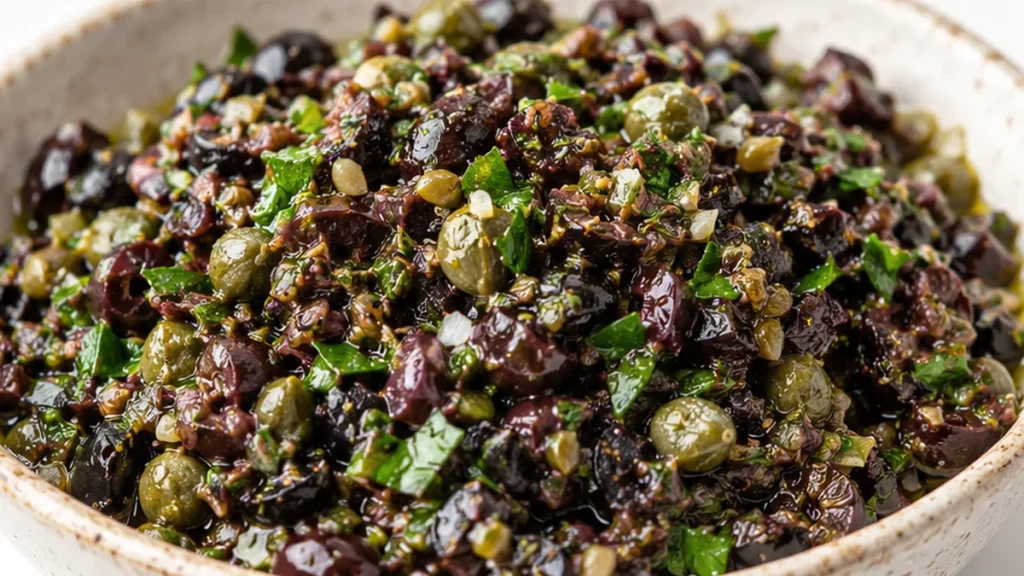
This 5 minute olive tapenade is a quick and easy recipe. Made with olives, garlic, and fresh herbs, it’s perfect for spreading on bread or crackers.
Key takeaways
- Quality ingredients are crucial for a flavorful tapenade.
- Avoid overly salty olives by rinsing them before use.
- Pulse the mixture to maintain a chunky texture.
- Let the tapenade sit at room temperature before serving for optimal flavor.
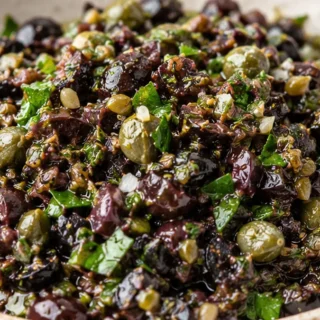
5-Minute Olive Tapenade
Ingredients
Instructions
- Combine olive oil, black olives, lemon juice, apple cider vinegar, garlic, capers, fresh parsley, dried thyme, and sea salt in a high-speed blender or food processor.
- Blend on low or pulse setting for 10-15 seconds until combined into a chunky paste.
- Add more olive oil if a thinner consistency is desired.
- Serve immediately for the freshest flavor, or store covered in the refrigerator for up to 2 days.
- If refrigerated, stir briskly before serving to combine ingredients again.
Understanding the Ingredients for 5-Minute Olive Tapenade
The foundation of a successful 5-minute olive tapenade lies in the quality of its ingredients. The primary component, olives, should ideally be pitted and can be green, black, or a mix of both. Green olives tend to have a firmer texture and a more robust flavor, while black olives offer a softer, milder taste. The choice of olives affects the overall flavor profile significantly. For instance, Kalamata olives can add a fruity depth, whereas Castelvetrano olives introduce a buttery sweetness. The balance of flavors is crucial, and a mix can provide a more complex taste.
Additionally, capers and garlic are vital for enhancing the umami notes of the tapenade. Capers, which are pickled flower buds, bring a tangy sharpness that cuts through the richness of the olives. Fresh garlic, when used judiciously, adds a pungent kick that elevates the dish. Olive oil is not just a binder; it also enriches the tapenade, making it smoother and more palatable. The quality of olive oil can elevate the entire dish, so a high-quality extra virgin olive oil is recommended.
Common Mistakes and How to Avoid Them
Even a simple recipe like 5-minute olive tapenade can have its pitfalls. One common mistake is using overly salty olives or capers, which can overwhelm the dish. To mitigate this, rinse the olives and capers under cold water before use to remove excess salt. Another issue is blending too long, which can turn the tapenade into a paste rather than maintaining a desirable chunky texture. Pulse the ingredients in short bursts to achieve the right consistency.
Another frequent error is not tasting the tapenade before serving. The flavors can vary significantly based on the specific olives and capers used, so adjusting with more olive oil, lemon juice, or seasoning can be necessary. Lastly, serving the tapenade too cold can dull its flavors. Allow it to sit at room temperature for about 15 minutes before serving to enhance the taste.
Ingredient Swaps and Their Effects
While the classic recipe for olive tapenade is beloved, several ingredient swaps can cater to personal tastes or dietary restrictions. For example, if you prefer a milder flavor, substituting half of the olives with roasted red peppers can add sweetness and a different texture. Alternatively, for a spicier kick, adding a small amount of crushed red pepper flakes can create a zesty twist.
Using sun-dried tomatoes instead of some olives can provide a sweet and tangy contrast, giving the tapenade a unique flavor profile. However, this swap will change the color and texture, making it less traditional. For a nutty flavor, incorporating a handful of toasted pine nuts can add richness and depth, but it will also increase the calorie count.
The Unique Aspect of Olive Tapenade
What sets olive tapenade apart from other spreads is its versatility and the fact that it can be prepared in mere minutes without cooking. This dish is not only a flavorful appetizer but also a great addition to sandwiches, pasta, or as a topping for grilled meats. Its ability to blend different flavor profiles—salty, tangy, and umami—makes it a unique condiment that can enhance a wide variety of dishes. Additionally, it is naturally vegetarian and can be made vegan by ensuring that no animal-derived ingredients are used, making it accessible for various dietary preferences.
How to Make Olive Tapenade Ahead of Time and Store It Properly
Olive tapenade is an excellent make-ahead dish, as its flavors deepen over time. To prepare it in advance, simply blend the ingredients as per the recipe and store the tapenade in an airtight container. Refrigerate it for up to a week. For longer storage, consider freezing it in small portions. When properly sealed, tapenade can last up to three months in the freezer. Be sure to thaw it in the refrigerator before serving, and give it a good stir to recombine any separated oils.
Scaling the Recipe for Larger Gatherings
Scaling your olive tapenade recipe is straightforward. The key is to maintain the same ratios of ingredients to ensure consistent flavor. For example, if you want to double the recipe, simply double each ingredient. Additionally, using a food processor with a larger capacity will help blend the ingredients evenly. When scaling, keep in mind that larger batches may require a bit more time to blend thoroughly. Taste as you go to adjust seasoning, as larger quantities may need slight modifications in salt or acidity.
Choosing the Right Equipment for Optimal Texture
The texture of your olive tapenade can vary significantly based on the equipment used. A food processor typically yields a smoother consistency, while a mortar and pestle will create a chunkier texture, offering more bite. If you prefer a rustic tapenade, opt for the mortar and pestle; however, for a creamier result, a food processor is best. Ensure your equipment is clean and dry to avoid any unwanted flavors in the tapenade, and process in short bursts to achieve your desired consistency without over-pureeing.
Seasonal Ingredients and Their Impact on Flavor
Olive tapenade can vary in flavor depending on the quality and type of olives used, which can change with the seasons. For instance, fresh, high-quality olives are often available in late summer and early fall, providing a more vibrant taste. In contrast, jarred or canned olives might be more accessible during winter months but can lack the same freshness. When making tapenade, consider sourcing seasonal ingredients from local markets to enhance the flavor profile. Additionally, fresh herbs like basil or parsley can elevate the dish, especially in spring and summer.
Understanding the Impact of Olive Quality on Tapenade Flavor
The quality of olives used in your tapenade significantly influences the final flavor profile. For optimal results, choose high-quality olives, whether they are Kalamata, Castelvetrano, or green olives. Each type brings its unique taste and texture, impacting the overall dish. Kalamata olives offer a robust, fruity flavor, while Castelvetrano olives are known for their sweetness and buttery texture. The saltiness of the olives also plays a crucial role; brined olives can add a distinct tang, while oil-cured olives provide a richer taste. Aim for a balance between the olives and other ingredients, like capers and anchovies, to create a harmonious blend. For instance, if using particularly salty olives, consider reducing the amount of salt added to the tapenade. Additionally, the ripeness of the olives at the time of harvest can affect their taste. Therefore, sourcing seasonal olives from local producers can enhance freshness and flavor.
Choosing the Right Accompaniments for Olive Tapenade
Pairing olive tapenade with the right accompaniments can elevate its flavor and texture. Traditionally, tapenade is served with crusty bread or crackers, which provide a satisfying contrast to the spread’s smoothness. However, consider experimenting with different bases like pita chips, vegetable sticks, or even as a topping for grilled meats and fish. When serving, drizzle a bit of high-quality olive oil over the tapenade to enhance its richness and add a glossy finish. Fresh herbs, such as parsley or basil, can also brighten the dish and add a pop of color. For a more substantial offering, pair the tapenade with cheeses like feta or goat cheese, which complement the saltiness of the olives. Additionally, consider serving it alongside a selection of pickled vegetables, which can provide a refreshing crunch and balance the tapenade’s richness. The key is to create a variety of textures and flavors that harmonize with the tapenade.
Understanding the Impact of Freshness on Flavor
The flavor profile of olive tapenade is significantly influenced by the freshness of its ingredients, particularly the olives and herbs used. Fresh olives, preferably from a recent harvest, will impart a vibrant taste that dried or overly processed olives cannot replicate. For example, the oil content in fresh olives can range from 15% to 25%, while older olives may have reduced oil levels, affecting the overall mouthfeel and richness of the tapenade. Fresh herbs, like parsley or basil, also contribute bright notes that can fade in older herbs. When preparing your tapenade, consider sourcing your olives from local markets or specialty stores where turnover is high, ensuring freshness. Additionally, the quality of olive oil used can enhance or detract from the final product; a high-quality extra virgin olive oil will provide a robust flavor that complements the tapenade, whereas lower-quality oils might introduce off-flavors. Aim for an olive oil with a fruity or peppery note, which can elevate the overall dish.
How to Adjust Texture for Different Serving Styles
The texture of olive tapenade can vary greatly depending on the intended use and serving style. For a spreadable consistency, blend the ingredients until smooth, but for a chunkier tapenade, pulse the mixture until it reaches your desired coarseness. If you’re planning to serve it as a dip, a smoother texture may be more appealing, while a chunkier version can work well as a condiment alongside grilled meats or vegetables. The moisture content of your olives can also affect the texture; if the tapenade is too dry, adding a bit of olive oil or lemon juice can help achieve the right consistency. Conversely, if it becomes too runny, incorporating more solid ingredients like capers or nuts can thicken it up. Remember that the texture can also influence how well it pairs with different accompaniments. For example, a smoother tapenade works beautifully on crackers, while a chunkier version can be served with pita bread or as a topping for bruschetta.
Pro tips
Pro tip: Best served immediately while hot!
Frequently asked questions
Can I use any type of olives for tapenade?
Yes, you can use various types of olives, such as green, black, or a mix. Each type will impart a different flavor profile, so choose based on your preference.
How can I adjust the saltiness of my tapenade?
If your tapenade is too salty, try rinsing the olives and capers before use. You can also balance it with additional olive oil or lemon juice.
What is the best way to store leftover tapenade?
Store leftover tapenade in an airtight container in the refrigerator. It can last for about a week. Drizzle a little olive oil on top to help preserve it.
Can I make tapenade ahead of time?
Yes, tapenade can be made ahead of time. In fact, letting it sit for a few hours or overnight can enhance the flavors as they meld together.
More from Vegan Breakfast →