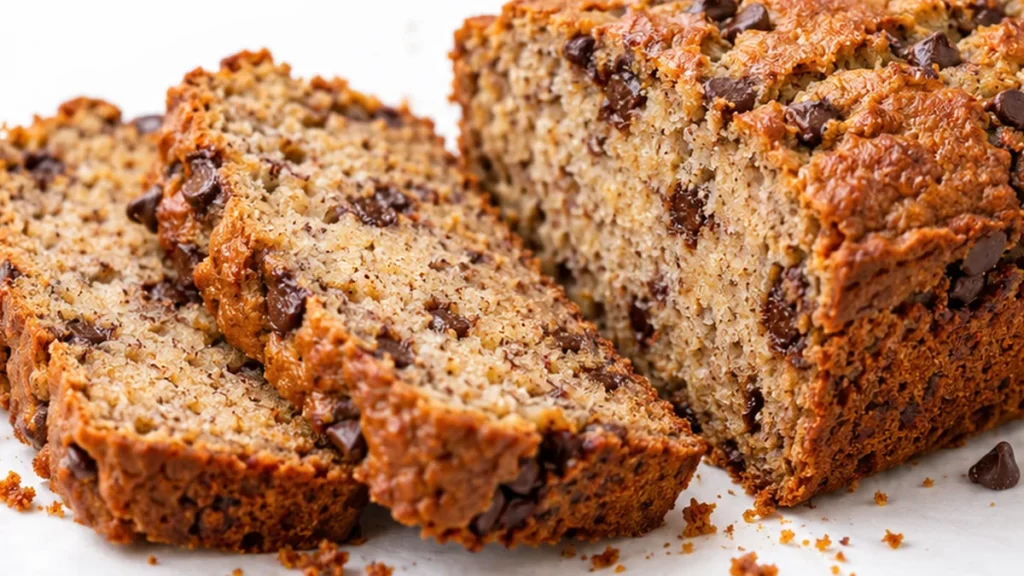
This is the best vegan banana bread recipe with flaxseed meal. It combines ripe bananas and flaxseed for a nutritious twist. Perfect for breakfast or snacks.
Key takeaways
- Flaxseed meal acts as an effective binding agent in vegan baking.
- Proper mixing and ingredient ratios are crucial for the right texture.
- Ingredient substitutions can enhance flavor and texture without compromising the recipe.
- This vegan banana bread is distinguished by its moistness and rich flavor from ripe bananas.
Best Vegan Banana Bread Recipe
Ingredients
Instructions
- Preheat your oven to 350°F (175°C) and line a loaf pan with parchment paper.
- In a small bowl, whisk the flaxseed meal with the water and let it sit for 5-10 minutes to form a gel.
- In a large bowl, combine the almond flour, oat flour, baking powder, baking soda, and Kosher salt. Whisk to combine.
- In a separate bowl, whisk together the mashed bananas, the prepared flax egg, and melted coconut oil until well combined.
- Pour the wet ingredients into the dry ingredients and stir gently until just combined. Fold in the vegan chocolate chips.
- Transfer the batter to the prepared loaf pan and bake for 50-60 minutes, or until a toothpick inserted into the center comes out clean.
Understanding the Role of Flaxseed Meal in Vegan Baking
Flaxseed meal serves as an excellent egg substitute in vegan baking due to its high content of omega-3 fatty acids and soluble fiber. When mixed with water, it forms a gel-like consistency that mimics the binding properties of eggs. The recommended ratio is typically 1 tablespoon of flaxseed meal to 2.5 tablespoons of water, allowing it to rest for about 10-15 minutes before use. This not only helps in binding the ingredients but also adds nutritional value to the banana bread.
Common Issues with Vegan Banana Bread and Their Solutions
One common issue when baking vegan banana bread is the texture turning out too dense or gummy. This can occur if too much liquid is added or if the mixing is overdone. To fix this, ensure that the bananas are well-mashed but not over-mixed with the other ingredients. Another frequent problem is uneven baking, which can be resolved by ensuring the oven is preheated to the correct temperature (around 175°C or 350°F) and by using a middle rack for even heat distribution.
Ingredient Substitutions for Enhanced Flavor and Texture
While the best vegan banana bread recipe with flaxseed meal is quite versatile, there are several substitutions that can enhance its flavor and texture. For instance, using almond milk instead of regular plant milk can impart a nuttier taste, while adding chopped walnuts or pecans can provide a delightful crunch. Alternatively, substituting coconut sugar for regular sugar can add a caramel-like flavor, though it may alter the sweetness level slightly. Each substitution brings its own unique characteristics to the bread.
The Unique Characteristics of Vegan Banana Bread
This vegan banana bread stands out due to its moist texture and rich flavor profile, primarily attributed to the ripe bananas. Unlike traditional banana bread, which may utilize eggs and dairy, this version relies solely on plant-based ingredients, making it suitable for various dietary preferences. The addition of flaxseed meal not only enhances the nutritional profile but also contributes to a slightly nutty flavor, distinguishing it from conventional recipes.
How to Properly Store Vegan Banana Bread for Maximum Freshness
Storing vegan banana bread correctly is essential for maintaining its flavor and texture. To keep your banana bread fresh, place it in an airtight container at room temperature for up to three days. If you want to extend its shelf life, consider refrigerating it, which can keep it good for up to a week. For longer storage, freezing is an excellent option. Wrap individual slices or the entire loaf tightly in plastic wrap and then place it in a freezer-safe bag. Properly stored, vegan banana bread can last for up to three months in the freezer. When ready to eat, thaw it at room temperature or warm it in the oven for a few minutes to regain its soft texture.
Adjusting the Recipe for Different Batch Sizes
Scaling the recipe for vegan banana bread is straightforward, whether you want to make a single loaf or multiple batches. The key is to maintain the same ratios of ingredients. For example, if you want to double the recipe, simply double all the ingredients, including the flaxseed meal, which is crucial for binding. If you’re making a smaller batch, consider using a smaller loaf pan and adjusting the baking time accordingly, as smaller loaves may bake faster. Always check for doneness by inserting a toothpick into the center; it should come out clean when the bread is ready. This flexibility allows you to customize your baking to suit any occasion.
Choosing the Right Equipment for Baking Success
The equipment you use can significantly affect the outcome of your vegan banana bread. A quality loaf pan is essential; opt for a non-stick or silicone pan for easy release. If using a metal pan, greasing it well is critical. An oven thermometer can help ensure that your oven is at the correct temperature, as many home ovens can be off by several degrees. Mixing bowls should be large enough to accommodate the batter without spilling, and a whisk or electric mixer can help achieve a smooth consistency. Additionally, using a scale for measuring ingredients, especially flour and flaxseed meal, ensures accuracy, leading to better results.
Pairing Suggestions to Enhance Your Vegan Banana Bread Experience
Vegan banana bread is incredibly versatile and can be paired with various accompaniments to elevate its flavor. For a breakfast treat, consider serving it with a smear of almond butter or peanut butter for added protein and richness. A drizzle of maple syrup or agave nectar can enhance the natural sweetness of the bread. For a dessert option, serve slices with a scoop of dairy-free vanilla ice cream or a dollop of coconut whipped cream. Additionally, fresh fruits like strawberries or blueberries complement the banana flavor beautifully. These pairings not only enhance the taste but also add nutritional benefits, making your vegan banana bread experience even more enjoyable.
Understanding the Impact of Ingredient Quality on Vegan Banana Bread
The quality of ingredients significantly influences the final outcome of vegan banana bread. Overripe bananas are essential, as they provide natural sweetness and moisture. Aim for bananas with a deep yellow color and brown spots, which indicate optimal ripeness. Additionally, the type of flour used can affect texture; whole wheat flour offers a denser loaf while all-purpose flour yields a lighter texture. Always check the freshness of baking powder and baking soda, as stale leavening agents can lead to inadequate rising. When using flaxseed meal as an egg replacement, ensure it is ground fresh to maximize its binding properties. This attention to ingredient quality can make a noticeable difference in both flavor and texture.
Adjusting Baking Techniques for Optimal Results
Different ovens can produce varied results, so understanding your baking environment is crucial. For instance, if your oven runs hot, consider reducing the temperature by 10-20°C (20-35°F) to prevent the exterior from browning too quickly while the interior remains undercooked. It’s also beneficial to rotate the loaf halfway through baking for even cooking. If using a dark baking pan, reduce the temperature by about 10°C (20°F) to avoid over-browning. Additionally, using a toothpick to check doneness is key; it should come out clean or with a few moist crumbs, not wet batter. These small adjustments can ensure your vegan banana bread bakes perfectly every time.
Scaling Vegan Banana Bread for Different Occasions
Scaling your vegan banana bread recipe can be straightforward, but it requires careful attention to ingredient ratios and baking times. Doubling or halving the recipe is usually feasible, but be mindful of the baking time; larger loaves may need additional time, while smaller ones may bake faster. When scaling up, consider using multiple pans to maintain consistent baking temperatures. If preparing for a gathering, consider making mini loaves or muffins; these bake faster and are easier to serve. Additionally, think about flavor variations when scaling; adding nuts, chocolate chips, or spices can enhance the overall experience without complicating the process. Properly adjusting your approach can ensure that every batch, regardless of size, turns out delicious.
Understanding the Impact of Overripe Bananas on Flavor and Texture
Using overripe bananas is crucial for achieving the best vegan banana bread. The natural sugars in overripe bananas caramelize during baking, enhancing the overall sweetness and flavor profile. Ideally, bananas should be at least 80% brown for optimal results. This not only contributes to a richer taste but also affects the moisture content, resulting in a tender crumb. When using bananas that are not fully ripe, the bread may turn out less sweet and drier. Aim for a ratio of one large overripe banana per 100 grams of flour to maintain the right balance of moisture and flavor. Additionally, the texture of the banana bread is heavily influenced by how well the bananas are mashed. A smooth puree will incorporate more air, leading to a lighter loaf, while chunky pieces may create a denser texture.
Choosing the Right Baking Pan for Even Cooking
The choice of baking pan significantly impacts the cooking time and texture of your vegan banana bread. Darker pans tend to absorb more heat, resulting in a quicker bake but can lead to over-browning. Ideally, use a light-colored, non-stick loaf pan for even cooking and a golden crust. The standard size for banana bread is typically 23 cm x 13 cm (9 in x 5 in). If you use a smaller pan, the bread may take longer to bake, while a larger pan can lead to a quicker bake and a drier loaf. Always check for doneness by inserting a toothpick into the center; it should come out clean or with a few moist crumbs. Adjusting the baking time based on your pan choice will ensure that you achieve the perfect texture and flavor.
Pro tips
Pro tip: Best served immediately while hot!
Frequently asked questions
Can I use other types of flour for this banana bread?
Yes, you can substitute all-purpose flour with whole wheat flour or gluten-free flour blends. However, adjustments in liquid may be necessary as different flours absorb moisture differently.
How do I know when the banana bread is done baking?
The banana bread is done when a toothpick inserted into the center comes out clean or with a few moist crumbs. Typically, it takes about 50-60 minutes at 175°C (350°F).
Can I add chocolate chips to the banana bread?
Absolutely! Adding vegan chocolate chips can enhance the flavor. Just fold them into the batter before pouring it into the pan for baking.
How should I store leftover banana bread?
Store leftover banana bread in an airtight container at room temperature for up to three days. For longer storage, wrap it tightly and freeze for up to three months.
More from Vegan Breakfast →