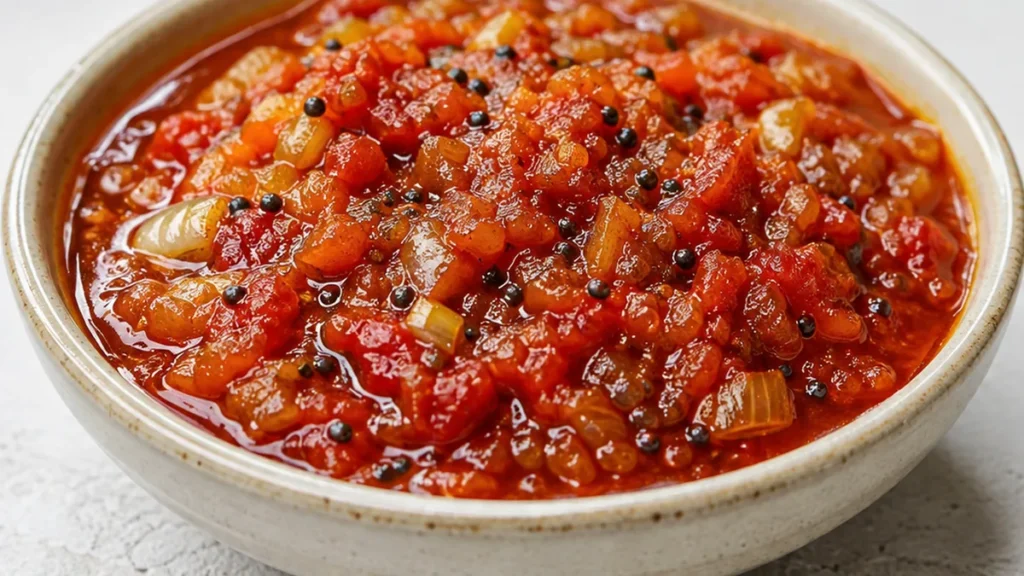
Tomato chutney is all about achieving the right balance of sweet, tangy, and spicy flavors, allowing the ripe tomatoes to shine through a blend of aromatic spices. This tomato chutney recipe, passed down through generations, brings that perfect balance to your table with minimal effort. Crafted for simplicity without compromising on authentic taste, this recipe is perfect for home cooks looking to recreate classic Indian flavors. It transforms humble ingredients into a bright condiment that enhances a variety of dishes.
Key takeaways
- Use ripe tomatoes for the best flavor.
- Balance spices carefully to avoid overpowering the chutney.
- Cook tomatoes just until softened to maintain texture.
- Jaggery adds depth and balances acidity effectively.
Mom’s Secret Tomato Chutney Recipe
Ingredients
- 1 tablespoon oil
- 1 teaspoon mustard seeds
- ⅛ teaspoon hing (asafoetida)
- 4 garlic cloves (1 tablespoon, finely diced)
- 1 large yellow onion (finely diced)
- 2 teaspoons kosher salt
- ¼ teaspoon ground turmeric
- 1 to 2 teaspoons kashmiri red chili powder
- 4 to 5 ripe tomatoes (about 1.5 lbs, diced)
- 1 to 2 tablespoons jaggery
Instructions
- Heat oil in a pan over medium heat until shimmering. Add mustard seeds and cook until they start to pop (about 30 seconds).
- Once mustard seeds pop, add hing and turmeric. Stir in garlic and fry for about 30 seconds until just aromatic, ensuring it does not brown.
- Add onions and salt. Mix well, cover, and cook for 7–8 minutes on medium heat until onions are translucent.
- Add diced tomatoes, Kashmiri chili powder, and jaggery. Mix well. Cover and cook for 10 minutes until the tomatoes break down and soften.
- Remove the lid and cook on high heat for 2 minutes, stirring frequently, to thicken the chutney to your desired consistency. Turn off the heat.
- Sprinkle with freshly chopped cilantro and serve warm with your favorite dishes.
Video
Notes
Understanding the Role of Spices in Tomato Chutney
Spices are crucial in tomato chutney, providing depth and complexity. Mustard seeds, when tempered in oil, release their essential oils, enhancing flavor. Hing (asafoetida) adds a unique umami note, while garlic and onion contribute aromatic sweetness. The right balance of Kashmiri red chili powder introduces color and mild heat without overwhelming the dish.
Why Overcooking Tomatoes Can Ruin Your Chutney
Tomatoes should be cooked just until they break down, typically around 10-15 minutes over medium heat. Overcooking can lead to a loss of freshness and a mushy texture. Aim for a simmer, allowing tomatoes to soften while retaining some structure for a vibrant chutney.
How Jaggery Enhances Flavor and Balances Acidity
Jaggery, a traditional unrefined sugar, adds a rich sweetness that balances the acidity of tomatoes. Use 1 to 2 tablespoons depending on your preference. This ingredient not only sweetens but also contributes a complex flavor profile, differentiating your chutney from others that may use refined sugar.
Common Mistakes When Making Tomato Chutney
- Too Much Salt: Over-salting can mask the natural sweetness of tomatoes. Start with 2 teaspoons and adjust as needed.
- Inadequate Cooking Time: Not cooking the mixture long enough can result in a raw taste. Ensure a minimum of 10 minutes of simmering.
- Incorrect Spice Measurements: Using too much chili powder can overpower the chutney. Stick to 1-2 teaspoons for a balanced heat.
- Skipping the Oil: Oil helps in flavor absorption and enhances the chutney’s overall mouthfeel. Never skip it.
Choosing the Right Tomatoes for Optimal Flavor
Ripe tomatoes are essential for a flavorful chutney. Look for tomatoes that are deep red, firm yet slightly yielding to pressure. Varieties like Roma or vine-ripened tomatoes have a good balance of sweetness and acidity, making them ideal for this recipe. Avoid tomatoes that are overly soft or have blemishes, as they may lead to a watery chutney.
How to Properly Store Tomato Chutney for Maximum Freshness
To maintain the freshness and flavor of your tomato chutney, proper storage is crucial. After cooking, allow the chutney to cool completely before transferring it to an airtight container. Refrigerate it for up to two weeks. For longer storage, consider freezing the chutney. Use freezer-safe containers and leave some space for expansion as the chutney freezes. It can last up to six months in the freezer. When ready to use, thaw in the refrigerator overnight and reheat gently on the stove.
Adapting Tomato Chutney Recipes for Larger Gatherings
Scaling your tomato chutney recipe for larger gatherings is straightforward but requires some adjustments. When increasing the batch size, maintain the same ratios of ingredients. For instance, if you double the recipe, use two tablespoons of oil and four garlic cloves. However, be cautious with cooking times; larger batches may require a longer cooking time to achieve the desired consistency. Taste periodically to ensure that flavors remain balanced, especially with spices like chili powder and jaggery.
Choosing the Right Equipment for Cooking Tomato Chutney
The equipment used can significantly affect the outcome of your tomato chutney. A heavy-bottomed pan is ideal, as it distributes heat evenly and prevents burning. Non-stick pans can also be beneficial for easy stirring and cleaning. If using a food processor to chop ingredients, ensure they are diced uniformly to promote even cooking. Additionally, consider using a splatter guard while cooking, as chutney can bubble and splatter, making cleanup easier.
How Seasonal Ingredients Affect Your Tomato Chutney
Seasonal variations in ingredient quality can influence the taste and texture of your tomato chutney. Fresh, ripe tomatoes in peak season will yield a sweeter, more flavorful chutney, whereas out-of-season tomatoes can be bland and watery. Similarly, the freshness of spices impacts flavor; always opt for whole spices that you can grind just before use. Adjusting the amount of jaggery based on the sweetness of your tomatoes can also enhance the final product. In winter, consider adding warming spices like cinnamon or nutmeg for a seasonal twist.
How to Scale Your Tomato Chutney Recipe Without Compromising Flavor
Scaling your tomato chutney recipe requires careful attention to ingredient ratios and cooking times. When doubling or tripling the recipe, maintain the same proportions of spices and tomatoes to ensure balanced flavors. However, cooking times may need adjustment; larger batches often require longer simmering to achieve the right consistency. For instance, a double batch may need an additional 10-15 minutes of simmering. Always taste and adjust seasoning as necessary, especially salt and jaggery, as larger volumes can dilute these flavors.
Understanding the Impact of Cooking Equipment on Flavor and Texture
The type of cookware you use can significantly affect the outcome of your tomato chutney. A heavy-bottomed pot or cast-iron skillet distributes heat evenly, preventing scorching and ensuring a rich, caramelized flavor. Conversely, thin pans may lead to uneven cooking. If using a non-stick pan, be cautious with high heat, as it can alter the spices’ flavors. Additionally, consider using an immersion blender for a smoother texture, but be mindful not to over-blend, which can make the chutney too watery.
Pairing Tomato Chutney with Complementary Dishes
Tomato chutney is incredibly versatile and pairs well with a variety of dishes. It can enhance grilled meats, serve as a dip for crispy snacks, or accompany rice and lentils. For a balanced meal, serve it alongside rich curries, as its acidity cuts through the richness. Additionally, consider pairing it with cheese platters or as a condiment for sandwiches. The sweet and spicy notes of the chutney can elevate simple dishes, making it a perfect accompaniment for any meal.
How Seasonal Changes Affect Your Tomato Chutney’s Flavor Profile
The quality of your tomatoes directly impacts the flavor of your chutney. In summer, opt for vine-ripened tomatoes, which offer a sweeter, more robust flavor. In contrast, winter tomatoes may lack sweetness and require additional jaggery or spices to enhance their flavor. Additionally, the availability of fresh herbs and spices can vary seasonally, affecting the overall taste. Always taste your ingredients before cooking, and adjust the recipe according to the produce’s quality to achieve the best results.
How to Scale Tomato Chutney Without Losing Flavor
Scaling the recipe for tomato chutney requires careful attention to ingredient ratios and cooking times. For every additional pound of tomatoes, increase the spices proportionally to maintain flavor balance. For example, if you double the tomatoes, use 2 tablespoons of jaggery and 2 teaspoons of salt. However, be cautious with cooking time; larger batches may take longer to reduce, so monitor the chutney closely to avoid overcooking. A good rule of thumb is to add 5-10 minutes to the simmering time for every additional pound of tomatoes. This ensures the chutney thickens properly while maintaining the right texture and flavor.
The Importance of Cooking Temperature in Tomato Chutney
Cooking temperature is crucial for achieving the right consistency in tomato chutney. Start by heating the oil over medium heat before adding mustard seeds; this allows them to pop and release their flavor. Once the seeds begin to crackle, reduce the heat to medium-low before adding the onions and garlic. This temperature control prevents burning and ensures the onions caramelize without becoming bitter. Ideally, maintain a simmering temperature of around 90-100°C (194-212°F) while cooking the tomatoes, which helps to meld the flavors without losing the fresh taste of the tomatoes. If the chutney starts to stick to the pan, reduce the heat further and add a splash of water to deglaze.
Understanding the Make-Ahead Benefits of Tomato Chutney
Tomato chutney is an excellent make-ahead condiment that can enhance its flavors over time. When prepared in advance, the spices have more time to meld with the tomatoes, creating a deeper, more complex taste. After cooking, allow the chutney to cool to room temperature before transferring it to an airtight container. Refrigerate it for up to two weeks. The chutney can also be frozen for up to three months. To thaw, simply place it in the refrigerator overnight or reheat it gently on the stovetop. Be aware that freezing may slightly alter the texture, making it a bit less chunky, but the flavor remains intact.
How Cooking Equipment Affects Tomato Chutney Consistency
The type of cooking equipment you use can significantly influence the texture and flavor of your tomato chutney. A heavy-bottomed pot is ideal as it distributes heat evenly, preventing the chutney from burning. Non-stick pans can also be useful, particularly for reducing the risk of sticking, but they may not provide the same depth of flavor as stainless steel or cast iron. If using a blender for a smoother consistency, ensure that you blend in batches to avoid overflow. Additionally, consider the heat source; gas stoves offer immediate temperature control, while electric stoves may require more time to adjust heat levels. This can affect cooking times, so monitor the chutney closely to avoid overcooking.
Pro tips
- For the best flavor, use very ripe, sweet tomatoes. Overripe tomatoes will break down more easily and contribute to a richer taste.
- When adding mustard seeds, ensure the oil is hot enough for them to pop quickly. This indicates the oil is ready for the next spices.
- To achieve the right consistency, don’t rush the simmering process. Let the tomatoes truly break down and the chutney thicken naturally.
This versatile tomato chutney is more than just a condiment; it’s a celebration of simple ingredients transformed into something extraordinary. Enjoy it with dosas, parathas, rice, or even as a spread on toast. Try this recipe and make it a staple in your kitchen!
Frequently asked questions
Can I use canned tomatoes for this chutney?
While fresh tomatoes are preferred for their flavor, you can use canned tomatoes if necessary. Choose whole or diced tomatoes without added salt or sugar for the best results. Adjust cooking time since canned tomatoes are already soft.
What can I serve with tomato chutney?
Tomato chutney pairs well with various dishes, including grilled meats, curries, and rice. It also makes a great condiment for sandwiches and wraps, adding a zesty kick to your meals.
How long can I store tomato chutney?
Homemade tomato chutney can be stored in an airtight container in the refrigerator for up to two weeks. For longer storage, consider canning it or freezing in small portions for up to three months.
Can I adjust the heat level of the chutney?
Yes, you can adjust the heat level by varying the amount of Kashmiri red chili powder. Start with 1 teaspoon for mild heat and increase to 2 teaspoons for more spice. Remember to taste as you go to achieve your desired level of heat.
More from Vegan Air Fryer →