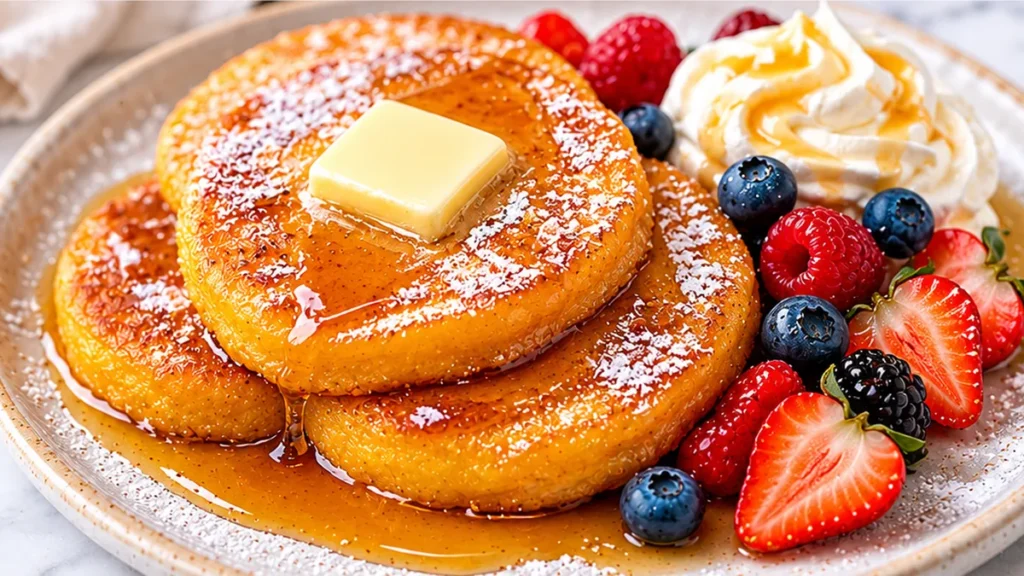
Discover the delightful world of polenta pancakes, a unique twist on a breakfast classic. These aren’t your average flapjacks; they offer a satisfyingly crisp exterior with a tender, flavorful inside, enhanced by the rich taste of butter and sweet maple syrup. Our polenta pancake recipe is designed for simplicity and maximum flavor, perfect for a quick yet impressive breakfast. You’ll love how the simple ingredients transform into a visually stunning and delicious meal, especially when adorned with fresh summer berries.
Key takeaways
- The key is pan-frying pre-cooked polenta slices in butter for a crisp exterior and tender interior.
- Ensure medium heat for even browning and avoid overcrowding the pan.
- Polenta offers a unique texture and nutty flavor compared to traditional pancakes.
- Serve immediately with your favorite toppings for the best experience.
Golden Polenta Pancakes: Melted Butter Dream!
Ingredients
- 1 ounce tube plain polenta
- 2 tablespoons salted butter (plus more for serving)
- Powdered sugar (for serving)
- Pure maple syrup (for serving)
- Fresh summer fruits (for serving)
- Whipped cream (for serving (optional))
Instructions
- Slice your polenta into 1/4 inch to 1/2 inch thick rounds.
- Heat a skillet over medium heat. Once hot, add a pat of butter.
- Add half the polenta rounds (or however many fit in one layer). Cook for 2 minutes per side, or until lightly golden and crisp on the edges.
- Remove from the pan and place on a plate. Repeat with the remaining polenta.
- To serve, divide the hot polenta pancakes among plates. Add fresh fruit to each plate.
- Sprinkle the pancakes with powdered sugar and a generous amount of maple syrup. Add a pat (or two) of softened butter and watch it melt all over. Eat immediately!
Notes
The technique that makes it
What makes these polenta pancakes work is the texture and flavor imparted by the polenta. Unlike traditional flour-based pancakes, polenta, which is essentially coarse-ground cornmeal, offers a subtle nutty flavor and a delightful, slightly gritty texture that becomes tender when cooked. The key is to properly prepare the pre-cooked polenta tube. Simply slicing it into rounds is the first step. Then, the crucial part is pan-frying these rounds in butter. The butter not only prevents sticking but also caramelizes the exterior of the polenta, creating a beautiful golden-brown crust. This crust provides a textural contrast to the soft, warm interior. The heat from the pan gently cooks the polenta through, ensuring it’s not just heated but also develops a pleasant chewiness. Overcrowding the pan should be avoided, as this can lower the pan temperature and lead to steaming rather than crisping, resulting in a less appealing texture.
Troubleshooting
- Polenta is too tough or dry: Ensure you are cooking the polenta rounds long enough on each side to heat through. If it remains dry, a slightly longer cooking time or a touch more butter can help.
- Pancakes are sticking to the pan: Make sure the pan is adequately heated before adding the polenta rounds and that there is sufficient butter. Non-stick pans are recommended.
- Uneven browning: This often occurs if the pan temperature is too high or too low. Maintain a medium heat to allow for even caramelization without burning.
- Texture is mushy: This can happen if the polenta is overcooked or if the pan is overcrowded, leading to steaming. Cook until a golden crust forms and the center is tender, not pasty.
Substitutions
- Polenta: While the recipe specifies plain polenta, you could experiment with a pre-cooked sweet polenta for a different flavor profile. The texture should remain similar.
- Butter: Ghee can be used as a substitute for salted butter, offering a similar nutty flavor and high smoke point, which is beneficial for crisping. Unsalted butter can be used if you adjust the saltiness of your serving accompaniments.
- Serving Fruits: While summer fruits are suggested, any fresh berries (strawberries, blueberries, raspberries) or even sliced stone fruits like peaches or nectarines would be delicious.
- Powdered Sugar: A light dusting of granulated sugar or a drizzle of honey could be used, though powdered sugar provides a classic, delicate finish.
Pro tips
- Use a good quality, salted butter for the best flavor.
- Don’t overcrowd the pan when cooking the polenta slices to ensure crispiness.
- Serve immediately after adding the butter to enjoy the glorious melt.
Enjoy these unique polenta pancakes as a quick and delicious breakfast or brunch option. Experiment with different fruit toppings for endless variations!
More from Vegan Breakfast →
Frequently asked questions
Can I make polenta pancake batter ahead of time?
Yes, you can prepare the polenta pancake batter up to 24 hours in advance. Store it in an airtight container in the refrigerator. You may need to stir in a splash of plant-based milk to loosen it up before cooking, as it can thicken when chilled. This makes weekend brunch a breeze!
What can I substitute for butter in polenta pancakes?
For a vegan option, use your favorite plant-based butter or a neutral oil like melted coconut oil or vegetable oil. Ensure the plant-based butter is melted before incorporating it into the batter for the best texture and consistency. Any of these will provide a similar richness.
How do I know when polenta pancakes are done cooking?
Cook the pancakes for 2-3 minutes per side, or until golden brown and cooked through. You’ll see small bubbles forming on the surface of the batter when it’s ready to flip. The edges should also appear set. Avoid overcrowding the pan for even cooking.
How should I store leftover polenta pancakes?
Leftover polenta pancakes can be stored in an airtight container in the refrigerator for up to 3 days. Reheat them gently in a toaster, oven, or skillet until warmed through. They also freeze well; wrap them individually and reheat from frozen.