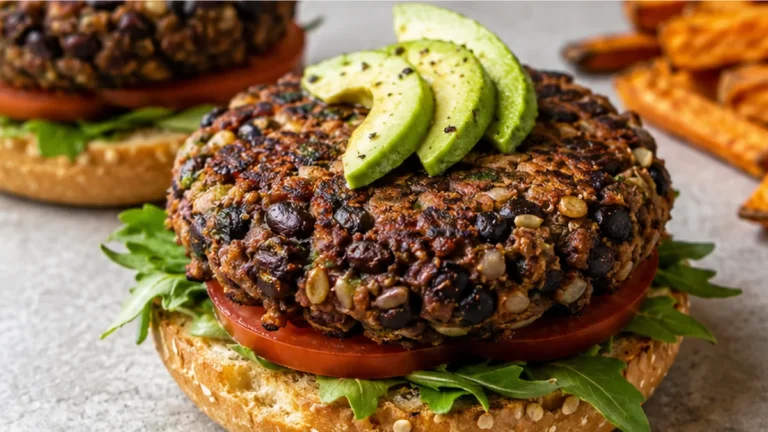
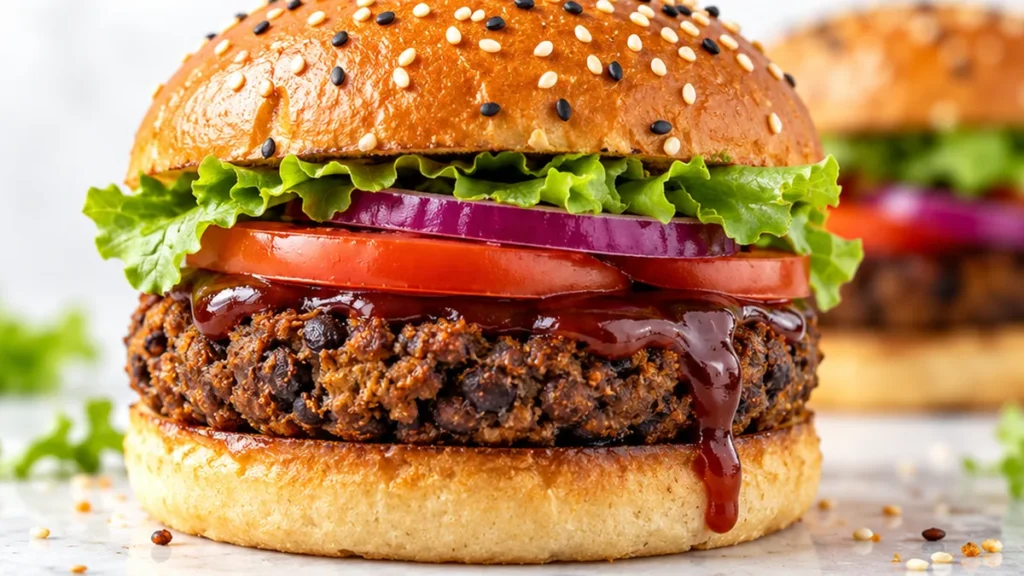
These mind blowing vegan burgers combine black beans and quinoa for a hearty meal. They’re easy to prepare and packed with nutrients, making them a great choice.
Key takeaways
- Use the right balance of wet and dry ingredients for optimal texture.
- Allow the burger mixture to rest before cooking to prevent crumbling.
- Experiment with ingredient swaps to customize flavors while maintaining structure.
- Utilize the Maillard reaction by cooking at the right temperature for enhanced flavor.
Mind-Blowing Vegan Burgers
Ingredients
- 15 ounces Black beans (one can, rinsed and drained)
- 1 tablespoon aged balsamic vinegar
- 2 tablespoons BBQ sauce
- 1/2 cup Panko breadcrumbs
- 2 tablespoons Ground flaxseed
- 1 teaspoon smoked paprika
- 1/2 teaspoon Garlic powder
- 1/2 teaspoon Sea salt (or to taste)
- 1/4 teaspoon ground pepper (or to taste)
- 1 tablespoon Olive oil (or more to cook the patties)
Instructions
- Place the beans into a food processor with vinegar, BBQ sauce, breadcrumbs, flaxseed, and seasonings. Pulse for about 1 minute until the mixture holds together.
- Divide the mixture into 2 equal portions and form them into patties.
- Heat oil in a skillet over medium heat.
- Carefully place the patties into the hot oil and sear each side until slightly brown and crispy, about 4 minutes per side.
- Heat another non-stick pan over medium heat. Add buns and toast until both sides are warmed through and lightly crispy.
- Spread BBQ sauce on the insides of the buns, add a bean patty, onion, tomato slices, and lettuce leaves.
Understanding the Perfect Texture for Mind-Blowing Vegan Burgers
The texture of a vegan burger is crucial to its success. Achieving a satisfying bite often hinges on the right balance of moisture and binding agents. A combination of ingredients like cooked beans, grains, and vegetables can create a hearty base. For instance, using 200 grams of cooked lentils can provide a firm texture, while incorporating 50 grams of oats helps bind the mixture. The key is to ensure that the mixture is neither too dry nor too wet, which can lead to crumbling or an overly mushy burger.
Common Mistakes When Making Vegan Burgers
One common pitfall is using too many wet ingredients without adequate binding agents. For instance, if you add 100 grams of grated zucchini without balancing it with enough oats or flour, you may end up with a soggy mixture. To fix this, you can reduce the zucchini or increase the amount of oats. Another issue is not allowing the patties to rest before cooking. A resting period of at least 30 minutes in the refrigerator helps the ingredients meld together and firm up, preventing them from falling apart on the grill.
Ingredient Swaps for Different Flavors
Experimenting with different ingredients can yield unique flavors and textures in your vegan burgers. For example, swapping black beans for chickpeas can change the flavor profile significantly. If you prefer a smokier taste, consider adding 15 grams of smoked paprika. Alternatively, if you’re looking for a spicier kick, incorporating 5 grams of cayenne pepper can enhance the flavor. Remember that each swap may require adjustments in seasoning and binding agents to maintain the burger’s integrity.
The Science of Flavor in Vegan Burgers
The Maillard reaction plays a significant role in developing the flavor of your vegan burgers. This reaction occurs when proteins and sugars in the ingredients are exposed to heat, creating complex flavors and a desirable crust. To maximize this effect, cook your burgers at a medium-high temperature of about 190°C (375°F) for 5-7 minutes on each side. Additionally, adding a tablespoon of soy sauce can enhance umami flavors, making the burger taste more savory and satisfying.
How to Prepare Mind-Blowing Vegan Burgers in Advance
Making vegan burgers ahead of time can streamline your meal prep and ensure that you always have a delicious option on hand. To do this effectively, shape the patties and place them on a parchment-lined baking sheet. Freeze them individually for about an hour, then transfer them to a resealable bag or airtight container. Properly stored, they can last up to three months in the freezer. When ready to cook, there’s no need to thaw; simply cook them straight from frozen, adding a few extra minutes to the cooking time.
Understanding the Impact of Ingredient Quality on Your Burgers
The quality of your ingredients can significantly affect the final taste and texture of your vegan burgers. Fresh vegetables, high-quality grains, and organic legumes can enhance the flavor profile. For instance, using freshly cooked chickpeas instead of canned can provide a firmer texture and richer taste. Pay attention to seasonal produce as well; tomatoes in summer are sweeter and juicier than those in winter, which can elevate your burger’s flavor. Similarly, herbs and spices should be fresh for the best aromatic experience.
Scaling Your Recipe: Adjusting Portions Without Compromising Flavor
Scaling your vegan burger recipe can be straightforward, but it requires careful adjustments to maintain flavor and texture. When doubling or halving the recipe, ensure that the ratios of wet to dry ingredients remain consistent. For example, if you typically use 200 grams of beans, use 400 grams when doubling. Additionally, be mindful of cooking times; larger batches may require longer cooking times to ensure even heating throughout. Using a larger pan or cooking in batches can help achieve a perfect sear.
Pairing Your Vegan Burgers: Sides and Sauces for Maximum Enjoyment
Complementing your mind-blowing vegan burgers with the right sides and sauces can elevate the entire meal. Consider serving them with homemade sweet potato fries or a fresh coleslaw to add crunch and balance. For sauces, a tangy vegan aioli or a spicy chipotle mayo can enhance the flavors of the burger. Additionally, toppings like avocado, pickled onions, or sautéed mushrooms can add depth and complexity. Experimenting with different combinations can lead to new favorite pairings that highlight the deliciousness of your burgers.
Understanding Texture Variations in Vegan Burgers
The texture of vegan burgers can vary significantly based on the choice of ingredients and preparation methods. For instance, using beans as a base can yield a softer patty, while incorporating grains like quinoa or brown rice adds a chewy texture. The balance of moisture is crucial: too much moisture can lead to a mushy burger, while too little can result in a dry one. Aim for a moisture content of about 50-60% in the mixture, adjusting with breadcrumbs or oats to achieve the desired consistency. Cooking methods also influence texture; grilling can create a crispy exterior due to the Maillard reaction, while baking may retain more moisture.
How Ingredient Quality Affects Flavor and Texture
The quality of your ingredients plays a pivotal role in the overall success of your vegan burgers. Fresh vegetables, high-quality spices, and organic legumes can enhance flavor significantly. For example, using freshly minced garlic instead of pre-packaged can elevate the taste profile. Additionally, the fat content in ingredients like avocados or nut butters can influence both flavor and mouthfeel. Aim for a fat content of around 15-20% in your mixture for optimal richness without compromising the patty’s integrity. Seasonal ingredients also tend to have better flavor, so consider using local produce when available.
Batch Scaling Without Compromising Quality
When scaling your vegan burger recipe, maintaining the right ratios of ingredients is essential to ensure consistent flavor and texture. A general rule of thumb is to keep the proportions of wet to dry ingredients approximately the same; for every 500 grams of base (like beans or lentils), use about 100-150 grams of binding agents (like oats or breadcrumbs). Keep in mind that cooking times may vary with larger batches; for instance, patties may require additional time to cook through evenly. Consider using a food processor for larger batches to ensure uniform mixing, but be cautious not to over-process, which can lead to a paste-like consistency.
Understanding the Best Equipment for Perfect Vegan Burgers
The right equipment can significantly influence the outcome of your mind-blowing vegan burgers. A high-quality food processor is essential for achieving the right texture, ensuring that ingredients are finely chopped and well-combined. For grilling, consider using a cast iron skillet or a grill pan to achieve a perfect sear, which enhances the Maillard reaction, contributing to the burger’s flavor. If you’re using a grill, preheat it to a high temperature (around 200°C or 400°F) to get those beautiful grill marks and to lock in moisture. Additionally, a reliable thermometer can help ensure your burgers are cooked to the ideal internal temperature, typically around 75°C (165°F) for safety, especially if using ingredients like beans or lentils that need thorough cooking.
How Seasonal Ingredients Impact Your Vegan Burgers
Using seasonal ingredients can elevate your mind-blowing vegan burgers, enhancing both flavor and nutritional value. For instance, summer tomatoes are juicier and sweeter, while fall squash varieties can add a creamy texture and natural sweetness. When opting for fresh herbs, their potency can vary by season; for example, basil in the summer is more aromatic than in winter. Additionally, the quality of legumes and grains can fluctuate based on their harvest time, affecting the final texture and flavor of your burgers. Always aim for fresh, local produce when possible, as it not only supports local farmers but also ensures the best taste in your dish.
Understanding the Role of Ingredients in Texture and Flavor Development
The texture and flavor of mind-blowing vegan burgers are significantly influenced by the choice and quality of ingredients. For instance, using high-quality legumes, such as organic chickpeas or lentils, can enhance the burger’s protein content and provide a creamy texture. The moisture content in vegetables like zucchini or mushrooms can also affect the overall consistency; too much moisture can lead to a soggy burger, while too little can result in a dry patty. Aim for a moisture-to-dry ratio of about 1:3 when mixing wet and dry ingredients. Additionally, incorporating ingredients like nutritional yeast can add a cheesy flavor, while spices like smoked paprika or cumin can introduce depth and complexity. Balancing these elements is crucial; if using a high-moisture ingredient, consider reducing the quantity of binding agents like flour or oats to maintain the desired texture.
How to Achieve the Perfect Burger Shape and Cook Evenly
Shaping your mind-blowing vegan burgers correctly is essential for ensuring even cooking and a satisfying bite. When forming patties, aim for about 1.5 cm thickness; this allows for optimal cooking time, ensuring that the outside crisps up while the inside remains moist. Use a light hand when forming the patties to avoid compacting them, which can lead to a dense texture. Additionally, chilling the patties for at least 30 minutes before cooking can help them hold their shape better on the grill or in the pan. If using a grill, preheat it to a medium temperature (around 200°C or 400°F) to create a nice sear without burning the outside. For stovetop cooking, a non-stick skillet or cast iron pan can provide the best results, allowing for a crispy exterior while maintaining moisture inside. Remember to flip the burgers gently to avoid breaking them apart, and consider using a spatula with a wide surface area for better support.
Pro tips
Pro tip: Best served immediately while hot!
Frequently asked questions
Can I use frozen vegetables in my vegan burger mixture?
Yes, you can use frozen vegetables, but make sure to thaw and drain them properly to remove excess moisture. This prevents the burger mixture from becoming too wet and ensures a better texture.
How do I know when my vegan burgers are done cooking?
Vegan burgers are typically done when they are golden brown on the outside and heated through. An internal temperature of around 75°C (165°F) is a good indicator that they are fully cooked.
Can I make the burger mixture ahead of time?
Absolutely! You can prepare the burger mixture a day in advance and store it in the refrigerator. This resting time can enhance the flavors as they meld together.
What can I add to my vegan burgers for extra protein?
To boost the protein content, consider adding ingredients like quinoa, nutritional yeast, or even hemp seeds. Each of these options can complement the flavor while enhancing the nutritional profile of your burgers.
More from Vegan Burgers →