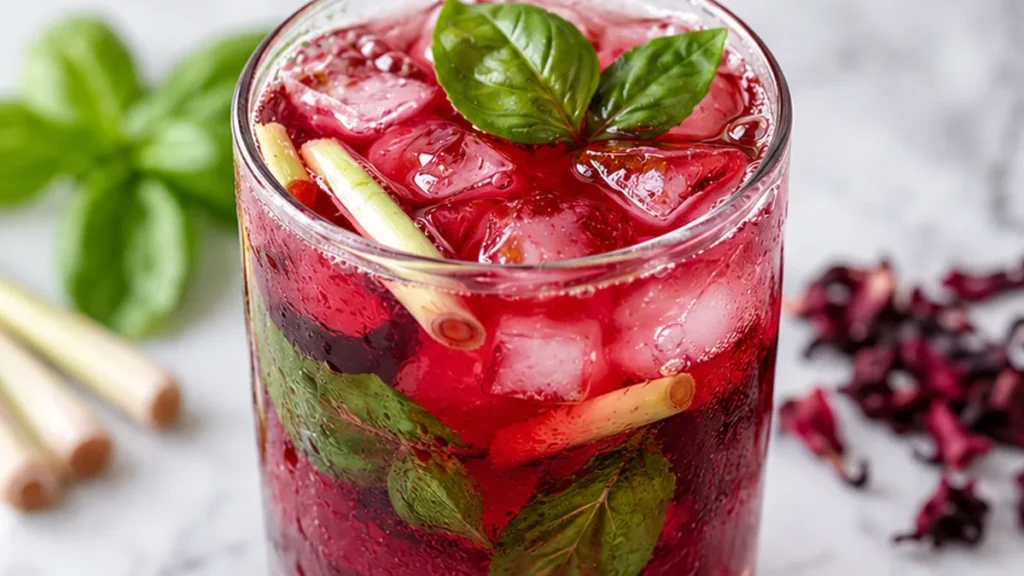
This hibiscus tea recipe offers an unparalleled refreshing experience, combining the floral notes of hibiscus with the zesty aroma of lemongrass and the herbaceous freshness of basil. It’s the perfect thirst-quencher for warm days, offering a delightful balance of tart, sweet, and aromatic flavors. This bright iced tea is surprisingly simple to prepare, making it an accessible yet impressive beverage for any occasion. The unique blend of ingredients in this hibiscus tea creates a complex flavor profile that is both invigorating and soothing. Unlike plain teas, this concoction delivers a burst of natural fruitiness and herbal undertones, enhanced by the natural sweetness of honey and a touch of citrus. It’s a delightful alternative to store-bought sugary drinks, offering both taste and visual appeal.
Key takeaways
- Steep hibiscus in freshly boiled water for 5-7 minutes for optimal color and flavor.
- Add basil towards the end of steeping or after straining to prevent bitterness.
- Adjust steeping times and ingredient additions to balance tartness and aroma.
- Sweeteners and herbs can be substituted, but expect variations in taste.
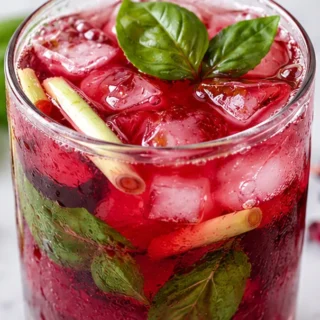
Hibiscus Lemongrass Basil Honey Iced Tea
Ingredients
- 5 cups water
- 1 lemongrass stalk, thinly sliced
- 1/4 cup honey
- 1/2 cup dried hibiscus flowers
- 3/4 cup loosely packed fresh basil leaves
- 1/4 cup fresh squeezed lime juice
Instructions
- Bring 5 cups of water to a boil in a medium pot.
- Add the sliced lemongrass stalk, honey, dried hibiscus flowers, and fresh basil leaves to the hot water.
- Cover the pot and let the mixture steep for 20 minutes to infuse the flavors.
- Strain the liquid into a pitcher, discarding the used solids.
- Stir in the fresh squeezed lime juice and taste for sweetness, adding more honey if desired.
- Chill the tea until cold and serve over ice with fresh garnishes.
Notes
The technique that makes it
The key to a truly fresh and flavorful hibiscus tea, especially when infused with complementary aromatics like lemongrass, basil, and lime, lies in the steeping process. For hibiscus tea, proper extraction of its tart, floral notes and deep ruby color is paramount. Use freshly boiled water (around 212°F or 100°C) to effectively extract the anthocyanins responsible for the color and the characteristic tartness from the dried hibiscus flowers. The high temperature ensures a full bloom of the flowers, releasing their full flavor profile. Don’t over-steep, however, as hibiscus can become unpleasantly astringent if left too long. Aim for a steeping time of 5-7 minutes for the hibiscus flowers. The lemongrass, with its citrusy and slightly ginger-like notes, benefits from a similar hot water infusion to release its essential oils. Slicing it thinly increases the surface area for better extraction. Fresh basil, however, has delicate leaves that can turn bitter if subjected to prolonged high heat. It’s best to add the basil towards the end of the steeping process, or even after the hibiscus and lemongrass have steeped and been strained, allowing the residual heat to gently wilt the leaves and release their aromatic oils without cooking them. This layered infusion technique ensures each ingredient contributes its best flavor without compromising the others.
Troubleshooting
- Tea is too tart or astringent: This often happens from over-steeping the hibiscus flowers. Reduce the steeping time to 5 minutes or less. You can also balance the tartness by adding a bit more honey or a splash of lime juice to the finished tea.
- Tea color is weak or pale: Ensure you are using freshly boiled water (around 212°F/100°C) and that your dried hibiscus flowers are fresh. Older flowers may have lost some of their pigment. Increase the amount of hibiscus flowers slightly or steep for the full 5-7 minutes.
- Lemongrass flavor is not noticeable: Make sure the lemongrass stalk was thinly sliced to maximize surface area. Using slightly bruised or crushed lemongrass can also help release more of its oils. Ensure it steeps in the hot water for at least 5 minutes.
- Basil flavor is lost or bitter: Adding basil too early or steeping it with the hibiscus and lemongrass can lead to a muted or bitter taste. Add basil during the last minute of steeping, or steep it separately in slightly cooler water after straining the hibiscus and lemongrass.
Substitutions
- Honey: Agave nectar or maple syrup can be used as sweeteners. Adjust the quantity to your taste, as their sweetness levels differ. The result will be a slightly different flavor profile due to the distinct taste of each sweetener.
- Dried Hibiscus Flowers: Dried rose hips can offer a tart, fruity flavor, though less floral. Cranberry hibiscus or other herbal tea blends with hibiscus can also be used, but be mindful of their unique flavor contributions.
- Fresh Basil Leaves: Mint leaves (spearmint or peppermint) provide a refreshing alternative, offering a cooling sensation. Lemon verbena or lemon balm can also be used for a citrusy herbal note.
- Lemongrass Stalk: A strip of lime or lemon zest (pith removed) can provide a similar citrusy aroma, though it will lack the subtle ginger notes of lemongrass. A small piece of fresh ginger, thinly sliced, can also add a complementary spicy note.
Pro tips
- For a deeper floral flavor, steep the hibiscus flowers for an extra 5-10 minutes.
- Adjust honey to your preferred sweetness level; start with less and add more.
- For a vegan version, substitute maple syrup or agave nectar for honey.
- Ensure all serving garnishes (lemongrass, basil, lime) are fresh for maximum aroma and flavor.
Enjoy this wonderfully aromatic and visually stunning hibiscus tea. It’s a perfect homemade beverage to impress guests or simply treat yourself to a moment of pure refreshment.
More from blog →
Frequently asked questions
Can I use dried hibiscus flowers instead of fresh?
Yes, dried hibiscus flowers are perfectly suitable for this iced tea. Use about half the amount of dried flowers compared to fresh, as they are more concentrated. Steep them in hot water for 10-15 minutes, then strain before chilling. The flavor will still be fresh and tart.
What can I use if I don’t have honey?
For a vegan version, maple syrup or agave nectar are excellent substitutes for honey. Use an equal amount, tasting and adjusting as needed. Simple syrup made from sugar and water also works. These sweeteners will provide the necessary sweetness without altering the herbal notes significantly.
How long does hibiscus lemongrass basil honey iced tea last in the fridge?
This iced tea can be stored in an airtight container in the refrigerator for up to 3-4 days. The flavors may meld and deepen over time. It’s best to consume it within this timeframe for optimal freshness and taste. Avoid storing it in direct sunlight.
Can I make this iced tea ahead of time?
Absolutely. You can prepare the tea base, including steeping the hibiscus, lemongrass, and basil, and then refrigerate it. Add the sweetener and ice just before serving. This allows the flavors to develop, and you’ll have a refreshing drink ready whenever you need it.