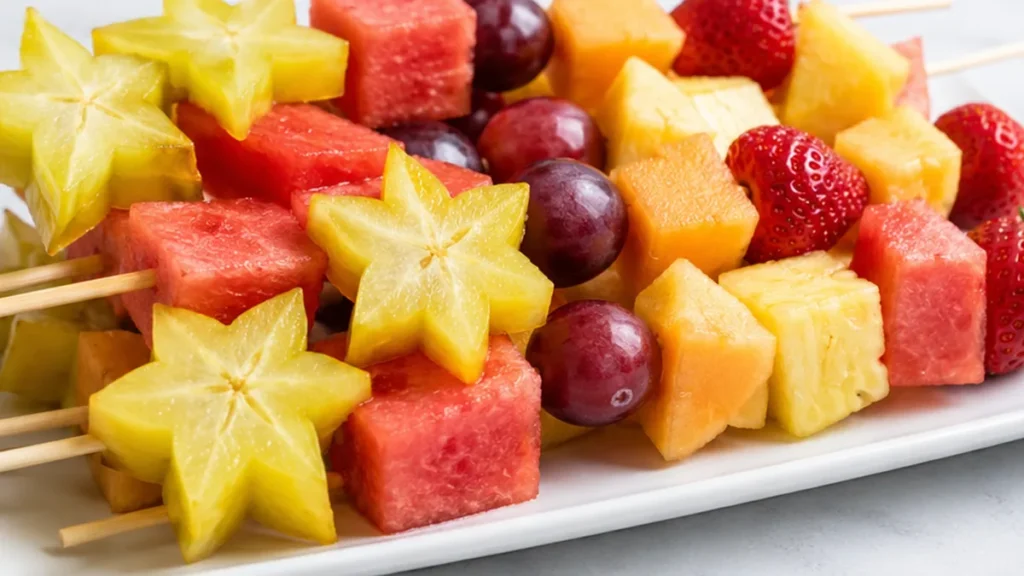
Creating delicious and visually appealing fruit wands is a fantastic way to encourage healthy eating, especially for kids. This recipe for fruit wands transforms simple produce into an exciting, edible craft that’s perfect for any gathering. What makes these fruit wands truly special is their interactive nature and vibrant presentation. A simple change in how fruit is served can dramatically increase its appeal, making it a hit at events. They’re a refreshing, light, and customizable treat that everyone can enjoy.
Key takeaways
- Achieve visual appeal through consistent fruit sizing and clean cuts.
- Assemble fruit tightly on skewers to prevent shifting and ensure stability.
- Serve chilled for optimal refreshment and to help maintain fruit shape.
- Use sharp tools for precise cutting to avoid bruising and ensure neat edges.
Magical Fruit Wands! Easy & Fun for Everyone!
Ingredients
- 4 starfruit
- 1 small watermelon
- 1 bunch red grapes
- 1 bunch green grapes
- 1 cantaloupe
- 1 pineapple, peeled
- 40 small to medium strawberries
- 40 bamboo skewers
Instructions
- Cut the cantaloupe in half and remove the seeds.
- Using a melon baller, make 40 balls out of the cantaloupe. OR, slice the cantaloupe into 1/2-inch slices and cut out shapes using a small cookie cutter.
- Cut the watermelon in half and, using a melon baller, make 40 balls.
- Cut pineapple into 1/2-inch slices, then cut the slices into 1/2-inch cubes.
- Cut each starfruit into 10 1/4-inch slices.
- Assemble the fruit wands by gently sliding each piece of fruit onto each skewer in this order: 1 Slice of Starfruit (this becomes the star on top), 1 Ball of Watermelon, 1 Red Grape, 1 Green Grape, 1 Piece of Cantaloupe, 1 Cube of Pineapple, 1 Strawberry.
- Serve.
Notes
The Technique That Makes It: Precise Cutting and Assembly
The magic of these fruit wands lies not in complex culinary science, but in the precise preparation and thoughtful assembly of the fruit. The key is achieving uniform shapes and sizes for each fruit component, which ensures even distribution of flavors and a visually appealing wand. For the starfruit, a clean slice perpendicular to its length will reveal the natural star shape. For the watermelon and cantaloupe, using a melon baller or carefully cut cubes of consistent size is crucial. The pineapple, with its fibrous core, requires careful coring and then cutting into bite-sized pieces. Strawberries should have their green tops removed, and grapes should be kept whole. The bamboo skewers act as structural supports, and the order of assembly is important for balance and aesthetics. Tightly packing the fruit onto the skewer prevents it from shifting and creates a dense, appealing wand. The coolness of the fruit is also a factor; serving them chilled enhances their refreshing quality and helps maintain their shape.
Troubleshooting
- Failure: Fruit pieces are falling off the skewer.
- Fix: Ensure the skewer is inserted firmly through the center of each fruit piece. For softer fruits like strawberries, be gentle but firm. Avoid overloading the skewer; aim for a balanced density.
- Failure: Wands look messy and uneven.
- Fix: Use sharp knives and cutting tools for clean edges. Measure or eyeball consistently sized pieces for each type of fruit before starting assembly.
- Failure: Fruit becomes mushy or bruised during assembly.
- Fix: Handle fruits with care, especially softer ones like strawberries. Use a stable surface for cutting and assembly. Chill the fruit slightly beforehand to firm it up.
- Failure: Wands are difficult to eat or handle.
- Fix: Ensure fruit pieces are not too large and are spaced appropriately on the skewer. Consider the overall length of the wand for ease of handling.
Substitutions
- Substitution: Other berries (blueberries, raspberries) for grapes.
- Expected Result: Adds a different tartness and color variation. Raspberries may be more delicate and require careful handling.
- Substitution: Honeydew melon for cantaloupe or pineapple.
- Expected Result: Provides a similar sweet, refreshing melon flavor and a pale green or yellow hue.
- Substitution: Kiwi slices (peeled) for starfruit.
- Expected Result: Introduces a vibrant green color and a tangy, tropical flavor. Ensure slices are not too thin to avoid breakage.
- Substitution: Firm mango chunks for pineapple or melon.
- Expected Result: Offers a rich, sweet, tropical flavor and a bright orange-yellow color. Ensure mango is ripe but firm enough to skewer.
Pro tips
- Make ahead: Fruit wands can be assembled up to one day in advance. Lay finished wands on a baking sheet, keeping space between each. Layer parchment paper or plastic wrap between each layer of wands and refrigerate overnight. This ensures they stay fresh and firm.
- Variety is key: Feel free to experiment with other fruits like kiwi, mango, or blueberries to add more color and flavor. Just ensure they are firm enough to skewer.
- For perfectly round fruit balls, ensure your melon baller is sharp and make a clean, scooping motion. If the fruit is too soft, it will be harder to shape.
These delightful fruit wands are a simple yet impressive way to add a touch of magic to any occasion. Experiment with different fruit combinations and enjoy this refreshing, healthy treat!
Frequently asked questions
How do I get the star shape from the starfruit?
To achieve the star shape, slice the starfruit horizontally, about 1/4 inch thick. Each slice will naturally reveal the star pattern. Ensure your knife is sharp for clean cuts without crushing the delicate shape.
Can I prepare these fruit wands in advance?
Yes, you can prepare the fruit components a few hours ahead and assemble them closer to serving time. Store cut fruit in airtight containers in the refrigerator. Assemble just before serving to maintain freshness and prevent the fruit from becoming too soft.
What is the best way to cut the melon for the wands?
For uniform pieces, a melon baller is ideal. Alternatively, cut the melon into manageable sections, remove the rind and seeds, and then slice or cube the flesh into pieces roughly the same size as your other fruits, about 1 inch.
My strawberries are too soft to skewer. What should I do?
Ensure your strawberries are ripe but still firm. If they are very soft, you can gently push the skewer through the side or bottom rather than the top. Alternatively, consider using slightly firmer berries or cutting very soft ones into larger chunks to provide more stability on the skewer.
More from Vegan Desserts →