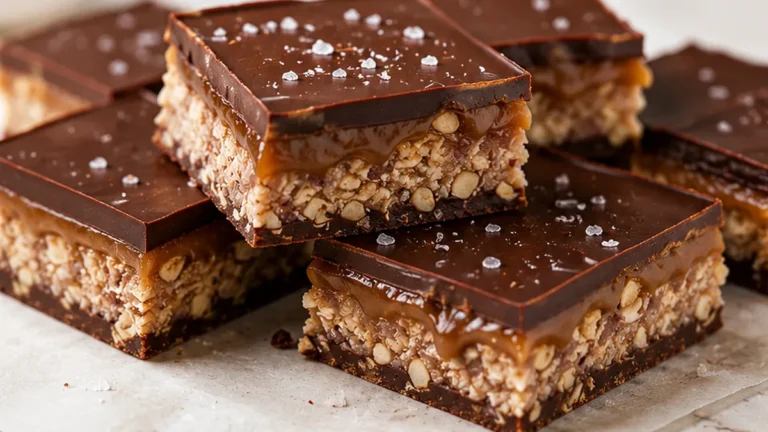
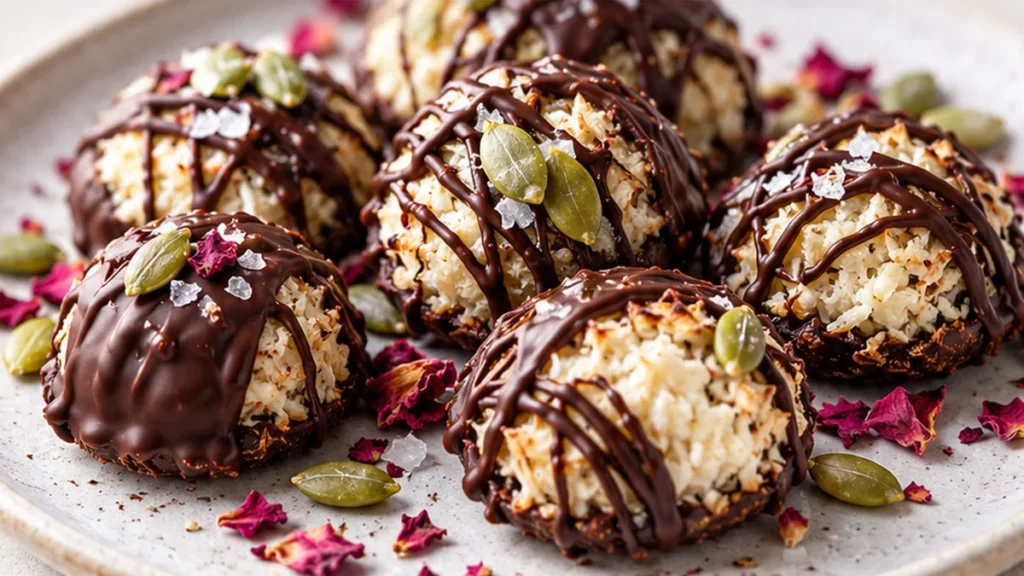
These dreamy chocolate dipped coconut caramel macaroons are a simple yet satisfying treat. Made with coconut and rich chocolate, they are perfect for any occasion.
Key takeaways
- Use unsweetened shredded coconut for the best texture.
- Temper the chocolate for a glossy finish.
- Avoid overmixing to prevent spreading.
- Experiment with ingredient swaps for varied flavors.
Dreamy Chocolate Dipped Coconut Caramel Macaroons!
Ingredients
Instructions
- Preheat the oven to 350 degrees F. Line two baking sheets with parchment paper.
- Add the pumpkin seeds to a prepared baking sheet and place in the oven for 5-8 minutes or until lightly toasted. Set aside.
- To make the caramel – In a small saucepan set over medium heat, combine the maple syrup, coconut milk and coconut oil. Bring the mixture to a boil, stirring continuously, for 10 minutes or until the mixture has thickened slightly and reduced to ¾ cup. The caramel should be easily pourable. Remove from the heat and stir in the vanilla and a pinch of salt.
- To the bowl of a food processor, add the coconut, almond flour, and all but 1/4 cup of the caramel (reserve the 1/4 cup caramel for topping). Pulse until the mix is finely chopped and holds together when squeezed into a ball.
- Drop 1 tablespoon size balls of the mixture onto the prepared baking sheet. Make sure the balls are packed tight; if needed, use your hands to finely pack the balls together. Transfer to the oven and bake for 8-10 minutes or until the tops of the macaroons just begin to appear toasted. Remove from the oven and let cool completely.
- Add half the chocolate to a microwave-safe bowl and microwave on thirty second intervals, stirring after each interval until melted and smooth. Remove from the microwave and stir in the remaining chocolate until smooth.
- Gently dip the bottom of each macaroon into the melted chocolate and place on a parchment lined baking sheet. Drizzle with any remaining chocolate and then sprinkle with toasted pumpkin seeds. Place in the fridge to firm up. Once the chocolate has set, serve cold or at room temperature, and drizzle with the remaining caramel sauce. If desired, sprinkle with a bit more flaky sea salt!
Understanding the Role of Coconut in Texture and Flavor
Coconut is the star ingredient in macaroons, providing both texture and flavor. The key to achieving the perfect macaroon lies in the type of coconut used. Unsweetened shredded coconut is preferred for its ability to absorb moisture without adding extra sweetness. Aim for a ratio of about 200 grams of coconut to 100 grams of sweetened condensed milk for optimal binding and texture. The coconut should be moist but not overly wet, as this can lead to soggy macaroons.
How to Achieve Perfect Chocolate Coating
The chocolate coating is crucial for adding flavor and visual appeal to your macaroons. To achieve a smooth, glossy finish, temper the chocolate by melting it to 45°C (113°F) and then cooling it down to about 31°C (88°F) before dipping. This process stabilizes the cocoa butter crystals, resulting in a shiny coating that snaps when bitten into. If you prefer a softer finish, simply melt the chocolate without tempering, but be aware that it may not hold up as well over time.
Common Mistakes in Baking Macaroons and How to Avoid Them
One common issue is the macaroons spreading too much during baking. This can be caused by overmixing the batter or not allowing it to rest before baking. To combat this, mix until just combined and let the formed macaroons sit for 20-30 minutes before baking. Another issue is underbaking, which can lead to a chewy texture rather than the desired crisp exterior. Aim for a baking time of 15-20 minutes at 180°C (350°F), ensuring that the bottoms are golden brown.
Ingredient Alternatives and Their Effects on the Final Product
Substituting ingredients can significantly alter the outcome of your macaroons. For instance, using dark chocolate instead of milk chocolate will yield a richer flavor, but it may also require a touch more sweetness in the macaroon base. If you opt for dairy-free chocolate, ensure it melts well to maintain the dipping quality. Additionally, using honey instead of sweetened condensed milk can change the texture and flavor profile, resulting in a denser macaroon.
How to Properly Store Chocolate Dipped Coconut Caramel Macaroons
Storing your dreamy chocolate dipped coconut caramel macaroons correctly is essential to maintain their texture and flavor. These macaroons should ideally be stored in an airtight container to prevent moisture from softening them. If stored at room temperature, they can last for about 3-5 days. However, for longer storage, you can refrigerate them, which can extend their shelf life to about two weeks. Just ensure they are well-wrapped to avoid absorbing odors from other foods. If you want to keep them even longer, consider freezing them. Place the macaroons in a freezer-safe container with parchment paper between layers to prevent sticking. They can be frozen for up to three months. To enjoy, thaw them in the refrigerator overnight before serving.
Scaling the Recipe for Larger Gatherings
If you plan to serve a crowd, scaling the recipe for chocolate dipped coconut caramel macaroons is straightforward. The ingredients can be easily multiplied to accommodate larger batches. For instance, if you want to double the recipe, simply double the quantities of coconut, condensed milk, and chocolate. However, keep in mind that baking times may vary slightly with larger batches. It’s crucial to monitor the macaroons closely while baking, as they may need a few extra minutes. Additionally, ensure you have enough space in your oven to bake them in batches if necessary. Using multiple baking sheets can help streamline the process.
Equipment Variations and Their Impact on Texture
The equipment you use can significantly affect the outcome of your chocolate dipped coconut caramel macaroons. Using a stand mixer versus a hand mixer can yield different textures; a stand mixer may incorporate air more efficiently, leading to a lighter macaroon. Similarly, the type of baking sheet used can influence browning. Darker sheets tend to absorb more heat, which may cause the bottoms to brown faster. If using a silicone baking mat, you might find the macaroons cook more evenly and release easily. Always ensure your tools are clean and dry to prevent any unwanted moisture from affecting the batter.
Pairing Suggestions for Serving
When it comes to serving dreamy chocolate dipped coconut caramel macaroons, consider pairing them with complementary flavors and textures to enhance the overall experience. A rich espresso or a smooth cup of coffee can balance the sweetness of the macaroons. For a refreshing contrast, serve them alongside a tart fruit compote, such as raspberry or passion fruit, which cuts through the sweetness and adds a vibrant color to your plate. Additionally, a scoop of vanilla ice cream can create a delightful dessert experience. For a more festive touch, consider drizzling some extra melted chocolate or caramel sauce over the macaroons before serving.
Understanding the Role of Chocolate in Flavor and Texture
The chocolate coating on your macaroons is not just a decorative element; it plays a crucial role in the overall flavor profile and texture of the finished product. High-quality chocolate, ideally with a cocoa content of 60-70%, provides a rich, bittersweet contrast to the sweetness of the coconut and caramel. The melting point of chocolate is around 30-32°C (86-90°F), which means that it should be tempered properly to achieve a glossy finish and a satisfying snap. If the chocolate is not tempered, it may bloom, resulting in a dull appearance and a less appealing texture. Additionally, consider the thickness of the chocolate layer; a thicker coat may enhance the richness but could overpower the delicate flavors of the coconut. Experimenting with different types of chocolate, such as dark, milk, or even white chocolate, can yield unique flavor combinations, but be mindful of how each type interacts with the macaroons’ sweetness.
Batch Scaling and Its Impact on Baking Time and Texture
When scaling the recipe for larger batches, it’s important to consider how the baking time and texture may change. Doubling the recipe may not necessarily mean doubling the baking time. Instead, monitor the macaroons closely, as they may require only a few extra minutes in the oven. The key is to maintain the same baking temperature of 160°C (320°F) to ensure even cooking. Additionally, the texture can be affected by the size of the macaroons; larger macaroons may have a softer center if not baked long enough, while smaller ones may become too dry. To maintain consistency, use a kitchen scale to measure ingredients accurately, and keep an eye on the macaroons during the last few minutes of baking to achieve the desired golden-brown color.
Make-Ahead Strategies for Chocolate Dipped Coconut Caramel Macaroons
Preparing chocolate dipped coconut caramel macaroons in advance can save time and enhance their flavors. The macaroons can be made up to two days ahead and stored in an airtight container at room temperature. However, for the best flavor, consider dipping them in chocolate just before serving. This ensures the chocolate remains crisp and the coconut stays fresh. If you plan to freeze them, allow the macaroons to cool completely before placing them in a single layer on a baking sheet. Once frozen, transfer them to an airtight container, where they can be stored for up to three months. When ready to serve, thaw them in the refrigerator to prevent condensation from forming on the chocolate. This method not only preserves the texture but also allows the flavors to meld beautifully, making them even more delightful.
Understanding the Impact of Ingredient Quality on Coconut Caramel Macaroons
The quality of ingredients plays a crucial role in the outcome of dreamy chocolate dipped coconut caramel macaroons. Fresh, high-quality coconut will provide a superior texture and flavor compared to stale or low-grade options. When selecting coconut, opt for unsweetened shredded coconut for a more authentic taste. Additionally, the type of chocolate used for dipping can significantly affect the overall flavor profile. For instance, using dark chocolate with a higher cocoa content (70% or more) will yield a richer taste that balances the sweetness of the caramel. Conversely, milk chocolate can create a sweeter, creamier experience. Furthermore, the freshness of your eggs is paramount; fresher eggs contribute to better binding and structure in the macaroons. Aim for eggs that are as fresh as possible to ensure optimal results.
Batch Scaling: Adjusting for Different Serving Sizes
When scaling the recipe for dreamy chocolate dipped coconut caramel macaroons, it is essential to maintain the correct ratios of ingredients to preserve texture and flavor. For instance, if doubling the batch, simply double all ingredients, but be mindful of the mixing and baking times. Larger batches may require a longer baking time, as the heat distribution in the oven can vary. A good guideline is to start checking for doneness a few minutes earlier than the original recipe suggests, especially if using multiple trays. Additionally, consider the size of the macaroons; larger macaroons may need more time to bake through without burning the outside. When scaling up, ensure that your mixing bowl and baking sheets are large enough to accommodate the increased volume. This will help you maintain the integrity of the macaroons and achieve the desired texture.
Pro tips
Pro tip: Best served immediately while hot!
Frequently asked questions
Can I use sweetened coconut instead of unsweetened?
While sweetened coconut can be used, it will alter the overall sweetness of the macaroons. This may lead to a cloyingly sweet final product, especially when combined with sweetened condensed milk.
How do I store leftover macaroons?
Store leftover macaroons in an airtight container at room temperature for up to a week. For longer storage, refrigerate them for up to two weeks, or freeze for up to three months.
What type of chocolate is best for dipping?
Dark chocolate is often preferred for its rich flavor, but milk or white chocolate can also be used based on personal preference. Ensure that the chocolate is of good quality for the best results.
Why are my macaroons too chewy?
If your macaroons are too chewy, it may be due to underbaking. Ensure they are baked until the edges are golden brown, which usually takes about 15-20 minutes at 180°C (350°F).
More from Vegan Desserts →