
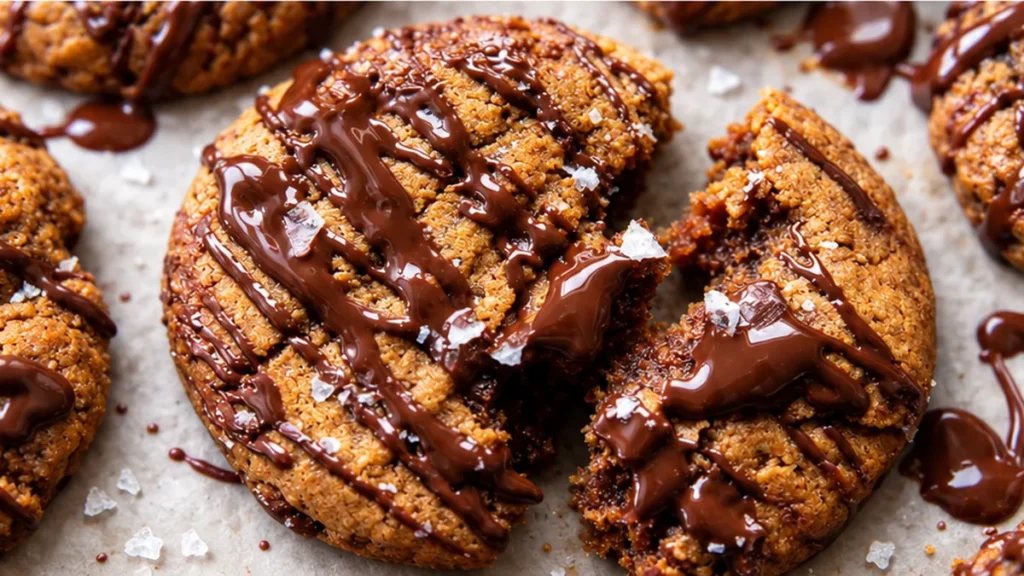
These 5 ingredient chocolate almond butter cookies are simple to prepare. With just five ingredients, they offer a quick and satisfying option for cookie lovers.
Key takeaways
- Use creamy almond butter for the best texture.
- Measure ingredients accurately to avoid spreading.
- Consider ingredient swaps for flavor variations.
- Chilling the dough can improve cookie structure.
5-Ingredient Chocolate Almond Butter Cookies
Ingredients
Instructions
- Preheat the oven to 350
- In a food processor, combine the almond butter, dates, vanilla, and baking soda. Pulse until combined and until no large chunks of dates remain. If the dough is dry, add 2-3 tablespoons of water to moisten.
- Roll the dough into 16-17 balls and place on the prepared baking sheet, gently flatten with your hand. Using a fork, press down on each dough ball to create a crosshatch pattern. Bake for 9-10 minutes.
- Remove the cookies from the oven and let cool. To make dipping easier, freeze the cookies for 10-15 minutes. Then drizzle or dip the cookies in chocolate and sprinkle with sea salt. Eat, or let the chocolate harden. Store in a cool place or the fridge.
Understanding the Role of Almond Butter in the Recipe
Almond butter serves as the primary fat source in these cookies, providing richness and moisture. It contains healthy fats, which contribute to the texture and flavor. The ideal almond butter for this recipe is smooth and creamy, as it allows for better incorporation into the dough. Using a natural almond butter without added sugar or oils will yield the best results. Typically, almond butter has a fat content of around 50-60%, which is crucial for achieving the right consistency in the cookies.
Common Issues and Their Solutions
When making 5-ingredient chocolate almond butter cookies, several common issues may arise:
- Issue: Cookies spread too much during baking.
- Cause: Too much almond butter or insufficient flour can lead to excessive spreading. Ensure you measure accurately, as almond butter can vary in density.
- Fix: Add a tablespoon of flour to the dough and chill it for 30 minutes before baking.
- Issue: Cookies are too dry.
- Cause: Overbaking or using a drier almond butter.
- Fix: Reduce baking time by a couple of minutes and check for doneness when the edges are lightly golden.
- Issue: Cookies lack flavor.
- Cause: Using unsweetened almond butter or not enough chocolate.
- Fix: Incorporate a pinch of salt and consider adding a splash of vanilla extract to enhance flavor.
Ingredient Swaps and Their Effects
While this recipe is designed to be simple, certain ingredient swaps can yield different textures and flavors:
- Swap: Maple syrup for honey.
- Effect: Maple syrup will give a slightly different sweetness and flavor profile, but it will maintain the cookie’s moisture.
- Swap: Dark chocolate chips for semi-sweet chocolate chips.
- Effect: Dark chocolate will provide a richer flavor and slightly less sweetness, appealing to those who prefer a more intense chocolate taste.
- Swap: Coconut flour for all-purpose flour.
- Effect: Coconut flour absorbs more moisture, so you will need to adjust the liquid in the recipe to maintain the right consistency.
The Unique Texture of Chocolate Almond Butter Cookies
These cookies have a distinct texture that sets them apart from traditional cookies. The use of almond butter creates a chewy and slightly dense cookie, while the chocolate chips add a contrasting melt-in-your-mouth quality. The balance of fat from the almond butter and the sugar helps achieve a soft and tender interior, while the edges can become crisp if baked correctly. This unique combination is not commonly found in other cookie recipes, making them a delightful alternative for those seeking something different.
How to Properly Store Chocolate Almond Butter Cookies for Maximum Freshness
Storing your cookies correctly can significantly impact their texture and flavor. To maintain the soft, chewy texture of your chocolate almond butter cookies, store them in an airtight container at room temperature. This prevents them from drying out. If you want to keep them for a longer period, consider freezing them. Place the cookies in a single layer on a baking sheet to freeze individually, then transfer them to a freezer-safe bag or container. This method helps avoid clumping and allows you to take out just what you need. When ready to enjoy, thaw them at room temperature or warm them slightly in the oven for a few minutes to regain their fresh-baked taste.
Scaling the Recipe: Adjusting Portions Without Compromising Quality
Scaling up or down your chocolate almond butter cookie recipe can be straightforward, but it requires careful attention to ingredient ratios. For instance, doubling the recipe is as simple as multiplying each ingredient by two. However, if you are halving the recipe, ensure you accurately measure the almond butter, as it can be dense and challenging to divide. Additionally, baking time may vary slightly with batch size. Larger batches may require a few extra minutes in the oven, while smaller batches might bake faster. Always keep an eye on the cookies, looking for the edges to set while the centers remain slightly soft.
Choosing the Right Equipment for Consistent Results
The equipment you use can make a notable difference in the outcome of your cookies. A high-quality baking sheet can help ensure even heat distribution, which is crucial for achieving the perfect texture. If you use non-stick or silicone baking mats, you may find that your cookies spread differently than on a traditional metal sheet. Additionally, using a cookie scoop can help maintain uniform size and shape, which promotes even baking. If you prefer a thicker cookie, chilling the dough for at least 30 minutes before baking can help, as it solidifies the fats and reduces spreading.
Seasonal Ingredients: How They Affect Flavor and Texture
Using seasonal ingredients can enhance the flavor profile of your chocolate almond butter cookies. For example, fresh, high-quality almonds can provide a richer taste compared to stale ones. Similarly, if you opt for chocolate chips, using artisanal or locally sourced chocolate can elevate the overall experience. The quality of ingredients, especially the almond butter, can significantly influence both flavor and texture. Freshly ground almond butter often has a creamier consistency, which can lead to a more moist cookie. Always consider the freshness of your ingredients, as they can greatly impact the final product.
Understanding the Impact of Ingredient Quality on Flavor
The quality of ingredients used in the 5-ingredient chocolate almond butter cookies significantly influences their flavor profile. For instance, using high-quality almond butter can enhance the nutty flavor and creaminess of the cookies. Look for almond butter that is made from 100% almonds without added sugars or oils for the best results. Similarly, the choice of chocolate—whether dark, semi-sweet, or milk chocolate—affects not only the sweetness but also the richness of the cookies. The cocoa content in chocolate can vary widely, and a higher cocoa percentage typically results in a more intense chocolate flavor. Additionally, using fresh, high-quality vanilla extract can elevate the overall taste. Freshness matters; old extracts can lose their potency and affect the final product.
Batch Scaling: Maintaining Consistency in Larger Quantities
Scaling the recipe for 5-ingredient chocolate almond butter cookies can be a straightforward task, but it requires careful attention to ingredient ratios. When doubling or tripling the recipe, ensure that the proportions remain consistent. For instance, if you increase the almond butter, chocolate, and sweetener, keep the ratios aligned to maintain the cookies’ texture and flavor. It’s also crucial to consider the mixing time; larger batches may require more time to achieve a uniform dough. Moreover, baking times may vary depending on the size of the cookies. Larger cookies may need additional time in the oven, while smaller ones may bake faster. Monitor the cookies closely to avoid overbaking.
Make-Ahead Strategies for Chocolate Almond Butter Cookies
Preparing 5-ingredient chocolate almond butter cookies ahead of time can save you effort and time when you need a quick treat. One effective strategy is to prepare the dough and refrigerate it for up to three days before baking. This not only allows the flavors to meld but also makes it easier to scoop and shape the cookies. Alternatively, you can freeze the dough in pre-portioned balls. When ready to bake, simply remove the desired number of cookie dough balls from the freezer and bake them directly from frozen, adding a minute or two to the baking time. This method ensures that you have fresh cookies on hand whenever you desire them, while also preserving the original texture and flavor.
Understanding the Effects of Ingredient Quality on Cookie Texture
The texture of your 5-ingredient chocolate almond butter cookies is significantly influenced by the quality of your ingredients. High-quality almond butter, for instance, contains more natural oils and fewer additives, leading to a smoother batter and a richer flavor. On the other hand, lower-quality almond butter may result in a drier cookie due to its higher starch content and lack of essential oils. Additionally, using fresh chocolate can enhance the overall flavor profile, providing a more intense chocolate experience. The fat content in the almond butter also plays a crucial role; a thicker, creamier almond butter will yield a chewier cookie, while a runnier variant might produce a crisper texture. Aim for almond butter that has a consistent texture and minimal separation for optimal results.
Batch Scaling: Ensuring Consistency Across Larger Quantities
When scaling your 5-ingredient chocolate almond butter cookie recipe for larger batches, maintaining consistency is key. The ratios of almond butter to sweetener and flour should remain the same, typically a 1:1 ratio of almond butter to sweetener, with enough flour to achieve the desired dough consistency. For example, if you start with 200 grams of almond butter, you should use 200 grams of sweetener and adjust the flour accordingly, usually around 100-150 grams. It’s essential to mix the ingredients thoroughly to ensure even distribution of flavors and textures. Additionally, consider the baking time; larger batches may require an adjustment in baking time, so check for doneness a couple of minutes earlier than the original recipe suggests. This ensures that all cookies are baked evenly, preventing some from being overcooked while others remain underbaked.
Pro tips
Pro tip: Best served immediately while hot!
Frequently asked questions
Can I use crunchy almond butter instead of creamy?
Yes, you can use crunchy almond butter, but it will give the cookies a different texture with added crunch. Just ensure it’s well-mixed to incorporate the oil properly.
How can I store these cookies?
Store the cookies in an airtight container at room temperature for up to a week. For longer storage, consider freezing them, where they can last for up to three months.
What type of chocolate is best for these cookies?
Dark chocolate chips are recommended for a richer flavor, but you can also use semi-sweet or even white chocolate for a different taste experience.
Can I make these cookies vegan?
Yes, you can make them vegan by using a plant-based sweetener and ensuring your chocolate chips are dairy-free. This will maintain the integrity of the recipe while accommodating a vegan diet.
More from Vegan Desserts →