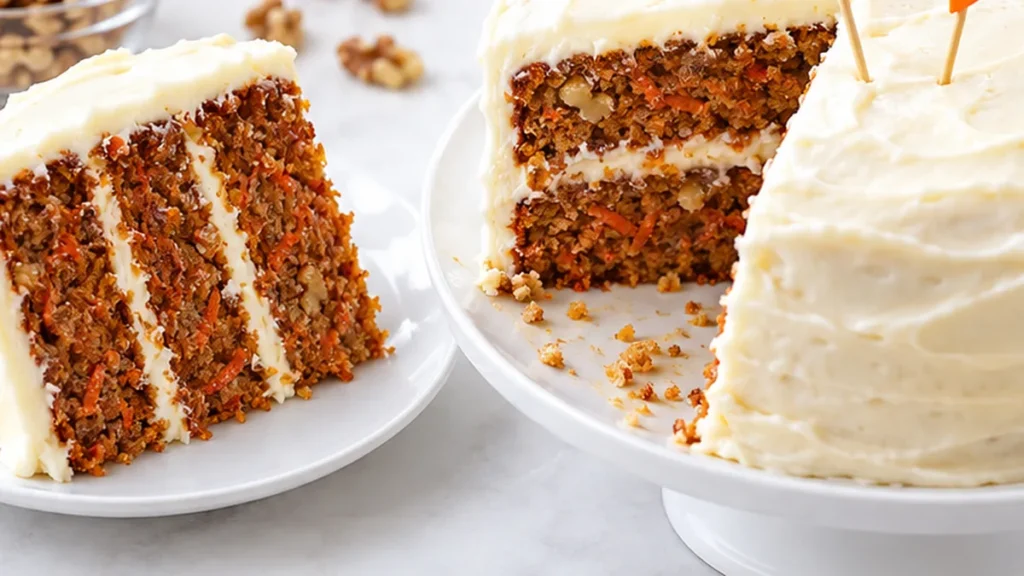
Carrot cake achieves its ultra moist texture through the right balance of wet and dry ingredients, along with the freshness of your carrots. This carrot cake recipe is designed to deliver a tender crumb and rich flavor without any dairy or gluten, making it accessible for a wider range of dietary needs. Preparing a truly delicious carrot cake requires attention to the shredding of the carrots and the gentle mixing of the batter. I’ve found that using finely shredded carrots helps them melt into the cake, contributing to that incredible moisture. This recipe ensures a perfect texture every time.
Key takeaways
- Use a gluten-free flour blend for the best texture.
- Mix ingredients until just combined to avoid density.
- Adjust baking times and temperatures to prevent sinking.
- Carrots provide natural sweetness and moisture, unique to this cake.
Vegan Gluten-Free Carrot Cake
Ingredients
- 2.5 cups (12.5 ounces) gluten-free all-purpose flour blend
- 1 tablespoon ground cinnamon
- 1 1/4 teaspoon baking powder
- 1 1/4 teaspoon baking soda
- 1 teaspoon salt
- 1/2 teaspoon ground nutmeg
- pinch ground cloves
- pinch ground ginger
- 1 pound carrots (peeled)
- 1 cup granulated sugar
- 1 cup brown sugar
- 2 flax eggs (2 tbsp ground flaxseed meal + 6 tbsp water)
- 1/2 cup vegetable oil
- 1/2 cup chopped walnuts (optional)
Instructions
- Adjust oven rack to the middle position, and preheat to 350 degrees F. Use cooking spray or butter to thoroughly grease the inside of either: 1 13×19-inch baking pan, or 2 9-inch round cake pans, or 3 8-inch round cake pans.
- Then dust the inside of each pan with gluten-free flour until the grease is completely covered and no spots of the pan are visible.
- In a separate bowl, whisk together the gluten-free flour blend, baking powder, baking soda, cinnamon, nutmeg, salt, cloves and ginger together until combined.
- In a food processor fitted with the large shredding disk, shred carrots. Then transfer them to the mixing bowl with the flour. Wipe clean the food processor bowl, and fit with the metal blade (in place of the shredding disk).
- Add the granulated sugar, brown sugar and flax eggs and process until frothy and thoroughly combined, about 20 seconds. With processor running, add oil in a steady stream. Process until egg mixture is light in color and well emulsified, about 20 more seconds.
- Transfer egg mixture to the large bowl with the carrots and flour. Using a rubber spatula, stir the mixture until thoroughly combined. If using nuts, stir them in until combined.
Notes
Understanding the Role of Ingredients in Vegan Gluten-Free Carrot Cake
The success of a vegan gluten-free carrot cake lies in the careful selection and balance of ingredients. The gluten-free all-purpose flour blend serves as the foundation, providing structure without the gluten typically found in traditional flour. The blend usually contains starches and flours such as rice, tapioca, and potato, which contribute to the cake’s texture. A combination of leavening agents, including baking powder and baking soda, is essential to achieve the desired rise. The addition of spices like cinnamon, nutmeg, and ginger not only enhances flavor but also complements the natural sweetness of the carrots.
Common Issues and Solutions When Baking Carrot Cake
Even with a well-crafted recipe, bakers may encounter several common issues. One frequent problem is a dense texture, which can occur if the batter is overmixed. To prevent this, mix until just combined. Another issue is uneven baking, often caused by incorrect oven temperature. Using an oven thermometer can help ensure the temperature is accurate, aiming for 180°C (350°F). Additionally, if the cake sinks in the middle, it may be due to underbaking or too much liquid in the batter. Always check for doneness with a toothpick inserted in the center; it should come out clean.
Ingredient Swaps and Their Impact on Texture and Flavor
Swapping ingredients can lead to different results in texture and flavor. For instance, replacing granulated sugar with coconut sugar may impart a deeper, caramel-like flavor but can also lead to a denser cake due to its moisture content. Using applesauce instead of vegetable oil can reduce fat content and add moisture, but it may alter the cake’s richness. If you prefer a nut-free version, omitting walnuts is an option, but consider adding extra spices to maintain flavor depth.
Unique Characteristics of Carrot Cake Compared to Other Cakes
What sets carrot cake apart from other cakes is its incorporation of grated vegetables, which not only adds moisture but also provides a unique texture. The natural sugars in carrots caramelize during baking, enhancing the cake’s sweetness without the need for excessive added sugars. Additionally, the spices used in carrot cake create a warm, comforting flavor profile that is less common in other cakes. This combination of ingredients makes carrot cake a delightful option for those seeking a dessert that is both satisfying and nourishing.
Understanding the Best Practices for Making a Vegan Gluten-Free Carrot Cake
Creating a vegan gluten-free carrot cake requires attention to detail, especially regarding ingredient ratios and mixing techniques. The gluten-free flour blend you choose is critical; a mix that contains xanthan gum can help mimic the elasticity that gluten provides. When measuring your flour, it’s best to spoon it into your measuring cup and level it off without packing it down. This can prevent a dense cake. Additionally, when incorporating wet and dry ingredients, mix until just combined to avoid overworking the batter, which can lead to a tough texture.
How to Scale Your Carrot Cake Recipe Effectively
Scaling your vegan gluten-free carrot cake recipe can be straightforward, but it requires careful adjustments. If you want to double or halve the recipe, maintain the same ratio of ingredients. For example, if you double the flour, make sure to double the flax eggs and sugars as well. Baking time may vary; larger cakes typically require longer baking, while smaller cakes may bake faster. Always check for doneness with a toothpick, ensuring it comes out clean before removing it from the oven.
Choosing the Right Equipment for Optimal Results
The equipment you use can significantly influence the outcome of your carrot cake. A high-quality stand mixer can help achieve a well-mixed batter, which is crucial for even baking. Use a light-colored cake pan to avoid over-browning; dark pans absorb more heat, which can cook the edges faster than the center. An oven thermometer is also a valuable tool to ensure your oven is at the correct temperature, as ovens can often be off by several degrees.
Seasonal Ingredients and Their Impact on Flavor
Seasonal ingredients can dramatically affect the flavor of your carrot cake. Fresh, in-season carrots are sweeter and more flavorful than those available out of season. Similarly, using freshly harvested spices can enhance the cake’s aromatic qualities. If you have access to local farmers’ markets, consider sourcing your ingredients there for the best quality. Also, keep in mind that the moisture content of your carrots can vary by season, which may require slight adjustments in your flour or liquid ratios to maintain the desired batter consistency.
How to Achieve the Perfect Moistness in Your Carrot Cake
Moistness is a critical characteristic of a successful carrot cake. The key to achieving this lies in the balance of wet and dry ingredients. The moisture content in carrots can vary, so it’s essential to weigh your carrots after peeling. For a pound of carrots, aim for approximately 450 grams. Additionally, incorporating 1/2 cup of vegetable oil adds richness and moisture. If you notice your cake is too dry, consider increasing the oil slightly or adding a tablespoon of plant-based yogurt. Baking time is also crucial; overbaking can lead to a dry cake. Use a toothpick to check for doneness, pulling it out when a few moist crumbs cling to it, typically around 30-35 minutes at 175°C (350°F).
Understanding the Role of Flax Eggs in Vegan Baking
Flax eggs serve as an excellent binding agent in vegan baking, replacing traditional eggs. To create a flax egg, mix 2 tablespoons of ground flaxseed meal with 6 tablespoons of water and let it sit for about 10-15 minutes until it thickens. This mixture not only binds the ingredients together but also adds a slight nuttiness to the cake. However, the ratio of flaxseed to water is crucial; too much water can lead to a soggy batter, while too little can result in a crumbly texture. For a more cake-like consistency, ensure the flax mixture is well-hydrated before incorporating it into your batter.
Pairing and Serving Suggestions for Your Carrot Cake
Serving your vegan gluten-free carrot cake can elevate the overall experience. A classic pairing is a light, tangy vegan cream cheese frosting, which complements the sweetness of the cake beautifully. For an added flavor dimension, consider serving the cake with a side of coconut whipped cream or a scoop of dairy-free vanilla ice cream. Garnishing with chopped walnuts or a sprinkle of cinnamon can enhance the visual appeal and flavor. Additionally, serving the cake slightly warm can enhance its moistness and flavor profile. For a seasonal twist, consider incorporating spices like cardamom or nutmeg, which pair well with the earthy sweetness of carrots.
How to Properly Store and Reheat Your Carrot Cake
Storing your vegan gluten-free carrot cake correctly is essential to maintain its moisture and flavor. Once cooled, wrap the cake tightly in plastic wrap or store it in an airtight container. It can be kept at room temperature for up to three days. For longer storage, refrigerate it, where it can last for about a week. If you need to store it for an extended period, consider freezing the cake. To freeze, wrap it in plastic wrap and then in aluminum foil to prevent freezer burn. It can be frozen for up to three months.
When you’re ready to enjoy your cake again, thaw it in the refrigerator overnight. For reheating, you can place individual slices in the microwave for about 15-20 seconds or warm the entire cake in an oven preheated to 175°C (350°F) for about 10-15 minutes. Be cautious not to overheat, as this can dry out the cake.
Scaling Your Carrot Cake Recipe for Different Occasions
Scaling your vegan gluten-free carrot cake recipe to accommodate different serving sizes can be straightforward, but it requires attention to ingredient ratios. For example, if you want to double the recipe, ensure that you double all ingredients, including the spices and leavening agents, to maintain the cake’s flavor and texture.
Additionally, consider the size of your baking pan. A larger quantity may require a larger pan or multiple pans. When baking in larger pans, you may need to adjust the baking time. Cakes baked in a larger pan may take longer to cook through, so check for doneness using a toothpick or cake tester. Conversely, if you are halving the recipe, reduce the baking time slightly and keep an eye on the cake as it bakes. This adaptability allows you to create the perfect carrot cake for any gathering, whether it’s a small family dinner or a larger celebration.
Pro tips
- For the best texture, use finely shredded carrots; avoid thick chunks that can make the cake dense.
- Do not overmix the batter once the wet and dry ingredients are combined; mix just until no streaks of flour remain to keep the cake tender.
- If your cake cracks, it might be slightly overbaked; check for doneness with a toothpick that comes out with moist crumbs, not wet batter.
- Store leftover carrot cake, covered, at room temperature for up to 3 days or in the refrigerator for up to 5 days. It also freezes well for up to 2 months.
This vegan gluten-free carrot cake proves that dietary restrictions don’t mean compromising on flavor or texture. Enjoy this delightful dessert as a perfect treat for any occasion, and feel free to experiment with added nuts or raisins.
Frequently asked questions
Can I use regular flour instead of gluten-free flour?
No, this recipe is specifically designed for gluten-free flour, which provides the necessary structure without gluten. Using regular flour will change the texture and may not yield the same results.
How do I store leftover carrot cake?
Store leftover carrot cake in an airtight container at room temperature for up to three days. For longer storage, refrigerate it, where it can last up to a week.
Can I make this cake without nuts?
Yes, you can omit the walnuts if you prefer a nut-free version. You may want to add extra spices to enhance the flavor profile.
What is the best way to grate carrots for the cake?
The best way to grate carrots for this cake is to use a box grater or a food processor. Aim for fine shreds to ensure they blend well into the batter and cook evenly.
More from Vegan Desserts →