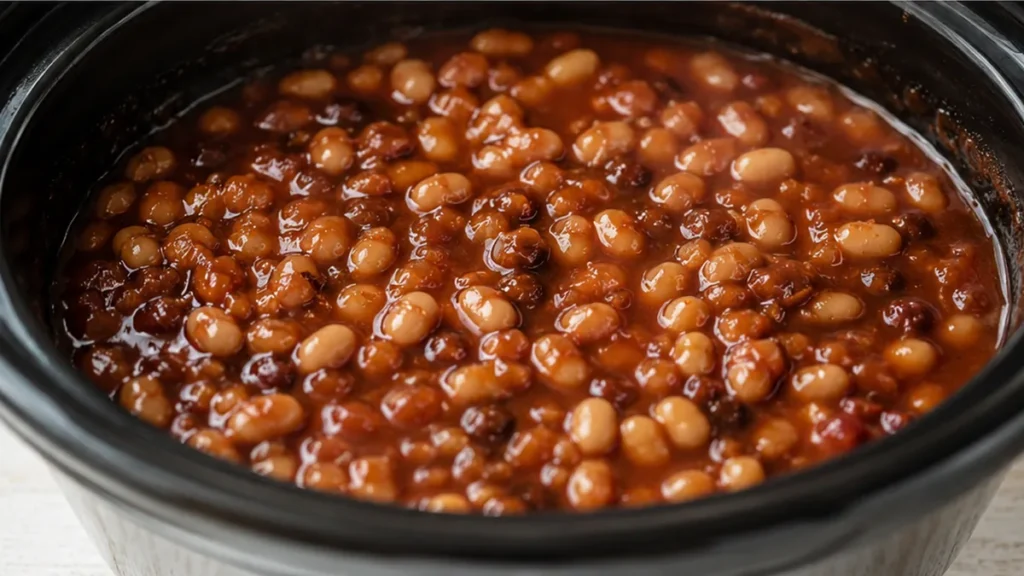
The secret to truly exceptional slow cooker baked beans lies in their thorough hydration and gentle, extended cooking. This method simplifies the process, yielding perfectly tender legumes with minimal effort. This slow cooker baked beans recipe is designed for ease and depth of flavor, making it a reliable choice for any home cook. Crafting these slow cooker baked beans ensures each bite is rich, sweet, and savory, transforming humble dried legumes into a comforting masterpiece. Keep the heat at a bare simmer because a hard boil splits the skins and prevents the desired creamy texture.
Key takeaways
- Start with properly hydrated dried legumes for best texture
- Sauté the onion to build a strong flavor base
- Cook until truly tender, adjusting time as needed
- Balance sweet (maple syrup, molasses) with savory (Dijon, tomato paste)
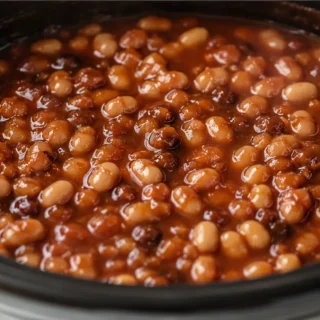
Slow Cooker Baked Beans: Comfort Food!
Ingredients
- 1 tablespoon olive oil
- 1 small onion, chopped
- 1 pound small dried white beans
- 1 6 ounce can tomato paste
- 1/4 cup maple syrup
- 1/4 cup molasses
- 2 tablespoons dijon mustard
- 1 32-ounce box vegetable broth
- 2 cups water
- 2 teaspoons kosher salt
Instructions
- Heat the olive oil in a saute pan over medium heat, add the onions and cook until soft, about 3-4 minutes.
- Transfer the softened onions to a crock pot, add the remaining ingredients, and stir thoroughly to combine.
- Cook on low for 8-10 hours or on high for 6-8 hours, or until the beans are tender and the sauce has thickened.
- Serve warm as a delicious side dish.
Notes
– Don’t skip the sautéing of the onion; it builds the foundational flavor for your baked beans. A good base makes all the difference.
– Cook the beans until they are truly tender, not just soft. This might mean extending the cooking time by an hour or two depending on your slow cooker and the age of your beans. Taste testing is key. Nutrition information is an estimate, calculated automatically. Values vary with brands, substitutions and portion sizes.
The Technique That Makes It: Slow Hydration and Gentle Cooking
The magic behind truly exceptional slow cooker baked beans lies in two key principles: thorough hydration and gentle, extended cooking. Dried varieties, especially small white ones like navy or cannellini, require ample time to absorb liquid and soften. Starting with dried ones and soaking them overnight (or using a quick-soak method) is crucial for even cooking and to prevent them from remaining hard and chalky. The slow cooker provides the ideal environment for this. Unlike most recipes that advocate for high-heat cooking, this one avoids it because stovetop simmering can be prone to scorching and uneven heat; the slow cooker maintains a consistent, low temperature. This gentle heat allows the legumes to gradually soften and absorb the complex flavors of the tomato paste, maple syrup, molasses, and Dijon mustard without breaking down into a mush. The combination of vegetable broth and water provides enough liquid for both hydration and to create a rich, thick sauce as they cook and release their starches. The olive oil and sautéed onion provide an aromatic base, but the slow, moist heat is the primary driver of texture and flavor development here, preventing the dreaded chalky texture.
Troubleshooting Your Baked Beans
- Legumes still hard after cooking? This usually means they weren’t fully hydrated or were old. Extend the cooking time by 1-2 hours on low, adding a bit more water if needed. What most guides miss is that older legumes can take significantly longer to soften.
- Sauce too thin? Remove the lid for the last 30-60 minutes of cooking and switch to high heat if available. This allows excess moisture to evaporate and the sauce to thicken. Avoid adding thickeners like flour or cornstarch mid-cook, as they can make the sauce pasty.
- Flavor lacking depth? Ensure your onions are properly caramelized at the start; this builds the flavor foundation. A dash of liquid smoke or a pinch of smoked paprika added at the beginning can also enhance richness. The overlooked detail here is the balance of sweet and savory elements, so don’t be afraid to adjust maple syrup or mustard to taste before the long cook.
Substitutions and Variations
- No dried white beans? While dried small white beans are recommended for texture, you could use large lima beans for a different, creamier profile, though cooking times might vary. Canned varieties are not recommended as they tend to get mushy.
- Out of maple syrup? Brown sugar can be substituted 1:1, but note that the flavor will be less nuanced and slightly sweeter. Molasses is key for that deep, characteristic baked flavor.
- Want a smoky flavor? Add 1/2 teaspoon of liquid smoke or 1 teaspoon of smoked paprika along with the other ingredients at the start. This enhances the traditional profile without needing bacon.
Pro tips
- Soak your dried white beans overnight to reduce cooking time and improve texture. If short on time, a quick soak can be done by boiling them for 5 minutes, then letting them rest off heat for an hour. This ensures the legumes cook evenly.
- Don’t skip sautéing the onion; it builds the foundational flavor for these baked legumes. A good base makes all the difference.
- Cook the legumes until they are truly tender, not just soft. This might mean extending the cooking time by an hour or two depending on your slow cooker and their age. Taste testing is key to achieving optimal texture.
- Add a touch of liquid smoke for an extra layer of depth if you enjoy a smoky flavor.
This slow cooker baked beans recipe is a testament to how simple ingredients can create extraordinary flavor. Give it a try for your next meal and savor the rich, homemade taste. Don’t hesitate to experiment with a touch of smoked paprika for an extra layer of depth!
Frequently asked questions
Can I use canned legumes instead of dried for this slow cooker baked beans recipe?
While you can use canned legumes, the texture and flavor will be significantly different. Canned legumes are already cooked and may become too soft or mushy in the slow cooker. If you must use them, rinse and drain them well and reduce the cooking time considerably to avoid overcooking.
How do I prevent my slow cooker baked beans from being too watery?
Ensure your legumes are properly hydrated before cooking. If the sauce seems too thin after the initial cooking time, you can remove the lid and cook on high for the last 30-60 minutes to allow excess liquid to evaporate and the sauce to thicken naturally.
What kind of legumes work best for this it recipe?
Small dried white legumes are ideal for this recipe. Varieties like navy beans, cannellini beans, or great northern beans have a creamy texture and hold their shape well during the long cooking process, absorbing the sauce beautifully.
Can I make this this dish recipe vegetarian/vegan?
Yes, this recipe is inherently vegetarian as it uses vegetable broth. To make it vegan, ensure your maple syrup and molasses are pure and do not contain any non-vegan additives. The recipe does not contain any meat products.