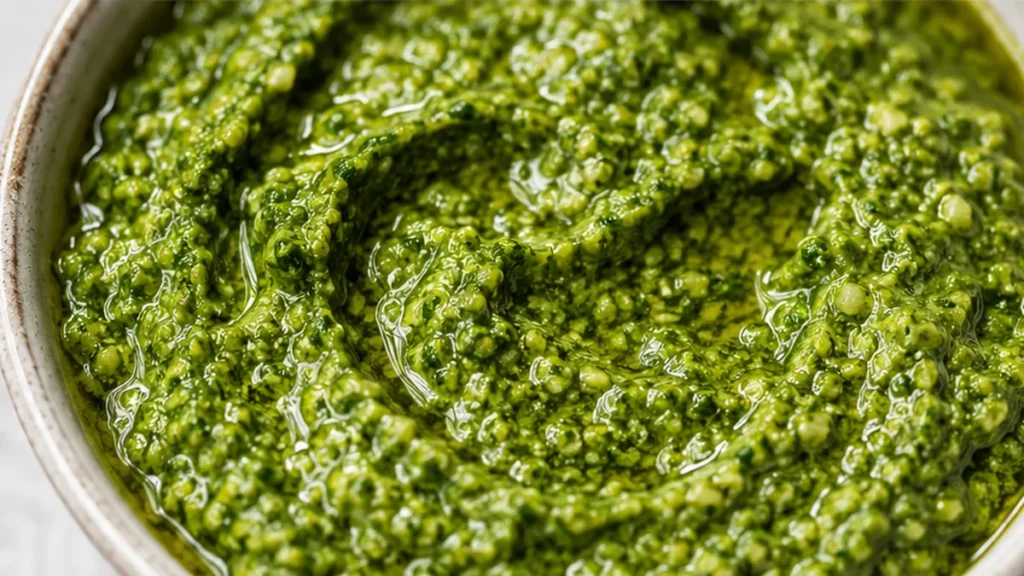
Making a truly bright arugula pesto hinges on balancing the peppery greens with creamy nuts and bright acidity, often missing in store-bought versions. This recipe focuses on creating a fresh, flavorful spread that improves any dish with minimal effort. This arugula pesto is quick to prepare, versatile, and brings a delightful zing to your table. It’s a fantastic alternative to traditional basil pesto, offering a unique, slightly bitter kick that pairs beautifully with many meals. Swapping basil for arugula adds unexpected depth to a simple pasta night.
Key takeaways
- Use fresh arugula for the best flavor and texture.
- Adjust the consistency with water or additional nuts as needed.
- Taste and balance flavors with garlic and lemon juice.
- Experiment with different nuts to create unique flavor profiles.
Zesty Arugula Pesto: Fresh & Fast!
Ingredients
- 1 clove garlic
- 1 cup walnuts
- 5 cups arugula (packed (5 ounces))
- 3 tablespoons nutritional yeast (could use parm)
- Juice from 1 medium lemon (about 1/4 cup)
- 1/2 teaspoon salt
- 1/3 cup avocado oil (could use light tasting olive oil)
- Water (as needed to thin out the consistency)
Instructions
- Toast the walnuts over medium heat for 3-4 minutes until warm and fragrant. Remove from the heat and transfer to a plate to cool completely.
- While the walnuts are cooling, add the garlic to the bowl of a food processor and blend for 10 seconds to break up the garlic.
- When the walnuts are cool, add them to the food processor and blend again until they’re broken down into very small pieces, 1-2 minutes.
- Add the rest of the ingredients, except the avocado oil and water, and blend on high for 1-2 minutes until the arugula is broken down. Scrape down the sides of the food processor as needed.
- With the food processor on medium speed, slowly drizzle in the avocado oil until the pesto becomes much thinner and starts to look like pesto.
- If it’s too thick, add water one tablespoon at a time to thin it out to your desired consistency.
Video
Notes
Understanding the Role of Arugula in Pesto
Arugula, known for its peppery flavor, is a crucial component of this pesto. It not only adds a unique taste but also contributes to the overall texture. When using 5 cups (approximately 150 grams) of packed arugula, the balance between its pungency and the creaminess from the nuts is essential for a well-rounded flavor profile. The bitterness of arugula can be mitigated by ensuring it is fresh and not overly mature, which can lead to a harsh taste.
Why Your Pesto Might Be Too Thick or Thin
The consistency of your arugula pesto is key to its versatility. If the pesto is too thick, it can be unappetizing and difficult to spread. Conversely, if it’s too thin, it may lack body and flavor. The avocado oil (1/3 cup or about 80 ml) serves as an emulsifier, binding the ingredients together. If the pesto is too thick, add water gradually until the desired consistency is reached. If it’s too thin, consider adding more walnuts or nutritional yeast to thicken it up.
Common Flavor Imbalances in Pesto and How to Fix Them
Sometimes, the flavor of arugula pesto may not hit the mark. If it tastes too bitter, consider reducing the amount of arugula or adding a bit more lemon juice (about 1/4 cup) to brighten the flavor. On the other hand, if it lacks depth, increasing the garlic (up to 2 cloves) or adding more nutritional yeast can enhance the umami profile. Always taste as you go to achieve the balance you prefer.
Choosing the Right Nuts for Your Pesto
While walnuts are used in this recipe, they can be swapped for other nuts such as pine nuts or cashews. Each nut brings a different flavor and texture. For instance, pine nuts (1 cup or about 140 grams) provide a sweeter taste, while cashews (1 cup or about 150 grams) create a creamier texture. However, using different nuts may alter the overall flavor and richness of the pesto, so adjust the amount of salt accordingly to maintain balance.
The Importance of Nutritional Yeast and Its Alternatives
Nutritional yeast adds a cheesy flavor without dairy, making it a popular choice for vegan diets. In this recipe, 3 tablespoons (about 20 grams) of nutritional yeast are used. If you opt for Parmesan cheese instead, reduce the salt slightly, as cheese is naturally salty. The choice between these ingredients can significantly affect the flavor, so consider your dietary needs and preferences when selecting.
How to Prepare and Store Zesty Arugula Pesto for Maximum Freshness
Making arugula pesto in advance can save time without sacrificing flavor. To store your pesto, transfer it to an airtight container and drizzle a thin layer of olive oil on top to prevent oxidation. Properly sealed, it can last in the refrigerator for up to a week. For longer storage, consider freezing the pesto in ice cube trays. Once frozen, transfer the cubes to a freezer bag, where they can last for up to three months. When ready to use, simply thaw the desired amount in the refrigerator or at room temperature, and stir to recombine.
Scaling Your Zesty Arugula Pesto Recipe: Tips for Adjustments
This arugula pesto recipe is easily scalable, whether you want to make a single batch or a larger quantity for a gathering. For every additional cup of arugula, increase the garlic, walnuts, and nutritional yeast proportionately to maintain the flavor balance. Keep the lemon juice and salt adjustments to your taste. If you double the recipe, you might find that a larger food processor works better to achieve a uniform consistency. Remember that the oil quantity may need slight adjustments based on the final texture desired.
Equipment Choices and Their Impact on Your Pesto’s Texture
The equipment you use can significantly affect the texture of your arugula pesto. A food processor is ideal for achieving a coarser texture, while a high-speed blender can create a smoother finish. If using a blender, you may need to add more water to help blend the ingredients effectively. When using a mortar and pestle, the process will be more labor-intensive, but it allows for greater control over the texture and flavor release. Whichever method you choose, ensure all ingredients are finely chopped to prevent clumping.
Seasonal Variations: Adapting Your Pesto to Ingredient Quality
The quality of your ingredients can vary with the seasons, affecting the overall flavor of your arugula pesto. Fresh, young arugula in spring will yield a milder, peppery flavor, while older leaves in summer may be more bitter. Adjust the amount of lemon juice and salt to balance these flavors. Additionally, consider adding seasonal herbs like basil or mint to enhance freshness during the summer months. For a winter version, roasted garlic can add depth and sweetness, while using toasted walnuts can introduce a richer flavor profile.
How to Keep Your Zesty Arugula Pesto Fresh for Longer
To maximize the shelf life of your arugula pesto, consider storing it in an airtight container. When properly sealed, it can last in the refrigerator for up to a week. For longer storage, freezing is ideal. Portion the pesto into ice cube trays and freeze until solid. Once frozen, transfer the cubes to a freezer bag, where they can last for up to three months. When ready to use, simply thaw the desired amount in the refrigerator overnight or at room temperature for a few hours.
How to Adjust the Flavor Profile of Your Pesto
While the recipe provides a balanced flavor, you may wish to tweak it based on personal preference or ingredient availability. If your arugula is particularly bitter, adding a pinch of sugar can help balance the flavors. Alternatively, if you prefer a nuttier taste, consider increasing the amount of walnuts slightly, but be cautious not to overpower the arugula’s distinct flavor. For a zestier kick, adding more lemon juice can enhance the overall brightness of the pesto.
Understanding the Impact of Ingredient Quality on Your Pesto
The quality of the ingredients used in your arugula pesto significantly affects the final flavor and texture. Fresh, vibrant arugula will yield a more aromatic and peppery pesto, while older leaves may impart a duller taste. Similarly, opt for high-quality olive oil or avocado oil, as they contribute to the emulsion and overall mouthfeel. Freshly grated Parmesan cheese, if used instead of nutritional yeast, can also elevate the flavor profile, providing a creamier texture and a richer taste.
How to Prepare Zesty Arugula Pesto in Advance
When making zesty arugula pesto ahead of time, it’s essential to consider the ingredient interactions. Fresh arugula can lose its vibrant color and flavor when stored improperly. To maintain freshness, prepare the pesto and store it in an airtight container, pressing a layer of plastic wrap directly onto the surface to minimize oxidation. Refrigerate for up to a week. For longer storage, consider freezing the pesto in ice cube trays. Once frozen, transfer the cubes to a freezer bag for up to three months. This method allows you to thaw only what you need, ensuring the rest remains fresh.
Understanding the Impact of Ingredient Quality on Your Pesto
The quality of each ingredient in zesty arugula pesto significantly affects the final product. Fresh, vibrant arugula will yield a brighter flavor, while older leaves may impart a bitter taste. Similarly, high-quality walnuts contribute a richer, nuttier profile compared to stale nuts. When selecting nutritional yeast or Parmesan, opt for fresh, high-quality products to enhance the umami depth of the pesto. Freshly squeezed lemon juice is crucial; bottled varieties can lack the brightness needed for balance. Investing in quality ingredients not only improves taste but also the nutritional value of your pesto.
How to Make Zesty Arugula Pesto Ahead of Time
Preparing zesty arugula pesto in advance can save time and enhance convenience. When making it ahead, use fresh ingredients, especially arugula, as they maintain their vibrant flavor and nutrients. After blending, transfer the pesto into an airtight container, ensuring minimal air exposure to prevent oxidation. Cover the surface with a thin layer of olive oil to further inhibit browning. Store in the refrigerator for up to one week. For longer storage, consider freezing in ice cube trays, which allows for easy portioning. Once frozen, transfer the cubes to a freezer-safe bag, where they can last for up to three months. When ready to use, simply thaw the desired amount and stir well before serving.
Adjusting Serving Sizes for Zesty Arugula Pesto
Scaling your zesty arugula pesto recipe is straightforward, but attention to ingredient ratios is crucial for maintaining flavor and texture. If doubling the recipe, simply multiply each ingredient by two. However, be aware that the blending time may increase slightly, so monitor the consistency closely. For smaller batches, such as half the original recipe, ensure you still use a full clove of garlic and maintain the same proportion of arugula to nuts for a balanced taste. If using a smaller food processor, consider blending in batches to achieve uniform consistency. Remember that the flavor may intensify over time, so taste adjustments may be necessary when scaling up or down.
Pro tips
- For extra depth, toast your walnuts until fragrant before blending, but be careful not to burn them. Walnuts can go from perfect to bitter quickly. – If you prefer a milder flavor, you can blanch the arugula briefly before blending to reduce its peppery bite. – To preserve the bright green color, add a pinch of ice cubes while blending, or ensure your food processor isn’t running too hot.
- Store leftover arugula pesto in an airtight container in the refrigerator for up to 5 days. For longer storage, freeze in ice cube trays, then transfer to a freezer bag for up to 3 months. Thaw in the fridge overnight.
This arugula pesto is a simple yet impactful way to add fresh, bold flavor to your cooking. Experiment with it on grilled chicken, roasted vegetables, or simply with crusty bread. Enjoy the bright taste!
Frequently asked questions
Why is my pesto too bitter?
Bitter pesto often results from using overly mature arugula. To reduce bitterness, use fresh, young arugula and adjust the lemon juice to brighten the flavor.
Can I use olive oil instead of avocado oil?
Yes, light-tasting olive oil can be used as a substitute for avocado oil. However, it may impart a stronger flavor than avocado oil, so adjust the quantity to taste.
How can I make my pesto creamier?
To achieve a creamier texture, increase the amount of nuts, such as walnuts or switch to cashews. Additionally, blending for a longer time can help emulsify the mixture better.
Is it necessary to use nutritional yeast?
Nutritional yeast provides a cheesy flavor and is a great vegan option. If you prefer, you can substitute it with Parmesan cheese, but adjust the salt to avoid overpowering the dish.
More from Vegan Air Fryer →