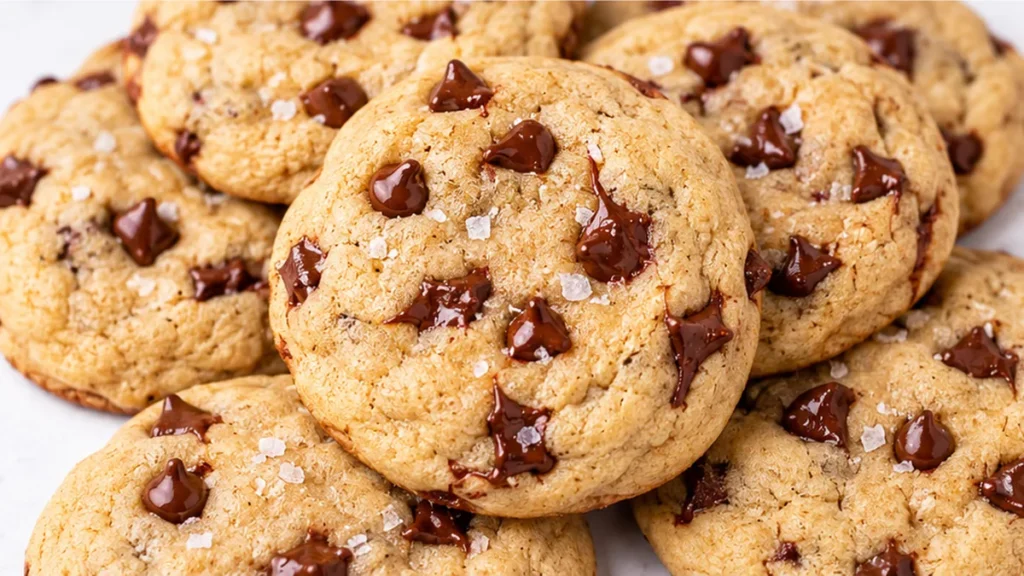
This recipe for vegan cookies offers a classic chewy texture and rich chocolate flavor. Enjoy these cookies made without any animal products.
Key takeaways
- Coconut oil is key for moisture and texture in vegan cookies.
- Resting the dough improves the cookie’s structure and chewiness.
- Chilling the dough prevents excessive spreading during baking.
- Ingredient swaps can alter flavor and texture, so choose wisely.

Vegan Chocolate Chip Cookies
Ingredients
- 1/2 cup coconut oil
- 1 ¼ cup light brown sugar (packed)
- 2 teaspoons vanilla extract
- 1/4 cup coconut cream
- 1 ripe banana (mashed)
- 2 ⅓ cups all-purpose flour
- 1 teaspoon baking soda
- 1/2 teaspoon kosher fine salt
- 1 1/2 cups vegan mini chocolate chips
- Flaky sea salt (to garnish)
Instructions
- Preheat oven to 375°F (190°C). Line a large baking sheet with parchment paper.
- In a large bowl, whisk together melted coconut oil, packed light brown sugar, and vanilla extract until combined.
- Stir in the coconut cream and mashed banana until fully incorporated, creating a smooth wet mixture.
- In a separate bowl, whisk together the all-purpose flour, baking soda, and kosher salt.
- Gradually add the dry ingredients to the wet ingredients, stirring until just combined into a thick cookie dough. Fold in 1 1/4 cups of vegan mini chocolate chips.
- Scoop rounded tablespoons of dough onto the prepared baking sheet, leaving about 2 inches between each cookie.
- Bake for 8-10 minutes, or until the edges are golden brown and the centers have set but still look slightly soft.
- Gently press the remaining chocolate chips onto the warm cookies and sprinkle with flaky sea salt if desired.
Video
Notes
Understanding the Role of Coconut Oil in Vegan Cookies
Coconut oil serves as a crucial fat source in vegan chocolate chip cookies, providing moisture and a rich flavor profile. When melted, coconut oil has a consistency similar to butter, which aids in creating a tender texture. The melting point of coconut oil is around 24°C (76°F), making it essential to ensure it is not overheated. Ideally, it should be incorporated at a warm but not hot temperature to maintain its emulsifying properties, which help bind the ingredients together effectively.
How to Achieve the Perfect Cookie Texture
The texture of your vegan cookies is influenced by the balance of ingredients and the baking process. The combination of coconut cream and mashed banana not only adds moisture but also contributes to a chewy texture. It’s important to note that the flour type and its hydration level play a significant role; all-purpose flour should be measured correctly to avoid overly dry or crumbly cookies. For optimal results, allow the dough to rest for at least 30 minutes before baking, which helps develop the gluten structure and enhances the overall texture.
Common Baking Mistakes and How to Avoid Them
One frequent issue with vegan cookies is spreading too much during baking. This can occur if the dough is too warm or if there is an imbalance in the fat-to-flour ratio. To mitigate this, chill the dough for 15-30 minutes before baking. Additionally, overmixing the dough can lead to tough cookies; mix just until combined to maintain a tender crumb. Lastly, ensure that the baking soda is fresh, as expired leavening agents can hinder the cookies from rising properly.
Ingredient Alternatives and Their Impact on Flavor
While this recipe calls for specific ingredients, there are several alternatives that can be used. For instance, replacing coconut oil with vegan butter can yield a similar texture but may alter the flavor slightly, making it less tropical. Using almond flour instead of all-purpose flour can enhance the nutty flavor but may require adjustments in moisture levels. Each swap can significantly change the cookie’s final taste and texture, so it’s essential to consider these effects when experimenting.
Understanding the Impact of Ingredient Quality on Vegan Chocolate Chip Cookies
The quality of ingredients plays a crucial role in the final outcome of vegan chocolate chip cookies. For instance, using fresh, ripe bananas enhances the natural sweetness and moisture of the cookies. Overripe bananas are ideal as they offer a more intense flavor and better binding properties. Similarly, the type of coconut oil can influence the taste; unrefined coconut oil adds a subtle coconut flavor, while refined coconut oil has a more neutral profile. Additionally, the freshness of the baking soda affects leavening power; expired baking soda may result in denser cookies. Always check the expiration dates and choose high-quality ingredients for the best results.
Adapting Vegan Cookies for Different Occasions
Vegan chocolate chip cookies can be tailored for various occasions, from casual gatherings to formal events. For a more sophisticated touch, consider adding a sprinkle of flaky sea salt on top just before baking, which enhances the chocolate’s flavor and adds a gourmet flair. If serving at a party, you can create cookie sandwiches by adding a layer of vegan frosting or ice cream between two cookies. For holidays, incorporating seasonal spices such as cinnamon or nutmeg can bring warmth and festivity to the cookies. Adjusting the size of the cookies can also cater to different settings; smaller cookies are perfect for buffets, while larger ones can serve as a decadent dessert.
Scaling Up or Down: Adjusting Batch Sizes for Vegan Cookies
Scaling the recipe for vegan chocolate chip cookies is straightforward, but it requires careful measurement to maintain the right texture and flavor. When increasing the batch size, maintain the same ratios of ingredients to ensure consistent results. For example, if doubling the recipe, use 1 cup of coconut oil, 2 ½ cups of light brown sugar, and so forth. Conversely, if halving the recipe, ensure you accurately measure smaller amounts, such as 1/4 cup of coconut oil and 5/8 cup of brown sugar. Keep in mind that baking times may vary slightly with batch size; larger batches may require additional baking time, while smaller batches may bake faster. Always monitor the cookies closely as they bake.
Make-Ahead Strategies for Vegan Chocolate Chip Cookies
Making vegan chocolate chip cookies ahead of time can save you effort on busy days. The dough can be prepared in advance and stored in the refrigerator for up to three days before baking. This not only allows the flavors to meld but also enhances the texture of the cookies. Alternatively, you can freeze the cookie dough for up to three months. To freeze, scoop the dough into balls and place them on a baking sheet to freeze individually before transferring them to an airtight container. When ready to bake, simply bake them from frozen, adding a couple of extra minutes to the baking time. This way, you can enjoy fresh cookies anytime with minimal effort.
How to Properly Store Vegan Chocolate Chip Cookies for Longevity
Storing vegan chocolate chip cookies correctly is essential to maintaining their freshness and texture. To keep them soft and chewy, place the cookies in an airtight container at room temperature. If you want to extend their shelf life, consider refrigerating them; however, this may alter the texture slightly, making them firmer. For long-term storage, freeze the cookies. Place them in a single layer on a baking sheet to freeze individually before transferring them to a freezer-safe bag or container. This method prevents them from sticking together, allowing you to take out only what you need. When ready to enjoy, thaw them at room temperature or warm them in the oven for a few minutes to regain their original softness.
Scaling the Recipe: Adjusting Ingredients for Larger Batches
Scaling recipes can be tricky, especially when it comes to baking, where precise measurements are crucial. For vegan chocolate chip cookies, you can easily double or triple the recipe by maintaining the same ratios of ingredients. However, keep in mind that the baking time may vary slightly with larger batches. For instance, when baking multiple trays at once, you might need to rotate them halfway through to ensure even baking. Additionally, larger batches may require a larger mixing bowl or even a stand mixer to properly combine the ingredients. Always monitor the cookies closely as they bake, especially the first time you scale the recipe, to achieve the desired texture and doneness.
The Impact of Ingredient Quality on Flavor and Texture
The quality of ingredients significantly influences the final outcome of vegan chocolate chip cookies. For instance, using high-quality coconut oil can enhance the flavor and texture of your cookies, providing a rich, buttery taste without dairy. Similarly, opting for organic light brown sugar can add a deeper caramel flavor, which complements the chocolate chips beautifully. When selecting vegan chocolate chips, look for those with a higher cocoa content; they tend to have a richer flavor and melt better. Additionally, fresh baking soda is crucial for achieving the right rise and texture. Using older baking soda may result in denser cookies. Always check the expiration date and store ingredients in a cool, dry place to maintain their quality.
Why the right cooling method affects your cookie texture
Cooling is a crucial step in the baking process that can significantly affect the texture of your vegan chocolate chip cookies. When cookies are removed from the oven, they continue to cook from residual heat. If left on the baking sheet, they may become overly soft and lose their structure. To achieve the perfect texture, transfer the cookies to a wire rack immediately after baking. This allows air to circulate around them, preventing sogginess and helping them firm up. Ideally, let them cool for at least 10-15 minutes before serving. This cooling period also allows the flavors to meld, enhancing the overall taste.
How ingredient quality impacts the final flavor
The quality of ingredients used in your vegan chocolate chip cookies can dramatically influence their flavor profile. For instance, using high-quality vegan chocolate chips will provide a richer taste compared to standard options. Similarly, the type of coconut oil can alter the flavor; refined coconut oil has a neutral taste, while unrefined coconut oil offers a distinct coconut flavor. Additionally, the ripeness of the banana used as a sweetener plays a significant role. A perfectly ripe banana will add more natural sweetness and moisture than an under-ripe one. Thus, selecting fresh, high-quality ingredients is essential for achieving the best flavor in your cookies.
Pro tips
- Use melted coconut oil and packed brown sugar for the best chewy texture.
- Don’t overmix the flour; stop when just combined to avoid tough cookies.
- For extra gooeyness, gently press more chocolate chips on top right after baking.
- Ensure your oven is accurately preheated to 375°F (190°C) for even baking.
Enjoy these delightful vegan chocolate chip cookies warm from the oven or stored in an airtight container for up to 3 days.
Frequently asked questions
Can I use a different type of flour for these cookies?
Yes, you can use whole wheat flour or gluten-free flour blends. However, the texture and taste may differ. Whole wheat flour will yield denser cookies, while gluten-free options may require additional binding agents.
How do I store leftover cookies?
Store the cookies in an airtight container at room temperature for up to a week. For longer storage, freeze them in a single layer, then transfer to a freezer-safe bag for up to three months.
Can I omit the banana from the recipe?
While the banana adds moisture and sweetness, you can substitute it with applesauce or another fruit puree. This will alter the flavor slightly but will still keep the cookies moist.
What can I do if my cookies turn out too dry?
If the cookies are dry, it may be due to too much flour or overbaking. Ensure accurate measurements and check for doneness a few minutes before the recommended baking time to avoid dryness.
More from Vegan Desserts →