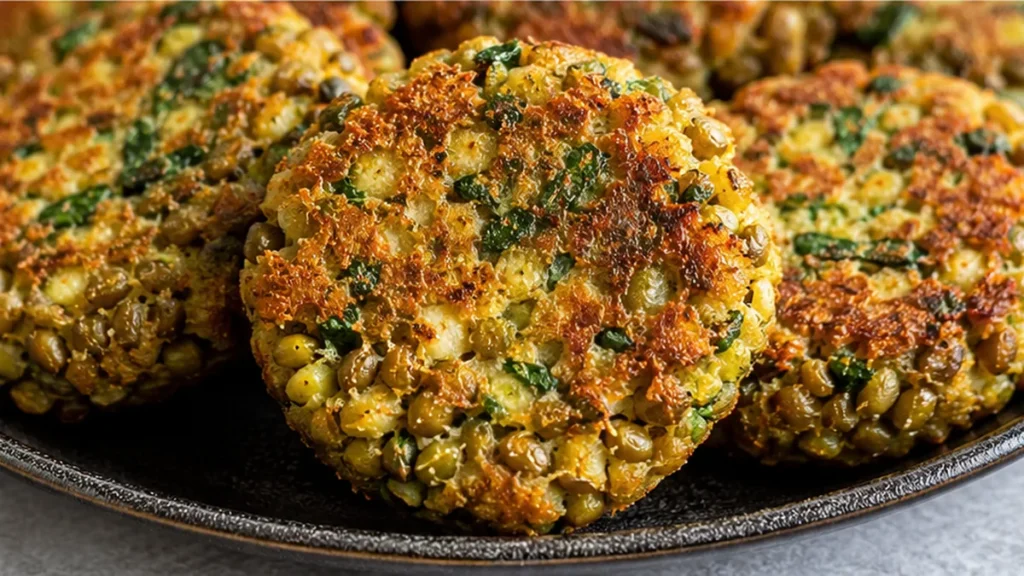
Moong tikki are best when the soaked beans are thoroughly drained and the right texture is achieved in your food processor. These bright, savory patties are a fantastic way to enjoy the goodness of whole moong beans, making them a popular choice for appetizers and snacks. This moong tikki recipe combines fresh spinach, cilantro, and a blend of aromatic spices, creating a bite that’s both nutritious and satisfying. It’s an accessible recipe that even novice cooks can master, offering a unique twist on traditional Indian snacks.
Key takeaways
- Soaking moong beans overnight is essential for texture.
- Adjust moisture with gram flour or breadcrumbs to prevent falling apart.
- Cook at medium-high heat for a crispy exterior and soft interior.
- Moong tikki is a high-protein, gluten-free alternative to traditional fritters.
Crispy Moong Tikki: Vegan Snack
Ingredients
- 1 cup whole moong beans (soaked overnight)
- 4 green chillies (rough chopped)
- 2 inch ginger (rough chopped)
- ½ cup cilantro (rough chopped)
- 2 cups baby spinach (rough chopped)
- 6 tablespoons gram flour
- 6 tablespoons breadcrumbs
- 2 teaspoons kosher salt
- ½ teaspoon garam masala
- 24 cashews (raw, unsalted)
Instructions
- Drain soaked moong beans thoroughly, discarding any unsoaked beans.
- Process green chiles, ginger, and moong in a food processor until grainy (30-45 seconds).
- Add spinach, cilantro, salt, garam masala, gram flour, and breadcrumbs; pulse until just combined, keeping texture coarse.
- Divide mixture into 24 portions, shape into 2-inch tikkis, and press one cashew into a small dent in each.
- Heat oil in a skillet over medium heat. Cook tikkis for 3-4 minutes per side until golden.
- Serve hot with your favorite chutney.
Video
Notes
Understanding the Role of Soaked Moong Beans
Soaking whole moong beans overnight is crucial for achieving the right texture in your moong tikki. This process hydrates the beans, allowing them to soften and swell. The ideal soaking time is 8-12 hours, which helps in breaking down the hard outer layer and activates enzymes that enhance flavor. After soaking, drain and rinse the beans to remove any anti-nutrients that can inhibit digestion.
Why Your Tikki Might Fall Apart
One common issue with moong tikki is the mixture falling apart during cooking. This can happen if the moisture content is too high. If your batter feels too wet, add more gram flour or breadcrumbs gradually until it holds together. A ratio of 1:1 for moong beans to gram flour can help maintain structure. Ensure you mix thoroughly to distribute ingredients evenly.
Enhancing Flavor with Spices
The addition of spices like garam masala and salt is essential for flavor development. The garam masala should be added in moderation; about ½ teaspoon is sufficient to enhance the dish without overpowering the natural flavors of the moong beans and vegetables. For a spicier tikki, consider increasing the amount of green chilies but be cautious not to exceed personal heat preferences.
Optimal Cooking Temperature for Crispiness
Achieving a crispy exterior while maintaining a soft interior is key to delicious moong tikki. Cook the tikkis in a preheated skillet over medium-high heat (around 180°C or 350°F). This temperature allows the gram flour and breadcrumbs to brown effectively, creating a crispy crust. Cooking for 4-5 minutes on each side should yield a golden-brown finish.
Unique Characteristics of Moong Tikki
Moong tikki stands out from other vegetable fritters due to its use of whole moong beans, which provide a distinct nutty flavor and a high protein content. Unlike potato-based tikkis, moong tikki is gluten-free and offers a lighter, healthier alternative, making it ideal for those seeking plant-based snacks without sacrificing taste or nutrition.
How to Properly Store Leftover Moong Tikki for Maximum Freshness
After preparing crispy moong tikki, proper storage is crucial to maintain its texture and flavor. Allow the tikkis to cool completely on a wire rack to prevent moisture buildup. Store them in an airtight container at room temperature for up to 2 days. For longer storage, refrigerate them in an airtight container for up to a week. If freezing, place them in a single layer on a baking sheet, freeze until solid, then transfer to a freezer-safe bag. This method prevents them from sticking together, allowing you to reheat only what you need.
Scaling the Recipe: Adjusting Ingredients for Larger Batches
Scaling the moong tikki recipe can be straightforward, but precision is key. If you double the recipe, maintain the same ratios of ingredients, particularly the soaked moong beans and spices. For optimal texture, ensure that the mixture is not too wet; you may need to adjust the gram flour and breadcrumbs accordingly. For example, doubling the recipe might require an additional tablespoon of gram flour for binding. Always taste and adjust seasoning after scaling up.
Choosing the Right Equipment for Perfectly Shaped Tikkis
The equipment used can significantly impact the outcome of your moong tikki. A non-stick skillet or a well-seasoned cast-iron pan is ideal for even cooking and crispiness. Use a spatula to gently flip the tikkis, ensuring they retain their shape. A cookie scoop or your hands can help form uniform patties, which ensures even cooking. If using a deep fryer, maintain the oil temperature around 350°F (175°C) for optimal frying without absorbing excess oil.
Seasonal Considerations: How Fresh Ingredients Affect Flavor
Freshness of ingredients plays a crucial role in the flavor profile of moong tikki. During peak seasons, use vibrant, fresh spinach and cilantro for enhanced flavor and nutrition. The spiciness of green chillies can vary depending on the season, so adjust the quantity according to your taste preferences. Additionally, using freshly ground spices, especially garam masala, can elevate the dish. Be mindful of ingredient quality, as older spices may lack potency, affecting the overall taste.
How to Prepare Moong Tikki in Advance Without Compromising Texture
Making moong tikki ahead of time can be a great way to save time without sacrificing quality. After preparing the mixture, shape the tikkis and place them on a baking sheet lined with parchment paper. Cover them with plastic wrap and refrigerate for up to 24 hours. When ready to cook, remove them from the fridge and allow them to sit at room temperature for about 15-20 minutes. This helps to relax the batter, ensuring they cook evenly. If you want to freeze them, flash freeze the shaped tikkis on the baking sheet for about an hour before transferring them to a freezer-safe bag. They can be stored for up to three months. When cooking from frozen, simply add a few extra minutes to the cooking time.
Understanding the Impact of Ingredient Quality on Moong Tikki
The quality of your ingredients significantly affects the final taste and texture of your moong tikki. Fresh, vibrant spinach and fragrant cilantro will enhance the flavor profile, while older ingredients may lead to a dull taste. Whole moong beans should be firm and free from any signs of spoilage. When using gram flour, opt for a finely ground variety to achieve a smoother texture in the mixture. Additionally, the freshness of your spices, particularly garam masala, can elevate the dish. Always check the expiration dates and store spices in a cool, dark place to maintain their potency.
Choosing the Right Cooking Method for Optimal Crispiness
The method of cooking can greatly influence the crispiness of your moong tikki. While shallow frying is traditional, you can also opt for baking or air frying to achieve a healthier version. If frying, ensure the oil is hot enough (around 350°F or 175°C) before adding the tikkis; this prevents them from absorbing too much oil and becoming greasy. For baking, preheat your oven to 400°F (200°C) and brush the tikkis lightly with oil for a golden finish. Air frying requires a similar approach; preheat the air fryer and arrange the tikkis in a single layer, lightly brushing them with oil for even cooking.
Serving Suggestions and Pairings to Elevate Moong Tikki
Moong tikki can be served in various ways to enhance the dining experience. Pair them with a tangy tamarind chutney or a cooling mint yogurt dip to balance the spices. For a more substantial meal, serve the tikkis on a bed of fresh salad greens, topped with sliced cucumber and tomatoes. You can also incorporate them into a wrap with fresh vegetables and your favorite sauce. For a seasonal twist, consider adding roasted seasonal vegetables as a side. In colder months, a warm soup can complement the crispy texture of the tikkis beautifully, while in warmer months, light and fresh accompaniments work best.
Understanding the Effect of Ingredient Freshness on Moong Tikki
The quality of your ingredients directly impacts the flavor and texture of moong tikki. Fresh, vibrant green chillies and cilantro will add a bright flavor, while wilted greens can lead to a dull taste. Whole moong beans should be firm and unblemished; older beans may not hydrate properly and can lead to a grainy texture. Aim for beans that have been stored in a cool, dry place. For optimal flavor, consider sourcing seasonal produce. Spinach, for instance, is best in cooler months when it is tender and sweet. In contrast, using out-of-season spinach can result in a more bitter flavor profile. When using spices like garam masala, ensure they are fresh; stale spices lose their potency and can make the dish taste flat. A good rule of thumb is to replace ground spices every six months for the best flavor.
Batch Scaling: Adjusting Ingredients for Moong Tikki
Scaling the moong tikki recipe requires careful consideration of ingredient ratios to maintain the desired texture and flavor. If increasing the batch size, maintain the ratio of whole moong beans to gram flour and breadcrumbs, typically around 1:0.5:0.5. For example, if using 2 cups of moong beans, use 1 cup of gram flour and 1 cup of breadcrumbs. This balance ensures that the batter holds together while achieving the right crispness upon frying. Additionally, when scaling, consider the cooking time; larger batches may need slightly longer to cook through, especially if frying in a crowded pan. Monitor the tikki closely to prevent uneven cooking. If you are doubling the recipe, it may be beneficial to fry in batches rather than overcrowding the pan, which can lower the oil temperature and result in soggy tikkis. Always taste and adjust seasoning when scaling, as larger quantities may require slight adjustments in salt and spices to achieve the same flavor profile.
Pro tips
- Don’t over-process the mixture in the food processor; a slightly coarse texture ensures a better mouthfeel and prevents the tikkis from becoming pasty. Over-blending makes the tikkis lose their satisfying bite.
- For best results, ensure your skillet is adequately heated before adding the tikkis. This helps create a beautiful golden crust without absorbing too much oil.
- Storage: Leftover tikkis can be stored in an airtight container in the refrigerator for up to 3 days. Reheat in an oven at 350°F (175°C) for 8-10 minutes to restore crispiness, or microwave for 1 minute.
These moong tikki are a delightful and healthy addition to your culinary repertoire. Experiment with different spices or serve them with your favorite chutney for a personalized touch. Enjoy this flavorful vegan treat!
Frequently asked questions
Can I use split moong beans instead of whole?
Yes, you can use split moong beans, but the texture will be slightly different. Split beans will create a smoother mixture, which may require less binding agent like gram flour.
How do I store leftover moong tikkis?
Store leftover moong tikkis in an airtight container in the refrigerator for up to 3 days. Reheat them in a skillet to restore crispiness before serving.
What can I use instead of gram flour?
If you need a substitute for gram flour, you can use chickpea flour or all-purpose flour. However, using all-purpose flour will alter the flavor and texture, making it less authentic.
Can I bake moong tikkis instead of frying?
Yes, you can bake moong tikkis for a healthier option. Preheat your oven to 200°C (400°F) and bake for about 20-25 minutes, flipping halfway through, until golden brown.
More from Vegan Air Fryer →