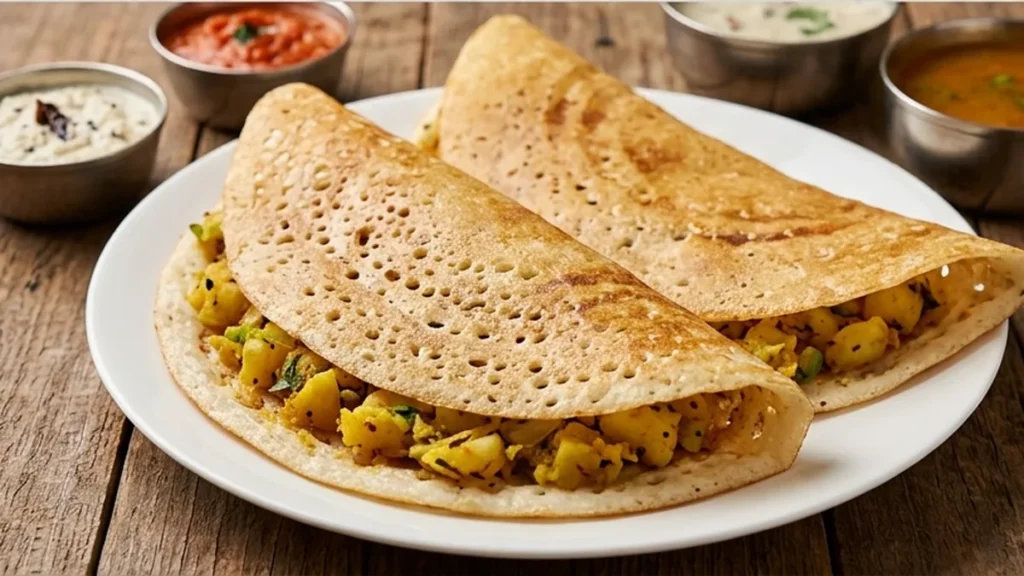
Embark on a dish with these bright Indian crepes, known as Rava Dosas, generously filled with a flavorful Summer Squash and Tomato Chickpea Masala. This recipe offers a delightful fusion of textures and tastes, perfect for an adventurous weeknight dinner or a unique weekend meal. Each component, from the crispy, delicate dosa to the hearty, spiced masala, is designed to create a harmonious and satisfying dish. The addition of toasted coconut and fresh cilantro improves the flavor profile, making these Indian crepes a truly memorable experience for any palate.
Key takeaways
- The balance of flours (semolina, rice, all-purpose) is key for texture.
- Proper batter hydration and resting are crucial for pliability and flavor.
- Medium-high heat and adequate fat are essential for cooking the crepes.
- Cook the vegetable masala separately to maintain its texture and distinct flavors.
Delicious Indian Crepes with Zesty Veggie Masala
Ingredients
- 1/3 cup unsweetened coconut
- 1 tablespoon coconut oil or clarified butter
- 1 small onion (chopped)
- 3 cloves garlic (minced or grated)
- 1 tablespoon fresh ginger (grated)
- 1 serrano pepper (chopped)
- 2 small-medium zucchini (chopped)
- 2 small-medium summer squash (chopped)
- 1 tablespoon spicy curry powder
- 1 teaspoon garam masala
- 1 (15-ounce) can chickpeas (rinsed and drained)
- 1 (14.5 ounce) can diced tomatoes (undrained)
- 1 cup water
- 1 cup semolina flour
- 1/2 cup rice flour
- 1/4 cup all-purpose flour
- 1 green onion (chopped)
- 1 teaspoon cumin seeds
- Salt and pepper to taste
- 1/2 cup coconut milk
- Fresh cilantro (chopped, for garnish)
Instructions
- In a skillet, toast the coconut over medium heat until golden brown, then transfer to a bowl. Add 1 tablespoon of coconut oil to the same skillet. Sauté the chopped onion, minced garlic, grated ginger, and chopped serrano pepper for 3-5 minutes until softened and fragrant.
- Add the chopped zucchini, chopped summer squash, spicy curry powder, garam masala, salt, and pepper to the skillet. Cook for 5 minutes, stirring occasionally, until the vegetables are tender-crisp and the spices are aromatic.
- Pour in the diced tomatoes (with their juice) and 1 cup of water. Bring the mixture to a boil, then reduce the heat and simmer for 10-15 minutes, or until the sauce has thickened to your desired consistency.
- While the masala simmers, prepare the rava dosai batter. In a bowl, combine the semolina flour, rice flour, all-purpose flour, chopped green onion, cumin seeds, salt, and pepper. Gradually whisk in 2 cups of water until you achieve a thin, smooth batter; add more water if necessary.
- Heat a nonstick skillet or griddle over medium-high heat and generously grease it with oil. Stir the dosa batter well. Pour about 1/2 cup of batter into the hot skillet, immediately spreading it in a rapid circular motion to form a thin, even crepe. Drizzle about 1 teaspoon of oil or butter around the edges and over the top of the crepe while it cooks.
- Cook the dosa for approximately 2 minutes, or until the edges begin to lift and the underside is golden brown and spotted. Carefully flip the dosa and cook for another minute. Transfer the cooked dosa to a plate and repeat the process with the remaining batter, keeping the dosas warm.
- Stir the coconut milk into the thickened vegetable masala until well combined. Remove the masala from the heat. Stir in the fresh chopped cilantro and the toasted coconut.
- To serve, spoon a generous portion of the masala onto one half of a warm dosa. Fold the other half of the dosa over the filling to create a half-moon shape. Garnish with additional fresh cilantro if desired.
Notes
The technique that makes it
The success of these Indian crepes, often referred to as ‘dosa’ or ‘uttapam’ in various regional Indian cuisines, hinges on achieving the right batter consistency and cooking temperature. The combination of semolina flour, rice flour, and all-purpose flour creates a unique texture. Semolina flour provides a slightly coarse, crisp edge when cooked, while rice flour contributes to a delicate crispness and helps bind the batter. The all-purpose flour adds structure and ensures the crepes hold together. The key is the resting period for the batter. Allowing the flours to hydrate properly is crucial for developing the gluten structure and achieving a smooth, pliable batter that spreads easily without tearing. This resting also allows for a subtle fermentation, which can enhance flavor and texture. When cooking, a medium-high heat is essential. Too low, and the crepes will become greasy and soft. Too high, and they will burn before cooking through. The use of coconut oil or clarified butter (ghee) adds a distinct nutty aroma and flavor characteristic of many South Indian dishes, and it helps create a beautifully golden-brown, slightly crispy exterior. The masala filling, with its blend of vegetables and aromatic spices, is cooked separately to ensure each component retains its texture and flavor, then folded or topped onto the cooked crepe.
Troubleshooting
- Crepes tearing when flipping: Ensure the batter is not too thin and has rested sufficiently. Cook on medium-high heat and allow the edges to visibly crisp up and lift slightly before attempting to flip. Use a thin, flexible spatula to get fully underneath.
- Crepes sticking to the pan: The pan may not be hot enough, or it needs more oil/ghee. Ensure the pan is well-seasoned or non-stick. A light coating of oil on the pan for each crepe is usually necessary.
- Crepes are too thick or doughy: The batter might be too thick. Add a tablespoon or two of water at a time until it reaches a pourable but not watery consistency, similar to heavy cream. Ensure the heat is high enough for a good sear.
- Masala is too watery: Cook the masala uncovered for a few extra minutes to allow excess moisture to evaporate. Ensure the diced tomatoes are not overly juicy, or drain them slightly if they are.
Substitutions
- Semolina flour: For a softer crepe, you can substitute with an equal amount of fine cornmeal or more rice flour, though the characteristic crisp edge will be less pronounced.
- Rice flour: All-purpose flour can be used as a direct substitute, but the crepes may be less crisp and slightly chewier.
- Coconut milk: Regular dairy milk or another plant-based milk like almond or soy milk can be used. The flavor profile will change slightly, losing the distinct coconut undertone.
- Serrano pepper: A finely chopped jalapeño pepper can be used for heat, or omit it entirely if you prefer a milder dish.
Pro tips
- Ensure your dosa batter is thin; it should pour easily like heavy cream.
- Don’t overcrowd the pan when cooking dosas; work in batches.
- Adjust serrano pepper for desired heat level in both masala and dosa.
Enjoy this delightful twist on Indian cuisine by trying this Rava Dosa recipe. It’s a wonderful way to explore new flavors and textures.
More from Vegan Breakfast →
Frequently asked questions
Can I make the dosa batter ahead of time?
Yes, dosa batter can be made 1-2 days in advance. After fermentation, store it in an airtight container in the refrigerator. Stir well before using. For longer storage, freeze the batter in portions. Thaw overnight in the fridge before cooking.
What can I substitute for rice flour in dosa?
While rice flour is traditional, you can substitute with a blend of all-purpose flour and semolina for a similar texture. Alternatively, use oat flour or chickpea flour for a gluten-free option. Adjust liquid amounts as flours absorb differently.
How do I know when the dosa is cooked?
The dosa is cooked when the edges start to lift and crisp up, and the surface appears golden brown and slightly lacy. You should see small bubbles form on the top. Flip it carefully to cook the other side briefly if desired.
What are good side dishes for veggie masala dosa?
Serve your dosa with the zesty veggie masala as a filling or side. Coconut chutney and sambar are classic accompaniments. A cooling raita or a simple side of pickled onions also complements the spices beautifully.